

EU Budget: Proposal to Cut €200 Billion and Levy Digital Tax Sparks Paris's Reservations
European Council President António Costa has unveiled a revised EU budget plan proposing a €204 billion cut alongside new revenues, including a digital tax on tech giants, triggering sharp criticism from Paris.

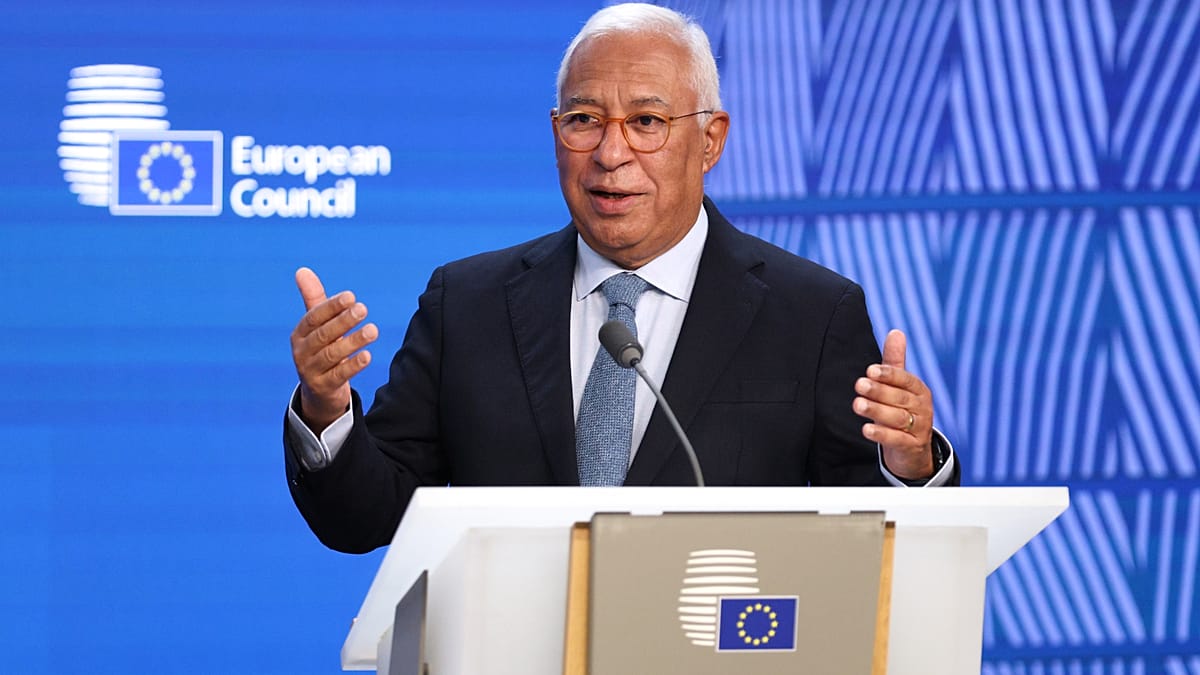
- A proposal to reduce the EU budget by around €204 billion to satisfy frugal states led by Germany, the Netherlands, and Sweden.
- Paris deems the proposal deeply disappointing and not a viable basis for an agreement amid cuts to cohesion, agriculture, and competitiveness programs.
- Imposing a 3% digital tax on major tech companies and adjusting the repayment pace for EU recovery plan debt.
In an effort to broker a comprehensive financial compromise among member states, European Council President António Costa has unveiled a revised plan for the European Union's general budget covering the 2028–2034 period, which includes an overall reduction of nearly €200 billion alongside new own resources, including a tax on major digital corporations.
Spending Cuts to Appease Frugal States
Costa's plan aims to slash the European Commission's proposed budget from around €2 trillion to €1.780 trillion—a 10 percent drop representing €204 billion in current prices. The move comes after Costa shaved off an additional €49 billion compared to the previous Irish draft, in an effort to respond to demands from the "Frugal" bloc—chiefly Germany, the Netherlands, and Sweden—which insists on reducing overall national contributions.
Costa emphasized that his proposal provides a balanced basis that reconciles European ambitions with keeping national contributions within reasonable limits, while introducing a new basket of own resources to support the unified budget.
Disappointment in Paris and German Conditions
Despite the conciliatory efforts, the new proposal met with sharp criticism ahead of the European Council summit in Brussels. A source at the Élysée Palace indicated that the new negotiating framework is "deeply disappointing," stressing that in its current form it "does not constitute a valid basis for reaching an agreement."
In a related development, budget negotiations were further complicated following statements by German Chancellor Friedrich Merz, in which he insisted that there would be no financial deal without unified, unconditional financial support for Ukraine, a stance that has raised reservations among several European capitals.
Cuts Affecting Vital Sectors
The proposed financial allocation reveals a €54 billion reduction in funding for agriculture, fisheries, and regional cohesion funds, running counter to the positions of the 17-nation "Friends of Cohesion" group, which seeks to protect allocations for lower-income regions. The cuts also hit competitiveness and defense by roughly €95.5 billion, while the "Global Europe" instrument for external action was curtailed by €45 billion.
A 3% Digital Tax on Tech Giants
The draft budget includes a uniform 3 percent tax on digital services targeting revenue from online advertising, digital intermediation, and the monetization of user data. The levy would apply to companies with global turnover exceeding €750 million and EU turnover above €50 million—a model already implemented nationally in France, Spain, and Italy—estimated to raise around €5 billion annually for the EU budget.
The package of new own resources also includes a phased allocation of carbon emissions trading scheme revenues reaching up to 30 percent by 2034, a progressively introduced 15 percent minimum tobacco tax, and an increase in the levy on non-recycled plastic waste from €0.80 to €1.25 per kilogram, in addition to channeling all Carbon Border Adjustment Mechanism proceeds to the EU budget, and studying future levies on crypto assets and the use of 5G and 6G network frequencies.
Rescheduling Recovery Plan Debt
On the financial front, the European Council President proposes reducing debt repayment obligations for the European recovery plan (NextGenerationEU) by €10 billion for the 2028–2034 period. While the overall repayment timeline remains extended through 2058, the proposal recalibrates the pace of principal debt repayments to address the burdens of recent interest rate increases, with actual repayments scheduled to begin in 2028 with adjusted amounts.
Source: Euronews (فرنسي)



Comments (0)
You must log in to comment on articles.
Log in Sign upBe the first to comment on this article.