

France National Rugby Team and the Art of Exploiting Refereeing Loopholes: How 'Les Bleus' Play on the Edge of the Law?
Ahead of their clash with Argentina, discussions grow around how the French rugby team masterfully exploits the grey areas of refereeing and tight regulations to secure victories.

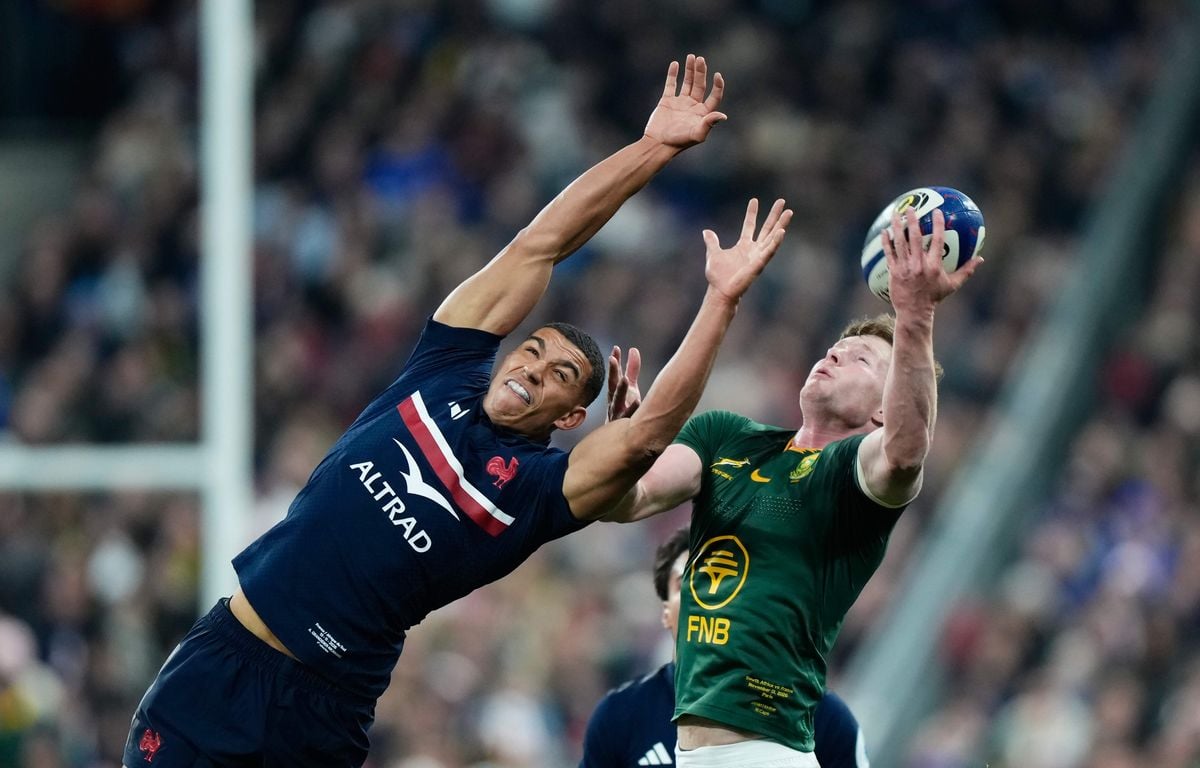
- The French national team faces Argentina in Paris amid discussions surrounding its clever exploitation of grey areas in refereeing rules.
- South Africa head coach Rassie Erasmus receives a six-match ban after criticizing officiating following his team's 21-19 loss to France.
- New regulations introduced by World Rugby on November 1, including restrictions on knee-drop tackles, further complicate the referees' task.
As French sports fans eagerly anticipate Les Bleus' upcoming clash against Argentina on Saturday evening at 21:10, discussions are mounting in sporting circles over how the French rugby team has come to navigate the boundaries of refereeing and strict laws with immense professionalism and tactical intelligence, leveraging the finest details to achieve victory in major competitions.
Exploiting Margins and Regulatory Loopholes
These debates follow France's thrilling 21-19 victory over South Africa. Rugby experts, such as coach Christophe Laussucq, explain that reaching the pinnacle of the world stage now relies on microscopic details, where every team seeks to flirt with the boundary of an infringement without actually committing it—an approach known in France by the maxim "not seen, not caught." For his part, former international referee Alexandre Ruiz believes the French have demonstrated great discipline in executing the regulations rather than breaching them.
France now relies on refereeing consultant Jérôme Garcès to delve into the comprehensive sports laws and capitalize on areas that offer players a margin of freedom. This approach was previously adopted by leading nations such as New Zealand in the 2011 World Cup final, when they denied France the title 8-7, as well as South Africa.
Erasmus's Outcry and the Intricacies of New Rules
This French approach did not sit well with South Africa's head coach, Rassie Erasmus, who launched a scathing attack during a press conference, criticizing officials for allegedly overlooking 17 French infractions alongside the details surrounding Maxime Lucu's yellow card. Erasmus's remarks subsequently earned him a six-match ban from governing bodies.
The task facing match officials is growing increasingly complicated with the implementation of new regulations introduced by World Rugby on November 1, notably the ban on the "knee-drop tackle" when one or both knees touch the ground. Technicians emphasize that measuring the time difference between the knee touching the turf and the moment of impact requires fractions of a hundredth of a second, placing referees under immense mental pressure and allowing players to test the whistle's resolve at the start of every encounter.
Source: 20 Minutes



Comments (0)
You must log in to comment on articles.
Log in Sign upBe the first to comment on this article.