

What Do You Know About Family Reunification in France? Procedures and Laws Explained
A comprehensive guide outlining the legal frameworks, eligibility criteria, and step-by-step procedures for family reunification in France, covering both standard regroupement familial and refugee status pathways.

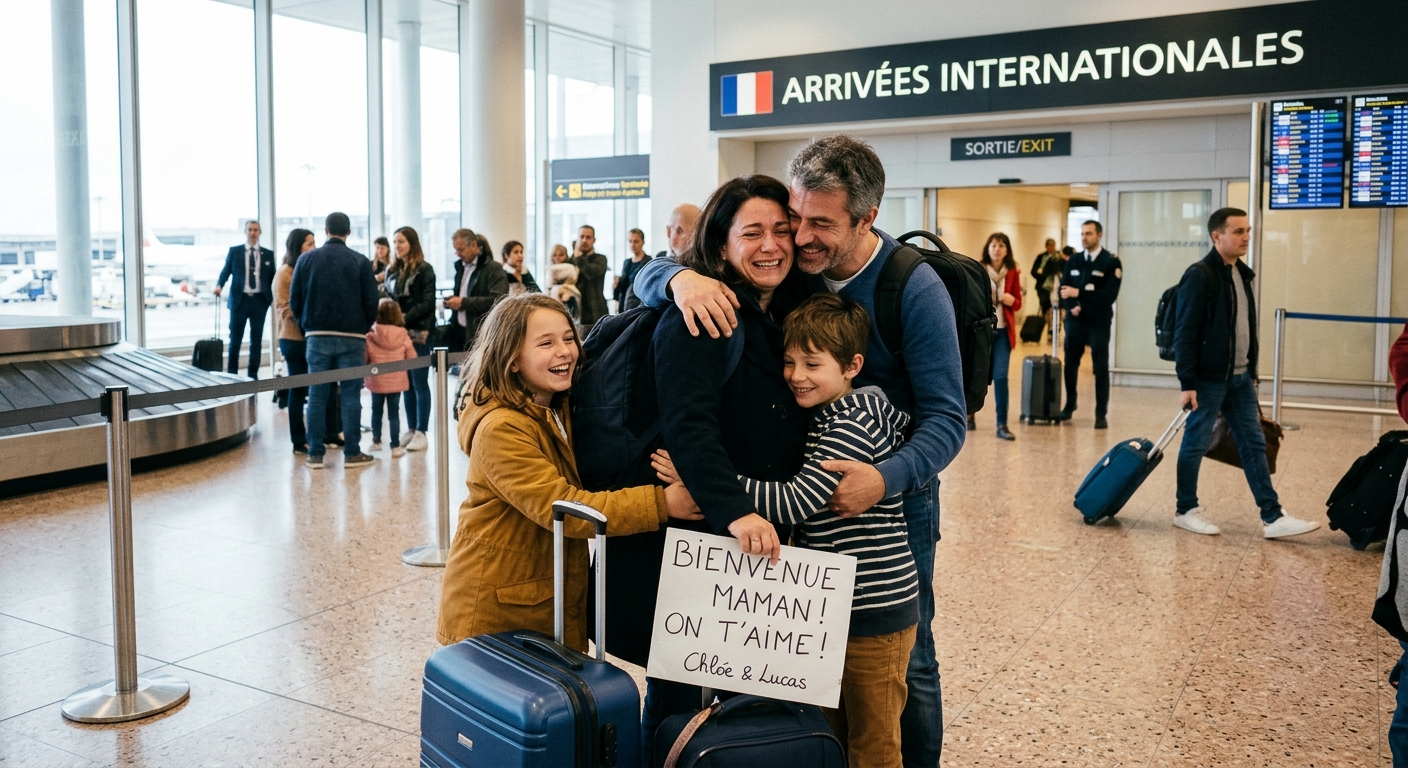
- Overview of the standard family reunification procedure (Regroupement familial) versus refugee family reunification (Réunification familiale).
- Essential criteria for applicants, including minimum legal stay, adequate resources, and proper housing standards.
- Procedures and legal distinctions depending on whether marriage took place before or after filing for asylum.
- Guidelines on registering marriages with OFPRA, required documentation, and appeal routes in case of visa denial.
Family reunification procedures in France vary depending on the resident's status in France, their nationality, and the type of residence permit they hold; typically, the standard pathway is Regroupement familial.
If you have obtained refugee status, subsidiary protection, or stateless status, your family members may claim certain rights, including: family reunification, social benefits, visitor visas, etc. The individuals eligible for this procedure are:
Your spouse, civil union partner (PACS equivalent), or partner;
Your children and the children of your spouse or partner who are under 19 years of age;
Your parents and your siblings, if you are an unmarried minor.
Accordingly, be sure to include the full name, date, and place of birth of your spouse/partner, as well as the date of marriage—whether contracted under religious or civil law—in your French Office for the Protection of Refugees and Stateless Persons (OFPRA) application file.
Also ensure you include the names, dates, and places of birth of your children. If you are uncertain about a specific date, write "approximate date" in parentheses.
Key Conditions:
- The resident must have resided legally in France for at least 18 months, holding a valid residence permit that authorizes both residence and work; specifics may vary according to the type of permit.
- Both spouses must be of legal age, and the marriage must be legally recognized.
- Eligible children must be under 18 years of age at the time of application, with special rules applying to adoption or legal custody.
- Proof of stable and sufficient income, typically calculated based on the average of the preceding 12 months, along with accommodation suitable for the family size and geographical area.
- The applicant must not pose a threat to public order, and the family must adhere to the fundamental principles governing life in France.
Standard Steps:
1. The resident submits the application to the OFII in France, either on paper or via the procedure established for their place of residence.
2. Documents, income, and housing are assessed; the municipality or OFII may inspect the residence to verify its adequacy.
3. The prefect (préfet) issues the decision. The statutory review period is typically six months from the completion of the file; a failure to respond within this timeframe may constitute an implicit refusal.
4. Upon approval, family members apply for a long-stay visa at the French consulate in their country of residence.
5. Following arrival in France, the required residency procedures are finalized depending on the visa category, which may involve visa validation or applying for a residence permit.
Frequently Required Documents:
Passports, proof of legal residence, marriage certificate, children's birth certificates, income statements, lease agreement or property title, and proof of housing surface area. Certified translations, authentications, or civil status verifications may be required. Because requirements vary by country and individual circumstance, applicants should consult the official list provided by OFII and the relevant consulate.
Cases Subject to Alternative Procedures:
This procedure may not apply identically if the resident is a French citizen, an EU national, a refugee/protected person, or if the family members are already physically present in France. Additionally, reunification for family members other than the spouse and minor children is governed by distinct regulations.
Because these procedures evolve and depend on permit type and country of origin, please consult official portals before applying: Service-Public: Family Reunification and OFII. By knowing your residence permit type in France, your family members' nationality, and their current place of residence, the exact procedure can be determined.
Maintaining Proof of Family Ties:
It is advisable to retain all evidence of ongoing ties with your family since your arrival in France: phone records (smartphone screenshots of chats, audio, and video calls), money transfers (remittance receipts or statements from individuals conveying funds), and documents issued in the home country (school records, medical records). All of these will prove valuable should supporting evidence of your family relationship be requested.
It is also helpful to retain photographs of you with your family taken prior to departure or during subsequent travels.
Married and Cohabiting Prior to the Asylum Application:
The marriage (or civil union) must have been celebrated and officially formalized before the asylum claim was filed. In the case of cohabitation, the relationship must be stable and ongoing (demonstrating actual common life).
1. Your Family Is in France:
If you legally married a person from your home country, the principles of respect for family life (Article 8 of the European Convention on Human Rights) require that your spouse be issued a residence permit: you have the right to live together in France since you cannot return to your country of origin.
If your spouse is residing in France without legal status, they will initially obtain a "private and family life" (vie privée et familiale) card, followed, depending on the case, by a refugee resident card or a multi-year residence permit for beneficiaries of subsidiary protection.
If your spouse or partner entered France without a visa, they may apply—provided they are of legal age—for a "private and family life" card upon paying a regularization fee. Once the initial residence permit is issued, they are entitled to apply for a refugee family member resident card or a multi-year permit under subsidiary protection (Article L. 423-23 / ex-L. 313-11 7° Ceseda).
Furthermore, under the principle of family unity and pursuant to Article L. 531-23 of the Ceseda (ex-L. 741-1):
— If you have obtained refugee or stateless status, your family members may, under certain conditions, receive a 10-year residence card (resident card).
— If you have obtained subsidiary protection, they may, under certain conditions, receive a residence permit valid for 4 years, followed by a resident card.
2. Your Family Is in Another Country:
You may request family reunification (réunification familiale) if the marriage took place prior to the asylum application: in this case, no requirements regarding income, housing, French language proficiency, or prior length of stay in France apply.
Once protection is granted, your family members may apply for a long-stay visa at the French consular authorities in their country of residence.
Information regarding procedures and required documentation is available via the France-Visas portal: https://france-visas.gouv.fr/.
— Proof of protection granted by OFPRA or the National Court of Asylum (CNDA) must be provided, along with civil status records (birth, marriage) establishing the relationship with the protected individual.
— If your family members cannot obtain a passport, French consular authorities may issue them a visa accompanied by a travel laissez-passer. Please note that additional proof of family ties may be requested.
— Third-party acquaintances may attest to these relationships via written statements, accompanied by copies of their identity documents.
— You may also present telephone bills, call histories via WhatsApp, Skype, or Viber, letters, emails, remittance slips, etc.
Notice: Your family members must apply for a visa to France at the French consular authorities in the country where they legally reside or the country of their nationality.
Important Note: If you travel to meet your family in a country other than your country of origin, keep copies of your travel document showing entry/exit stamps, airline tickets, and purchase receipts. Take dated photographs with your family.
Married After Applying for Asylum:
As an asylum seeker or recognized refugee residing in France, you have the right to marry or cohabit, provided French law is observed. However, if a person obtains refugee status in France and subsequently marries in a third country while their spouse remains outside France, the applicable route is generally the standard family reunification (regroupement familial) via OFII, rather than refugee family reunification. The marriage must also be recognized in France by OFPRA, as detailed below.
Core Requirements for Post-Asylum Marriage:
• The spouse must have resided in France for at least 18 months under legal status and hold a residence permit valid for at least one year or a resident card.
Certain periods of stay covered by documents such as a long-stay visa or temporary residence permit are taken into account, and periods spent holding an attestation de demande d’asile (asylum claim certificate) may also be credited toward this duration, according to Service-Public.
• Proof of stable and sufficient income over the preceding 12 months. The threshold varies by family size; Service-Public states that, as a general rule, the required monthly average roughly equals the statutory minimum wage (SMIC) for a household of two to three persons, with higher thresholds for larger households.
• Provision of adequate, healthy housing appropriate for the household size and geographical location. Space requirements are evaluated according to the zone and number of occupants.
• The marriage must be legally valid, non-polygamous, and the spouse must not pose a threat to public order.
Procedure:
1. Verify that the marriage certificate is eligible for recognition in France. If the marriage took place in a third country after protection was granted, the refugee must request its registration with OFPRA according to designated guidelines; marriages violating French public policy may be denied recognition.
2. Submit the family reunification request to the OFII office competent for the resident's domicile in France, using the prescribed form or online service, accompanied by proof of residence, marriage, identity, income, and accommodation.
3. OFII and the local municipality review the application, and a housing inspection may be conducted. The prefect (préfet) issues the final decision; the statutory timeline is six months from receipt of a complete file at OFII. Lack of response within this period constitutes an implicit refusal.
4. Following approval, the spouse applies for a long-stay visa at the competent French consulate in her place of residence, and finalizes residency formalities upon arrival in France.
Important Note:
If the spouse is already present in France, this does not fall under standard overseas entry; her entry and residence status must be evaluated to identify the appropriate permit pathway. Certain provisions also vary by nationality, such as for Algerian citizens.
To determine the exact procedure: Is the spouse currently outside France? Has the marriage certificate been registered or recognized by OFPRA?
How Marriages Are Recognized in France by OFPRA:
For a marriage celebrated in a third country after refugee status has been granted, the refugee must apply to OFPRA for an endorsement of the marriage in the margin of the birth certificate issued by OFPRA.
This process does not automatically mean OFPRA will issue a French marriage certificate or family record book (livret de famille); OFPRA reviews the documentation and compliance with French legal standards and may decline registration if statutory requirements are not met.
According to published procedures, the application typically requires:
1. The official form designated for marriages celebrated abroad after refugee status was granted, available for download here:
Inscription en marge du certificat de naissance de l’Ofpra d’un mariage célébré à l’étranger après l’octroi du statut.
2. The foreign marriage certificate, duly certified/legalized, alongside a certified translation into French prepared by a sworn translator.
3. Evidence of the refugee's physical presence before the marriage celebrant/authority, such as copies of travel documents with entry and exit stamps, plane tickets, boarding passes, or other proofs.
4. If a religious marriage preceded the official civil registration, the religious marriage certificate and its translation must also be provided where applicable.
The completed application is submitted to OFPRA at the address or via the method specified on the form.
OFPRA may request supplementary documentation; applicants should review the current checklist and instructions before filing.
The portal notes that applications received in April 2026 were currently undergoing processing, indicating that processing times may be lengthy.
Once the marriage is officially inscribed, the resident spouse in France applies for standard family reunification through OFII to sponsor their spouse, as marriages contracted after the asylum claim do not qualify for the refugee family reunification track.
Crucial: A French family record book (livret de famille) is not required for this application; OFPRA clarifies that it does not issue a family record book for marriages celebrated in a third country following the grant of international protection.
Recognition remains contingent on the submitted marriage documentation and conformity with French law, and cannot be guaranteed prior to formal case review.
Certificate of Custom (Certificat de coutume):
OFPRA has ceased issuing certificates of custom (Certificat de coutume) and certificates of celibacy (Certificat de célibat) for marriage purposes.
Effective February 15, 2023, in coordination with the French Ministry of Justice, these certificates are no longer required from refugees, beneficiaries of subsidiary protection, or stateless persons seeking to marry in France.
The alternative requirements according to marriage location are as follows:
1. Marriage in France:
• Procedure: Handled directly at the local town hall (Mairie) of your place of residence.
• Alternative Documents: These certificates are replaced by civil status records issued to you by OFPRA, such as an updated birth certificate (Acte de naissance) indicating your current marital status (single, divorced, etc.).
• Legal Prohibition: Municipal officials in France are strictly prohibited from requiring a refugee to contact the authorities or embassy of their country of origin to procure any documentation.
2. Marriage Outside France:
If you plan to marry abroad, the procedure falls under both French and local law:
• Certificate of Capacity: A Certificate of Capacity to Marry (CCAM) must be obtained from the French consulate in the destination country prior to celebrating the marriage.
• Marriage Registration: After completing the marriage abroad, the official registration form must be forwarded to OFPRA accompanied by the certified, translated foreign marriage certificate for entry into your personal civil records in France.
If you need to obtain updated civil status documents, you may request a birth certificate directly via OFPRA's official website free of charge.
Marrying after arriving in France necessitates applying under standard "family reunification" (regroupement familial), subject to stricter requirements than those applicable to marriages established before filing for asylum, as detailed above.
Unaccompanied Minors with Parents in France:
If you are granted refugee status as an unmarried minor, your parents may, under specific conditions, obtain a 10-year residence permit (resident card). If you obtain subsidiary protection, your parents may receive a permit valid for four years.
If your parents reside in another country: you may apply for family reunification (réunification familiale) on behalf of your parents, as well as your minor, unmarried brothers and sisters.
Appeals:
In the event of a visa refusal for your family, you may file an appeal: first before the Commission for Appeals Against Decisions Refusing Entry Visas to France (CRRV), and subsequently before the Administrative Court of Nantes.
Assistance may be sought from specialized NGOs; however, strict attention must be paid to short appeal deadlines.
Education:
Whether you are an asylum seeker or a recognized refugee, your children are entitled to enroll in local schools serving your place of residence (from age 3 up to age 16).
Divorce:
For individuals holding international protection in France (refugees or stateless persons), divorce proceedings are governed by French law. However, when one spouse does not hold protection in France, their national law applies. In such matters, consulting legal counsel or non-governmental organizations dedicated to immigrant rights is strongly recommended.
Comments (0)
You must log in to comment on articles.
Log in Sign upBe the first to comment on this article.