

What Do You Know About the OFPRA Interview? Hearing with an OFPRA Representative
A comprehensive guide to the decisive asylum interview conducted by the French Office for the Protection of Refugees and Stateless Persons (OFPRA), covering preparation, hearing proceedings, legal rights, and decision timelines.

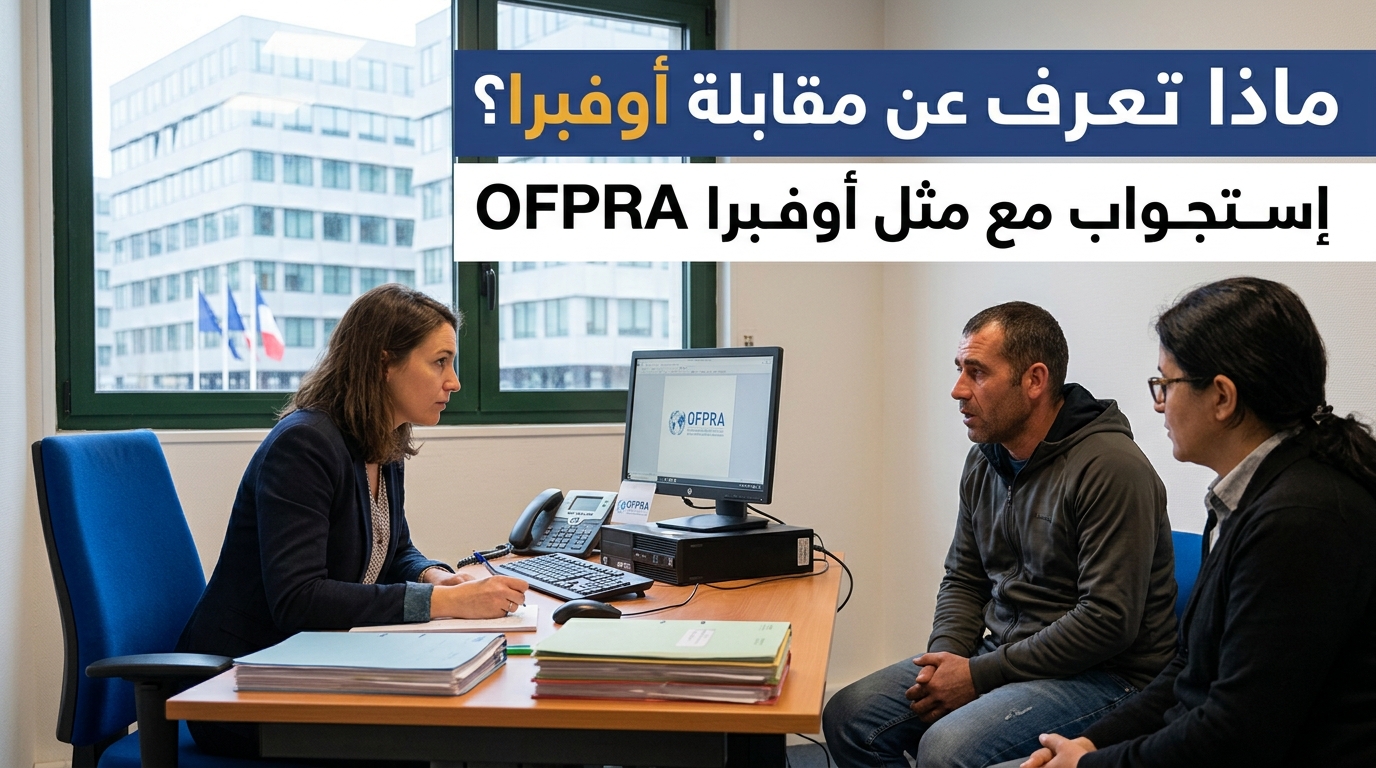
- Asylum seekers receive a summons to the OFPRA interview within 3 to 6 months of filing their application, sent at least 15 days in advance.
- The interview is pivotal, conducted by a protection officer to assess the credibility of the applicant's asylum claims and well-founded fear of persecution.
- Applicants have the right to be accompanied by a lawyer or an authorized NGO representative, as well as a free interpreter in their native language.
- OFPRA typically issues its decision within 1 to 3 months under standard procedures, or within 15 days under accelerated procedures.
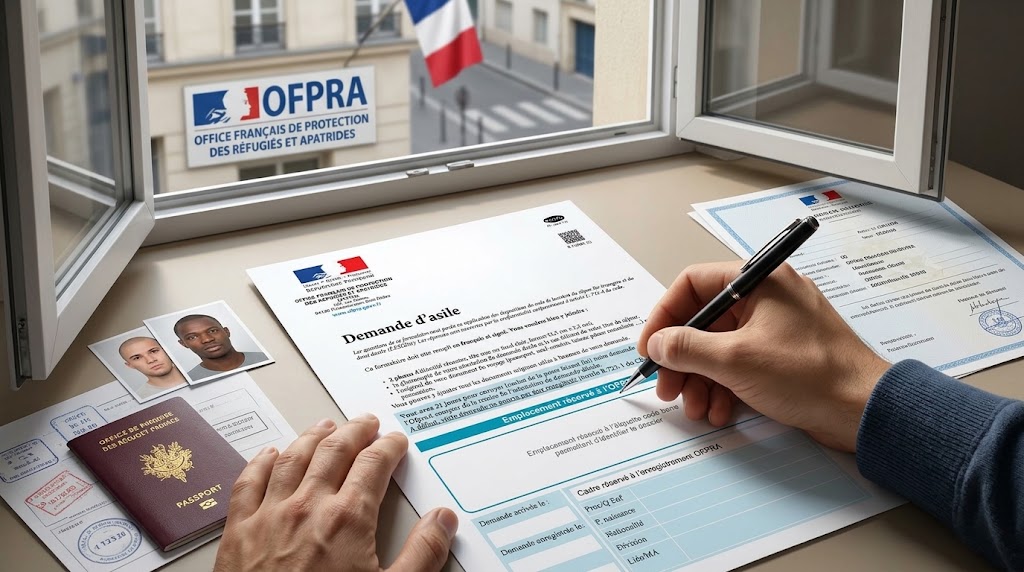
After completing the asylum application procedures, receiving the registration certificate from OFPRA, and waiting between 3 to 6 months, you will receive a convocation letter summoning you to attend a decisive interview with OFPRA.
01 – Summons to the Interview with the French Office for the Protection of Refugees and Stateless Persons (OFPRA):
You will receive a summons from the French Office for the Protection of Refugees and Stateless Persons (OFPRA) at least fifteen (15) days prior to the date of the interview.
* Important Notice: You will be notified of the convocation via your personal account on the OFPRA online portal: https://www.usager.ofpra.gouv.fr/ofpra/user/login?v=0
A notification letter is also sent by regular postal mail to the address you provided to OFPRA when completing your asylum application form.
In case of a change of address, OFPRA must be notified in a timely manner so that critical notices are not lost.
OFPRA may dispense with a personal interview in the following cases:
- If it is about to grant you refugee status without conducting an interview (which is very rare).
- In the event of an inability to attend the hearing due to health, serious, or emergency reasons; in this case, you must send justifications, such as a medical certificate, as soon as possible via registered mail with acknowledgment of receipt.
- If OFPRA has previously determined that your application is inadmissible or has initiated procedures to close and dismiss your file, in which case you will not be summoned to this interview.
- If you fail to attend the hearing without a legitimate reason, OFPRA is entitled to take a decision to reject or close your file without examining the merits of your application.
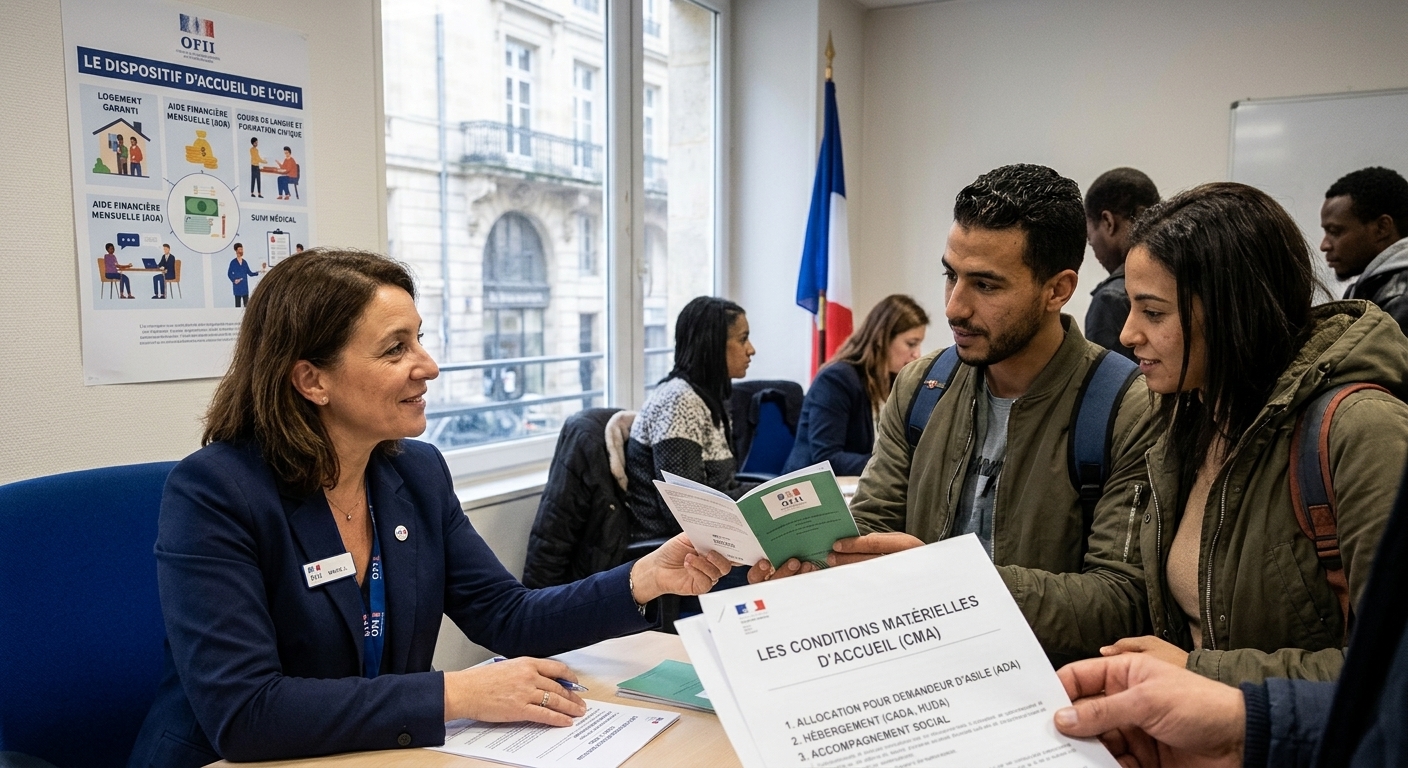
- If you are accommodated in an asylum seekers' reception center (CADA) or emergency accommodation for asylum seekers (HUDA), they must cover round-trip transportation expenses for the interview with OFPRA (as well as travel expenses to the National Court of Asylum (CNDA) in the event of a refusal by OFPRA).
- For individuals not accommodated in such structures, it is possible to request coverage from the French Office for Immigration and Integration (OFII); however, in most cases, the financial allowance for asylum seekers (ADA) is considered sufficient to cover such costs.
02 – The Importance of the Interview: The "Confidential Hearing"
The hearing is critically important for several reasons, most notably:
- The interview is conducted under the supervision of a protection officer tasked with examining your account and deciding whether to grant or refuse your application. Consequently, the interview is decisive, as all determinations are made based on it.
- It is essential to prepare thoroughly for the interview by reviewing your narrative, particularly dates, and recalling the sequence of events, with the assistance of an NGO or friends before attending OFPRA, in order to convince the protection officer that your life is in danger and that you genuinely require protection.
- The interview takes place at OFPRA's headquarters in Fontenay-sous-Bois, in the Paris suburbs. It may also take place in other cities when OFPRA decides to dispatch mobile missions in coordination with OFII, and occasionally, under exceptional circumstances, via videoconference.
Conduct and Structure of the Interview:
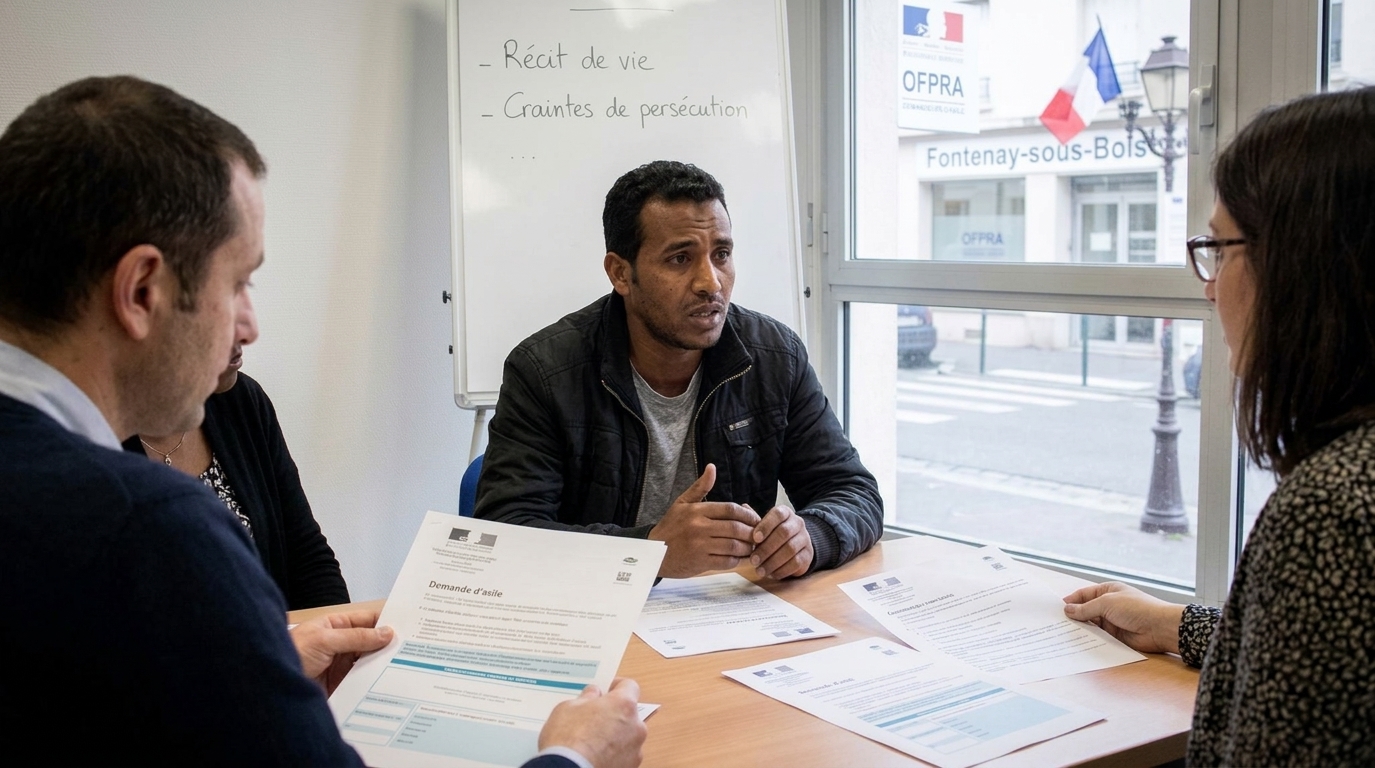
The hearing takes place on OFPRA's premises (or remotely via videoconference in exceptional cases) in your personal presence, alongside the following parties:
- The OFPRA Representative / Protection Officer:
The protection officer is responsible for examining the authenticity of your story and the credibility of the statements you provide during the interview. You may request an officer of your own gender (male or female) if your account involves sexual assault, for instance.
- A Lawyer or NGO Representative, Upon Your Request:
You have the right to be accompanied by a lawyer or a representative from qualified organizations during the interview. In 2018, 27 accredited organizations were authorized to accompany asylum seekers during OFPRA interviews.
If you choose to be accompanied by a lawyer or an NGO representative, you must inform OFPRA by mail or email, providing the full details of the person, at least seven (7) days before the interview (or four (4) days in the case of an accelerated procedure).
The accompanying person may take notes throughout the interview and provide observations following the conclusion of the hearing (regarding the account itself, procedural irregularities, comprehension difficulties, interpretation remarks, attitudes, or facts omitted by the protection officer).
- The Interpreter:
The interpreter translates into the language or dialect specified in your OFPRA application form. It is preferable to request an interpreter for your mother tongue (specifying your exact dialect) to avoid direct translation into a language you do not fully comprehend.
Interpretation services are free of charge, and you may request an interpreter of your own gender if your account involves sexual violence.
- Family Members:
You are usually heard without family members present. However, if OFPRA deems their presence necessary, it may request an additional hearing in the presence of family members.
* Note: The interview is audio-recorded unless technical impossibilities prevent it, of which you will be notified. You may request a copy of the recording. A written hearing report (transcript) is also prepared and cannot be altered; you will be notified of it alongside the final decision.
03 – Questions and Inquiries During the OFPRA Interview:
- During the interview, the protection officer will ask questions to obtain further details about your asylum story submitted in your initial application form. If you notice that no questions were asked about key points or events you deem critical, take the initiative to mention these facts and the reasons that forced you to flee your country.
- If you did not provide a passport or identity document, it will be necessary to establish your identity by providing precise information about your country of origin (the officer may question you about specific cities, villages, geographical locations, historical events, or prominent public figures). You are presumed to know these facts as a national of the declared country.
- In virtually every interview, the protection officer systematically asks the following question before concluding:
"What would happen to you if you returned to your country today?" or "What fears do you hold should you return to your country?"
In this case, you must clearly explain and establish to the investigator your specific fears and the anticipated reactions—whether from authorities, groups, or individuals—upon returning to your home country, even if you left it long ago.
- At the close of the hearing, the officer typically asks an open-ended question such as: "Do you have anything to add?" This allows you to provide further details regarding your account, supplement your data, or state anything you wish to add before the session concludes.
04 – The Decision: Acceptance or Refusal
OFPRA generally reaches a decision within the three months following the interview (between 1 and 3 months), though the duration may extend longer.
Under accelerated procedures, the decision timeframe is fifteen (15) days.
The officer verifies that your account is consistent with the country of origin information. The application is then evaluated to determine whether your situation meets the criteria for refugee status under the Geneva Convention, particularly Articles 1 and 2 (granting a 10-year residence permit), or qualifies for subsidiary protection under Article L. 712-1 of the Code on Entry and Residence of Foreigners and the Right of Asylum (Ceseda), which confers a residence permit valid for 4 years (previously 1 year).
- Note: If the decision is favorable, you can review the necessary post-grant procedures in our dedicated guide: Refugee Guide: You Have Been Granted Refugee Status, Where to Start?
If the decision is negative, OFPRA must issue a reasoned decision outlining the grounds for denying international protection.
Upon receiving a refusal, you have the right to appeal the decision. Here is a detailed guide on the appeal procedure:
Step-by-Step Appeal Against an OFPRA Rejection Before the National Court of Asylum (CNDA)
Comments (0)
You must log in to comment on articles.
Log in Sign upBe the first to comment on this article.