

US Air Traffic Gradually Recovers Following Three-Day Meltdown That Disrupted Thousands of Flights
US air travel began gradually returning to normal on Monday after a rare nationwide ground stop sparked three days of widespread chaos and disrupted thousands of flights across the country.

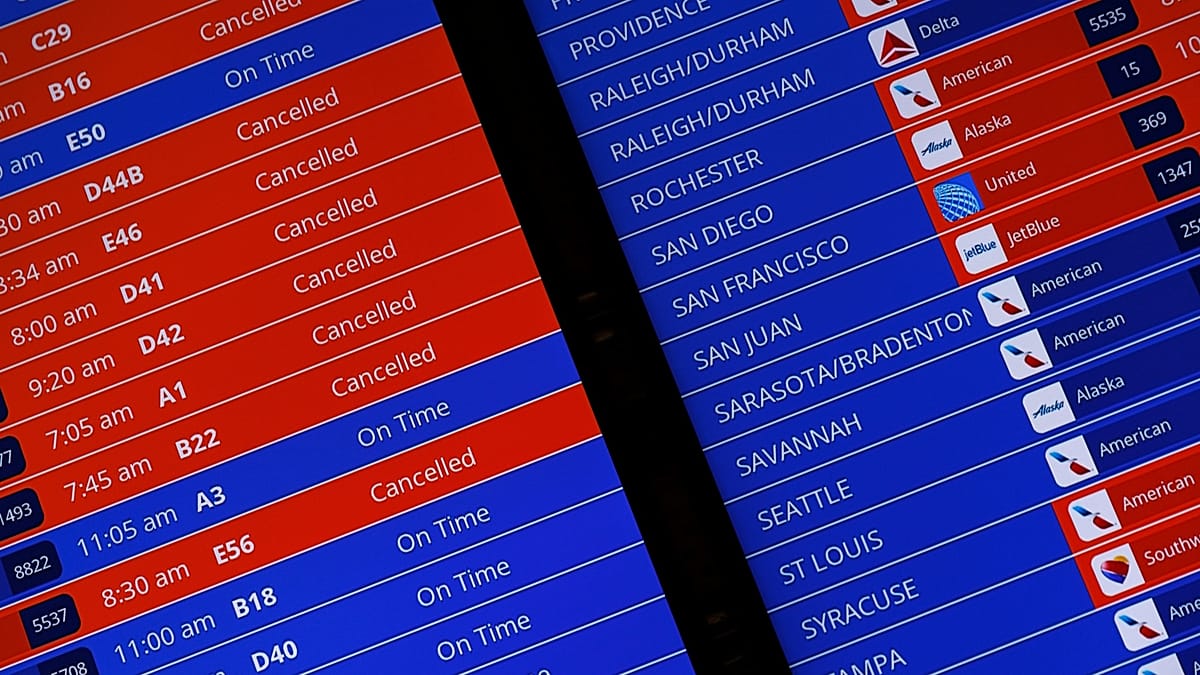
- A significant drop in flight cancellations on Monday to around 250, compared to more than 2,300 on Sunday.
- The massive disruption stemmed from a flawed update to air traffic control communication cables, marking only the second nationwide ground stop since September 11.
- The Trump administration called on Congress to allocate $50 billion to modernize the aging aviation system amid a sharp political dispute with Democrats.
Air traffic across the United States began gradually returning to its normal pace on Monday, following three consecutive days of widespread disruptions triggered by a rare and extraordinary nationwide ground stop issued by federal aviation authorities, which heavily affected the air transport network and travelers across airports, including passengers on international and European routes.
Gradual Relief After a Turbulent Weekend
Data from flight-tracking website FlightAware showed a notable improvement on Monday morning, with just over 250 flights within, into, or out of the United States canceled—a stark difference from Sunday, which saw more than 2,300 cancellations. Delays also affected approximately 700 scheduled flights on Monday, compared to more than 10,000 delayed the previous day.
The nationwide ground stop ordered on Friday afternoon marks only the second such instance in the history of congested US airspace since the terrorist attacks of September 11, 2001. Thousands of travelers, including families, tourists, and expatriates, endured grueling hours throughout the weekend, stranded in airport terminals amid exhaustion and prolonged waits for information or alternative flight bookings.
Political Feud Over the Causes of the Glitch
Authorities attributed the major paralysis to an unsuccessful maintenance and upgrade operation targeting communication cables within the air traffic control system. For his part, US President Donald Trump broke his silence to place the blame on his predecessor, Joe Biden, asserting that his administration left behind a chaotic and crumbling air traffic control system. Trump stated that "the Biden administration was a disaster for the Federal Aviation Administration (FAA), with enormous sums spent fruitlessly, rendering the system even more fragile."
Although FAA Administrator Bryan Bedford announced that air traffic would return to normal by the end of Sunday, Transportation Secretary Sean Duffy explained that a full recovery required additional time to reposition aircraft, cabin crews, and pilots following the chaos that began on Friday, indicating that operations would fully regularize over the course of Monday.
Aging Infrastructure and an Urgent Need for Funding
Transportation Secretary Sean Duffy dismissed calls for his resignation, emphasizing that he inherited a severely outdated air traffic control infrastructure and pointing to radar systems and equipment dating back to the 1960s. The secretary made an urgent appeal to Congress to allocate up to $50 billion (approximately €45 billion) to radically overhaul the American air traffic control network.
In response, these demands faced immediate criticism from Democrats, who countered that Congress, controlled by Trump's Republican Party over the past two years, could have passed this funding and averted the crisis that disrupted millions of travelers worldwide.
Source: Euronews (فرنسي)


Comments (0)
You must log in to comment on articles.
Log in Sign upBe the first to comment on this article.