

Israel: Gadi Eisenkot Ahead in Race to Form Government as Netanyahu Hints at 'Foreign Interference'
Centrist candidate Gadi Eisenkot has taken the lead in the race to form Israel's next government following Ra'am's endorsement and United Torah Judaism's abstention, while Benjamin Netanyahu raises allegations of foreign interference.

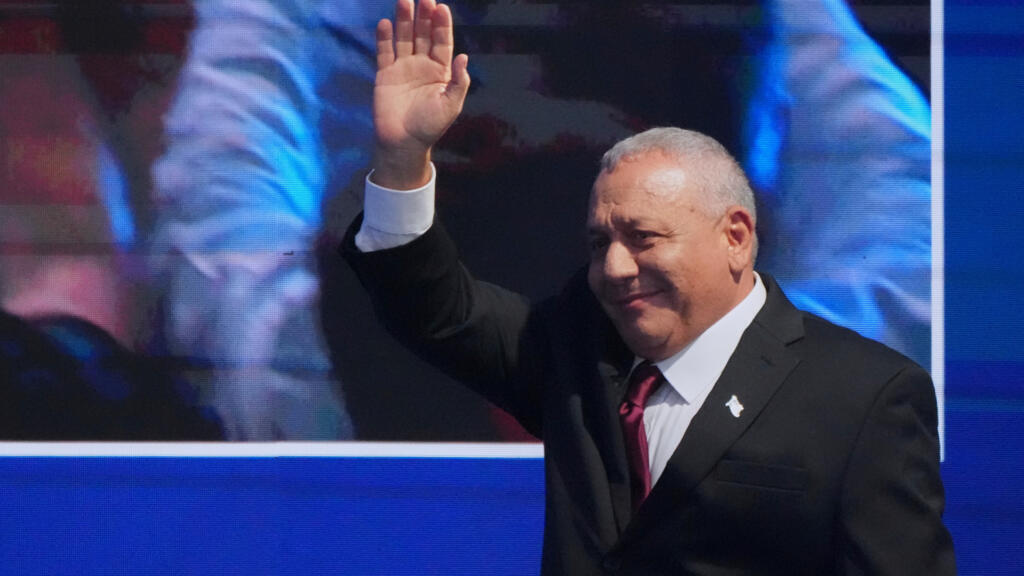
- Centrist Gadi Eisenkot leads the government race with backing from the United Arab List (Ra'am) and the ultra-Orthodox party's refusal to endorse Netanyahu.
- Support for Netanyahu drops to 46 recommendations compared to 56 for Eisenkot, out of the 61 seats needed for a majority.
- Netanyahu refuses to accept the results, alleging foreign funding for Arab parties, amid official rejections of fraud claims by the Central Elections Committee.
Intensive Consultations to Break Political Deadlock
Israeli President Isaac Herzog continued on Thursday, November 5, his rounds of consultations to determine the most suitable candidate to task with forming the next government, following last week's legislative elections which failed to produce a clear and absolute majority for either competing camp.
Current indicators point to rising prospects for centrist candidate Gadi Eisenkot to head the government, driven by two decisive factors: first, receiving direct and official support from the Arab Ra'am party; second, the announcement by the ultra-Orthodox United Torah Judaism (UTJ) party—a historic ally of Benjamin Netanyahu—to abstain from making any recommendation to the presidency.
The ultra-Orthodox party clarified to President Herzog that it decided not to align itself behind either Netanyahu or Eisenkot, setting a condition for cooperation with any incoming prime minister: a commitment to maintain the military draft exemption for its young religious adherents.
Battle for Seats and Coalition Calculations
Forming a government requires rallying at least 61 seats to secure a majority within the Knesset. Although outgoing Prime Minister Benjamin Netanyahu's camp won 53 seats in last week's vote compared to 48 seats for Eisenkot's bloc, UTJ's abstention caused Netanyahu's expected endorsements to drop to 46 seats, while recommendations in favor of Eisenkot rose to 56 votes with Ra'am's support.
Herzog continues to hear from representatives of the various parties and blocs, with a final decision on naming the candidate tasked with government formation due no later than Wednesday, November 11. The designated candidate will be granted a constitutional window of 28 days to assemble a coalition, extendable by an additional 14 days; failing that, the mandate will be transferred to another candidate, or the country will head toward new elections should the deadlock persist.
Interference Allegations and Backlash
For his part, Benjamin Netanyahu has voiced rejection of the outcomes and their implications, reiterating statements claiming "strong suspicions" of foreign interference that affected the course of the legislative elections. His camp went so far as to accuse Arab parties that secured notable representation of buying votes with funds from the State of Qatar—claims for which no evidence has been provided, leading observers and media figures to view them as groundwork for an attempted political coup against the results.
The Central Elections Committee responded by denying the presence of any widespread fraud that could cast doubt on the integrity of the democratic process. Although an official inquiry has been opened to examine the allegations, the targeted Arab Israeli politicians described these moves as a campaign of political persecution aimed at undermining their electoral gains.
Source: RFI
Comments (0)
You must log in to comment on articles.
Log in Sign upBe the first to comment on this article.