

Mélenchon and the Constitutional Council: A Silent Battle Shaping the 2027 Presidential Election
A quiet legal and constitutional conflict is brewing between the Constitutional Council and France Unbowed (LFI), threatening to escalate if radical left leader Jean-Luc Mélenchon secures the presidency in 2027.

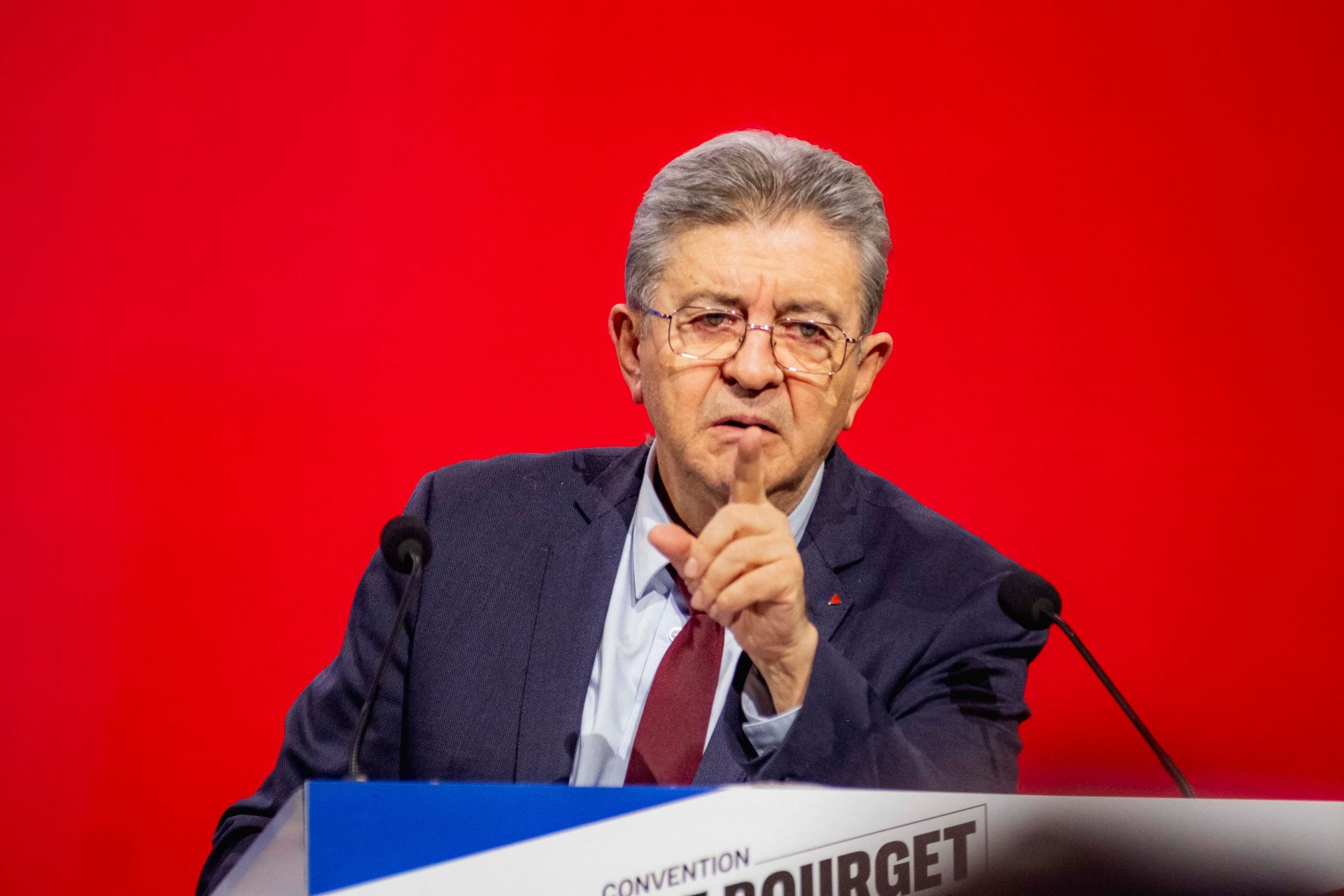
- France Unbowed's endeavor to invoke Article 11 of the Constitution to convene a constituent assembly clashes with legal objections and the guardians of the constitution.
- A growing debate over popular legitimacy versus institutional constraints is intensifying, amid comparisons between the radical left's tactics and the proposals of the far right.
- Major tax and social measures championed by Mélenchon risk facing strict scrutiny from the Constitutional Council should he take power.
The French political arena is heading toward an intense legal and constitutional battle, taking place away from media spotlights, between the Constitutional Council and the "France Unbowed" (LFI) party. This clash is poised to erupt should radical left leader Jean-Luc Mélenchon win the upcoming presidential election in 2027. This underlying tension comes at a time when the open standoff between the President of the Constitutional Council, Richard Ferrand, and the far-right "National Rally" party has captured recent public and media focus.
Article 11 at the Heart of the Institutional Dispute
The roots of the crisis trace back to Richard Ferrand's assertion that any constitutional amendment cannot be passed via direct popular referendum without prior approval from parliament under Article 89 of the Constitution, thereby ruling out reliance on Article 11, which was previously utilized by General Charles de Gaulle in 1962. Although France Unbowed has refrained from directly engaging in this particular spat, its "Shared Future" platform relies primarily on Article 11 to call for a constituent assembly that would lay the groundwork for a Sixth Republic.
In statements to the newspaper "Libération," MP Clémence Guetté asserted that constitutional scholars acknowledge a legal pathway for this mechanism, pointing out that proceeding through Article 89 would grant the conservative-majority Senate the power to obstruct this sweeping transformation. Mélenchon's allies justify their position by arguing that the 1958 Constitution contains no provision defining a mechanism for drafting a completely new foundational text, arguing that existing institutions lack the democratic legitimacy to veto the will for change.
Controversy Over Legitimacy and Constitutional Review
This approach has stirred widespread skepticism among constitutional law scholars. Denis de Béchillon, professor emeritus at the University of Pau, argues that there is no legal distinction between amending the constitution and convening a constituent assembly; altering the essence of the text remains an amendment that necessitates following established procedures. In contrast, left-wing figures, including Jérôme Gleizes and MP Clémence Guetté, defend the necessity of establishing a balance of power anchored in a popular majority to enforce the constituent process. Rejecting comparisons with the far right, Guetté stressed that her party's project aims to return power to the people, whereas the National Rally's agenda seeks to target foreigners.
Mistrust of the Constitutional Council is not new for Mélenchon, who has frequently criticized what he considers the confiscation of popular sovereignty by nine appointed members. He often cites past rulings, such as the invalidation of the 3% tax on distributed dividends in 2017, and the Council's validation of the controversial pension reform law in 2023 despite extensive public protests.
Socioeconomic Reforms Under Scrutiny
The dispute carries a highly sensitive socioeconomic dimension, as France Unbowed's economic proposals—such as the "Zucman tax," a 12-million-euro inheritance cap, and more progressive income tax brackets—are expected to face rigorous challenges before the Constitutional Council. Such objections would likely rest on protecting individual property rights and barring confiscatory taxation under the Declaration of the Rights of Man and of the Citizen.
Pierre Crétois, who contributed to drafting the party's institutional program, argues that the current constitution protects economic freedoms at the expense of social justice, thereby warranting a new text that realigns priorities in favor of human dignity. In a related vein, MP Pierre-Yves Cadalen advocates curbing the constitutional judges' authority over fiscal and economic matters, limiting their mandate to safeguarding fundamental rights, while MP Aurélien Taché calls for a Constitutional Council model that embraces a comprehensive humanist approach.
A History of Friction with the Constitutional Judges
This friction echoes historical clashes between left-wing forces and the Constitutional Council, most notably in 1982 under the Socialist government, when judges challenged provisions of the nationalization acts before relations eventually stabilized. Nevertheless, Mélenchon has occasionally voiced rare praise, such as welcoming the Council's July 2018 ruling that affirmed the constitutional principle of "fraternity" and abolished the so-called "offense of solidarity" that had been used to prosecute activists who assisted migrants and asylum seekers, underscoring the delicate nature of issues related to fundamental rights and their impact on French society.
Source: L’Express


Comments (0)
You must log in to comment on articles.
Log in Sign upBe the first to comment on this article.