

Summary of the Latest Immigration and Asylum News in France Over the Past Few Days
A roundup of the latest immigration and asylum developments in France, covering deportation orders, regulatory amendments, unaccompanied minors, and the status of Syrian refugees.

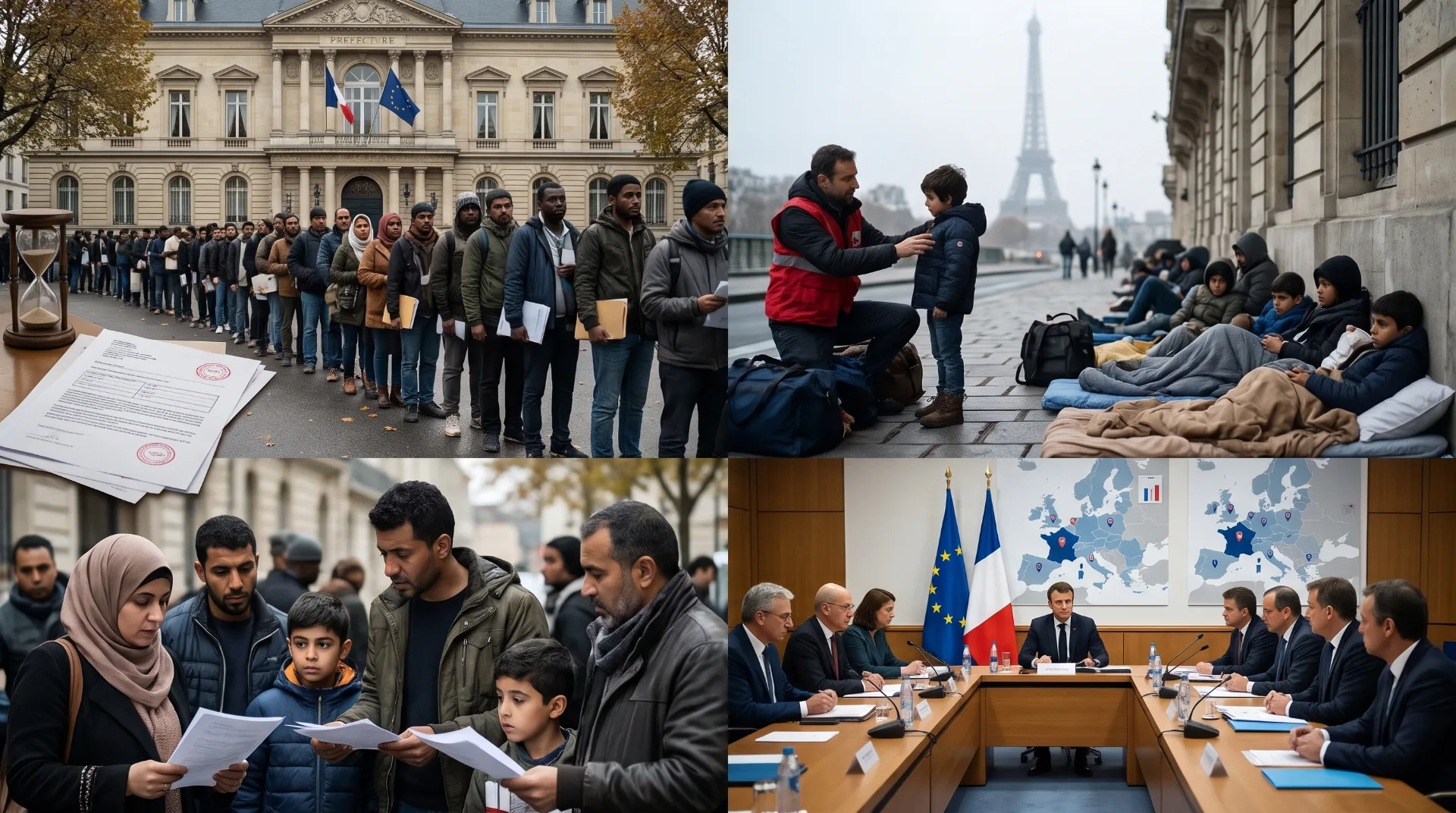
- France topped European Union nations by issuing more than 67,000 deportation orders (OQTF) to irregular migrants during the first half of 2026, with Maghreb nationals accounting for over a third.
- A new executive decree took effect, enforcing stricter deadlines and requirements on processing residence permits, asylum requests, and the status adjustment of foreign workers in France.
- Escalating human rights warnings and Council of Europe calls urge better protection for hundreds of unaccompanied minor migrants left homeless on French streets due to bureaucratic hurdles.
- French authorities confirmed there are no plans to deport Syrian refugees, amid ongoing domestic political debate over immigration policies.
The recent days of November 2026 witnessed numerous notable developments and reports concerning immigration, asylum, and expatriate affairs in France, reflecting marked procedural tightening alongside human rights criticism. Here are the main highlights:
01 — France Leads Europe with 67,000 Deportation Orders:
Official data released in early November 2026 revealed that French authorities issued over 67,000 Obligation to Leave French Territory orders (OQTF) during the first half of the current year.
This figure placed France at the forefront of European Union member states in terms of the number of expulsion orders issued against irregular migrants who are citizens of non-EU countries.
According to official figures released by the European statistical office (Eurostat), France issued a total of 67,300 departure orders (OQTF) to non-EU citizens between January and June 2026.
Maghreb nationals topped the list of those targeted, accounting for more than a third of the total (24,050 individuals). Despite the scale of this figure, which places France at the top of deporting countries, experts clarify that these orders do not imply immediate, actual deportation.
Administrative statistics indicate that France enforces only about 11% of these decisions due to the complexity of removal procedures and the difficulty of coordination with countries of origin.
All migrants subject to these orders are granted full legal rights to file administrative appeals and petitions before French administrative courts to suspend their enforcement.
— Ranking by Nationality:
1 — Algeria: 13,745 (one in five)
2 — Tunisia: 5,480
3 — Morocco: 4,825
4 — Bangladesh: 2,470
5 — Turkey: 2,340
6 — Ivory Coast: 2,290
7 — Guinea: 1,935
8 — Georgia: 1,900
9 — Democratic Republic of the Congo: 1,860
10 — Afghanistan: 1,655
*— Source: Eurostat
02 — Immigration Law Amendments and the October 2026 Decree:
Legal affairs and diaspora experts reviewed the details of the decree issued last October, which entered into force in November.
This decree introduced amendments impacting key procedural provisions concerning residence permits, asylum application conditions, and administrative regularisation mechanisms for undocumented individuals (sans-papiers), imposing stricter deadlines and documentation requirements.
Decree No. 2026-1001 came into effect on 30 October 2026, amending core articles of the Code on Entry and Residence of Foreigners and the Right of Asylum (CESEDA) in alignment with European directives.
Key amendments reduced the deadline for prefectures (Préfectures) to respond to residence permit applications from four months to just 90 days, with administrative silence after this period deemed an implicit rejection.
Regarding foreign workers, the restriction period preventing an employer change was shortened from 12 months to 6 months, while granting them an additional 6-month period to search for a new job should their residency be withdrawn or its renewal denied.
In terms of protection, the regulations enacted heightened health screenings and stricter vetting at border administrative detention centers, alongside stringent rules for updating fingerprint databases (Eurodac) for asylum requests.
This tightening coincides with a heated parliamentary debate over a new legislative proposal introduced in November to regularise the status of undocumented workers (Sans-papiers) who can prove employment for at least six months.
03 — Ongoing Domestic Political Debate on Immigration:
Meanwhile, political debate continues in France over the immigration issue. Dominique de Villepin criticised right-wing statements made by Édouard Philippe.
Former French Prime Minister Dominique de Villepin attacked recent remarks by Édouard Philippe linking recent incidents of theft and looting to immigration issues, describing such a connection as a "moral and political failure" and an attempt to chase far-right rhetoric, warning that such rhetoric fuels hate speech and persecution against foreigners.
*— Source: The French government legal portal Légifrance.
*— The Crisis of Unaccompanied Migrant Minors:
Media and human rights reports on 7 November highlighted the worsening crisis of hundreds of migrant children and minors on French streets.
Hundreds of unaccompanied migrant minors face severe homelessness on French streets due to administrative complications in age assessments and the refusal to recognise their legal status.
Protracted waiting times during judicial appeals leave them deprived of shelter, social care, and essential services, exposing them to risks of exploitation, violence, and homelessness.
In this context, the Council of Europe formally called on the French government to provide better protection for children and migrants.
The Council's report noted severe administrative and regulatory shortcomings affecting the most vulnerable groups, particularly regarding access to safe housing and compensation.
— For more details, you can watch the field report by Al Araby Television on YouTube.
*— Source: Al Araby TV.
04 — France Confirms No Deportation of Syrian Refugees, Holds Bilateral Talks:
The French Ministries of Foreign Affairs and the Interior confirmed that the option of repatriating or deporting Syrian refugees residing in France is not up for discussion, given their limited overall numbers.
This coincided with official talks held in Paris between the Syrian Expatriates and Refugee Affairs Directorate and the French Crisis and Support Centre (CDCS) to discuss humanitarian aid and development projects inside Syria.
For more details, you can watch the Syria TV report.
*— Source: Al Jazeera Net.
Source: فرنسا نيوز www.frncnews.com



Comments (0)
You must log in to comment on articles.
Log in Sign upBe the first to comment on this article.