

Study: Climate Change Tops Security Threats for French Residents, Ahead of Terrorism and Wars
A study by the think tank Destin Commun reveals that climate disruption and extreme weather events have become the leading external security concern for people in France, surpassing terrorism, economic crises, and armed conflict.

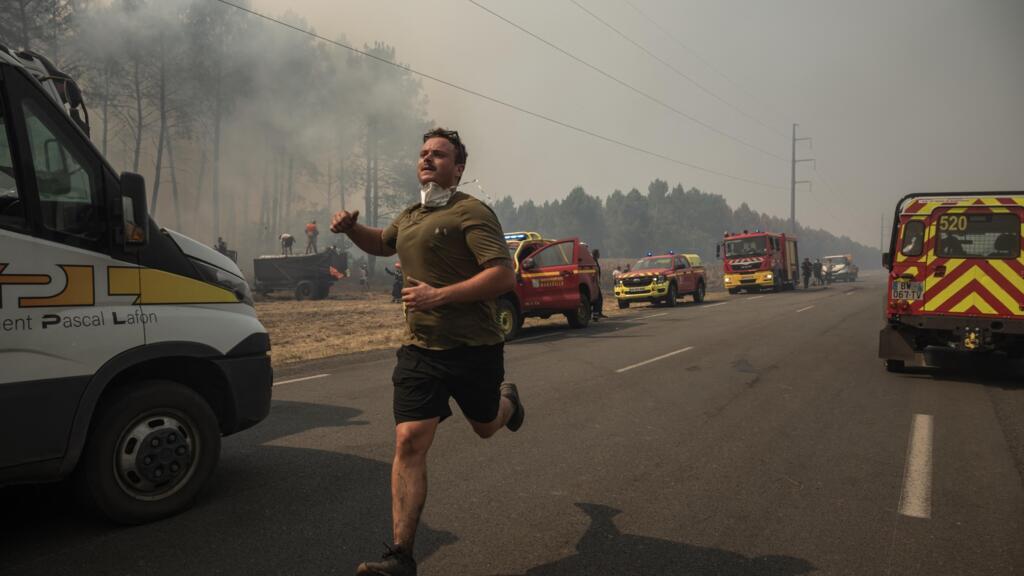
- 40% of survey respondents consider worsening global warming and extreme weather phenomena to be the greatest security threat facing France over the next five years.
- Heatwaves and forest fires in the summer of 2026 shifted environmental hazards from a distant future scenario into a tangible everyday reality, driving up public anxiety.
- A partisan and generational divide marks threat perceptions, with climate topping the concerns of left-wing voters and youth, while the right prioritizes counter-terrorism.
Amid international conflicts, wars, and consecutive economic crises, France is witnessing a notable shift in public concerns. A study conducted by the think tank "Destin Commun" revealed that climate disruption and its fallout have become the most alarming external threat for French citizens and residents, outpacing traditional security and economic risks.
Climate Outranks Terrorism and Armed Conflicts
The report was based on an opinion poll of 4,000 respondents and six focus groups conducted last August. When asked about the most dangerous external threats to France's security over the next five years, 40% placed "the worsening of global warming and extreme weather events" in first place, followed by the threat of religious or identity-based terrorism at 38%, global economic crises at 35%, and the risk of an armed conflict erupting in Europe at 34%.
Although concern over the potential expansion of war in Europe remains widespread—largely driven by the war in Ukraine—with 75% expressing apprehension (including 30% who feel deeply concerned), this fear has receded somewhat in comparison to developments in the Middle East, as well as the direct domestic impact of climate events inside France, according to Stewart Chau, Deputy Managing Director of Destin Commun and co-author of the study.
From a Future Scenario to a Tangible Daily Reality
Experts explained that the consequences of the climate crisis are no longer abstract, long-term projections of what might happen decades from now; they have become an imminent, tangible danger affecting residents' daily lives. The summer of 2026 brought severe heatwaves, exceptional drought, and extensive forest fires, leading 67% of respondents to report that their environmental anxiety had increased compared to before the summer.
In terms of personal safety, 23% of participants reported being particularly concerned about the dangers of forest fires, with 4% stating they had faced a direct threat from wildfires, and 16% knowing someone close who was affected by these disasters. Researchers emphasize that the proximity of natural hazards to residential neighborhoods has transformed climate change into a vital, shared security matter across most segments of society.
Political and Generational Divides Ahead of the 2027 Election
The study showed that while concern over climate change exists across the political spectrum, priority rankings differ sharply between the left and the right. While climate is the top concern for supporters of La France Insoumise (LFI) at 55% and supporters of the Greens at 78%, right-wing supporters—represented by The Republicans (LR) and the National Rally (RN)—place religious terrorism at the top of their worries (50% and 57%, respectively), with climate dropping to fourth place.
A significant generational gap also emerged, with 49% of young people aged 18 to 24 identifying climate as the greatest threat. The study notes that these findings will feature prominently in the run-up to the presidential election scheduled for May 2027, as candidates will be compelled to integrate environmental issues into broader platforms on purchasing power, healthcare, and the economy.
Looking Toward International Cooperation and the European Union
A significant 87% of participants believe that tackling climate challenges requires cross-border cooperation, and 33% affirmed that France is more effective when acting collectively with other nations rather than alone in this arena. While 66% recognize that poorer countries pollute the least yet suffer the most from climate consequences, 37% supported providing French development aid to them—even though 58% believe France no longer possesses the financial resources to fund international solidarity, particularly as foreign aid dropped from €6.7 billion in the 2024 budget to €3.6 billion in the 2026 budget.
The findings conclude that the public views the European Union as an anchor of economic, diplomatic, and environmental sovereignty, with more than half of respondents favoring greater European autonomy to confront global challenges. This positions the environmental dimension as a crucial lever for political forces preparing for upcoming electoral milestones.
Source: France 24
Comments (0)
You must log in to comment on articles.
Log in Sign upBe the first to comment on this article.