

Warnings of Foreign Infiltration of Scientific Research Extend to France: How Spy Networks Target Universities and Institutes
Two prominent academic security and counterintelligence experts have revealed alarming developments across Western universities and research centers, warning that illicit attempts to acquire research findings and knowledge now directly target France and European nations alongside the United States.

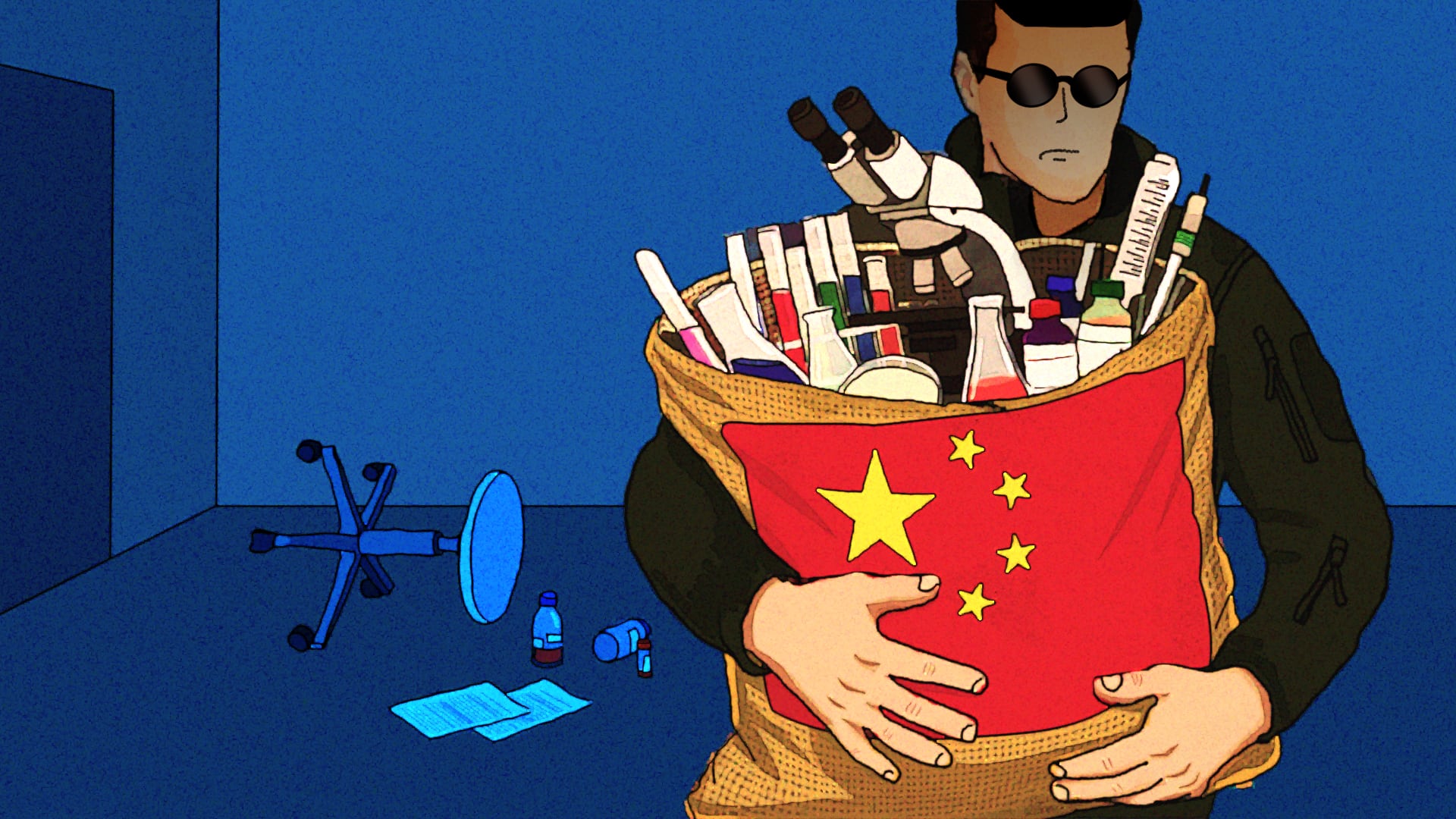
- Two former experts from the FBI and the US National Institutes of Health uncover networks infiltrating research and conducting unauthorized data transfers.
- France and European countries face similar challenges, with specific praise directed at the French system for the Protection of the Scientific and Technical Potential of the Nation (PPST).
- Foreign recruitment expands into non-traditional fields such as business schools, amid calls for regulations that protect foreign researchers and students without restricting their freedoms.
Two prominent experts in academic security and counterintelligence have revealed dangerous shifts taking place across university campuses and research centers in Western countries, warning that illicit attempts to acquire research findings and knowledge are no longer confined to the United States, but are now directly targeting France and European nations.
The details of these warnings stem from a study and field research led by Tam Dao, a former academic and former FBI agent, and Michael Shannon, a former US military intelligence officer and former oversight official at the National Institutes of Health (NIH), conducted through the Baker Institute for Public Policy at Rice University in Houston, and funded by the National Science Foundation (NSF) via a survey encompassing approximately 1,600 professors and researchers.
Infiltration Extends Beyond Exact Sciences to Business Schools
The two experts explained that efforts toward technological dominance and transfer are spearheaded by countries classified as strategic competitors, primarily China, alongside Russia, which relies on similar programs such as the "Megagrants" launched in 2010. While attention is typically focused on microchips, semiconductors, artificial intelligence, quantum physics, and biotechnology, talent acquisition networks have expanded into unexpected sectors.
Tam Dao noted that recruitment contracts targeting scientific and academic talent have reached business schools (Écoles de commerce) and even linguistics departments, as part of an intelligence strategy based on "assembling puzzle pieces." Under this approach, an apparently simple, non-classified piece of information can acquire critical importance when combined with other data, or by recruiting early-career researchers with the aim of leveraging them later once they attain sensitive positions.
France and Europe: Growing Vigilance and Protection for Researchers
Regarding the European and French landscape, Michael Shannon affirmed that these risks are acutely present, noting that what is termed "research security" in Washington is known in Europe and France as "responsible international cooperation." Shannon praised the French model, specifically the system for the Protection of the Scientific and Technical Potential of the Nation (PPST), which conducts rigorous, case-by-case risk assessments of laboratories while maintaining the importance of international cooperation based on transparency and reciprocity.
This heightened focus comes at a time when international experts are working to organize a global forum in Dubai next December to establish common standards and unified concepts regarding secure scientific cooperation, thereby preventing publicly funded research from being exploited by foreign entities without official disclosure.
Challenges of Artificial Intelligence and the Academic Community
The report addressed the challenges posed by artificial intelligence, which is no longer merely a target of espionage, but a rapid tool enabling the duplication of sensitive databases in seconds, rendering traditional protective measures based solely on physical presence insufficient.
The two experts stressed the necessity of avoiding panic and refraining from discrimination or indiscriminately targeting scientists and students of foreign origin—a mistake that marred the previous "China Initiative" in the United States before its cancellation in 2022. They concluded that the solution lies in raising awareness across university circles, including international researchers and scientific diasporas, regarding disclosure rules and conflict-of-interest avoidance, thereby simultaneously preserving academic openness and safeguarding the integrity of innovation.
Source: L’Express
Comments (0)
You must log in to comment on articles.
Log in Sign upBe the first to comment on this article.