

Social Anger and Unprecedented Rise in Poverty in France: Political Debate over Wages and Protests

- The charity 'Restos du Cœur' sounds the alarm after assisting 1.4 million people and distributing 186 million meals in France.
- Widespread debate over the 1.6% increase in the minimum wage (Smic), amid trade union calls to take to the streets.
- Accusations from the right of exploiting popular anger, as Emmanuel Macron's popularity plunges to 14% according to the latest polls.
France is experiencing escalating social and political tensions under stifling living pressures endured by millions of residents and citizens, amid sharp polarization among political forces over how to address purchasing power and the waves of protests sweeping the country.
Cost of Living Crisis and Unprecedented Poverty Levels
Jean-Michel Richard, president of the charity "Restos du Cœur", sounded the alarm over deteriorating living conditions, stressing that "poverty has reached levels unseen in decades." Richard revealed that the association received 1.4 million people last year and distributed 186 million meals, compared to 161 million meals the previous year, warning that charitable capacities are nearing their limits.
The charity's president called for "structural solutions" to address the consecutive crises since 2023, proposing a specific national strategy aimed at lifting more than one million people out of poverty by 2030, alongside establishing a public policy guaranteeing universal access to food and making the fight against child and family poverty a top priority.
The Battle Over Minimum Wage and Cost of Living
Regarding purchasing power and wages—the primary concern for employees and workers in France—Green Party MP Sandrine Rousseau criticized the planned 1.6% increase in the minimum wage (Smic), deeming it insufficient to counter inflation compared to measures adopted by neighboring countries such as Spain and Germany. She demanded an increase ranging between 100 and 150 euros, confirming her participation in upcoming civil service demonstrations because "people can no longer make ends meet."
Conversely, Minister of Labor and Public Accounts David Amiel explained that measures to revalue low wages would cost public finances more than one billion euros due to their direct impacts on civil service expenditures and related financial allocations.
Debate Over Protests and Exploitation of the Street
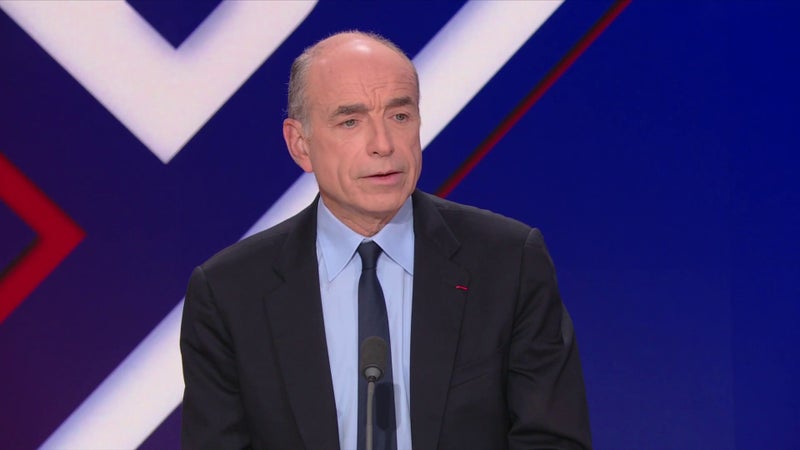
Politically, Jean-François Copé, mayor of Meaux and a leader in "The Republicans" party, launched an attack on the social movement, arguing that "the French are being exploited by the far-left," led by Jean-Luc Mélenchon. Copé called for an end to demonstrations, calling them "pointless at the end of a presidential term when there is no bill submitted for withdrawal," and emphasizing that expression must occur through the ballot box.
For his part, "La France Insoumise" MP Éric Coquerel responded by accusing authorities of choosing to "ignore the movement on the ground and avoid shedding light on it," warning the government against banking on the protests fading away, and pointing out that government responses to the finance bill fall short of public demands.
Record Low in Macron's Popularity and Anticipation of the 2027 Election
This tense climate coincides with a sharp decline in the executive's popularity; an Ipsos-BVA poll showed that only 14% of French people approve of President Emmanuel Macron's performance, marking a historic low. For his part, Senator Yannick Jadot declared that France is living in the "twilight of Macronism" in the face of public anger that is accumulating day by day, while former President François Hollande described the 2027 presidential election as "the most important of his life" amid conflicts and the rise of populist forces.
Political attention is turning toward the presidential race; an Elabe poll showed Marine Le Pen and Jean-Luc Mélenchon leading voting intentions, while divisions deepen within the right and center camps, as former Prime Minister Édouard Philippe rejected Senate President Gérard Larcher's proposal to hold primaries to select a unified candidate, while Sandrine Rousseau urged her party to support Mélenchon to avoid splitting the left-wing vote.
Source: BFM TV

Comments (0)
You must log in to comment on articles.
Log in Sign upBe the first to comment on this article.