

According to Kaja Kallas, the EU Remains "Traumatised" by Brexit
EU foreign policy chief Kaja Kallas stated that the European Union remains "traumatised" by Brexit, urging the UK to focus on practical defence cooperation rather than reopening membership talks.

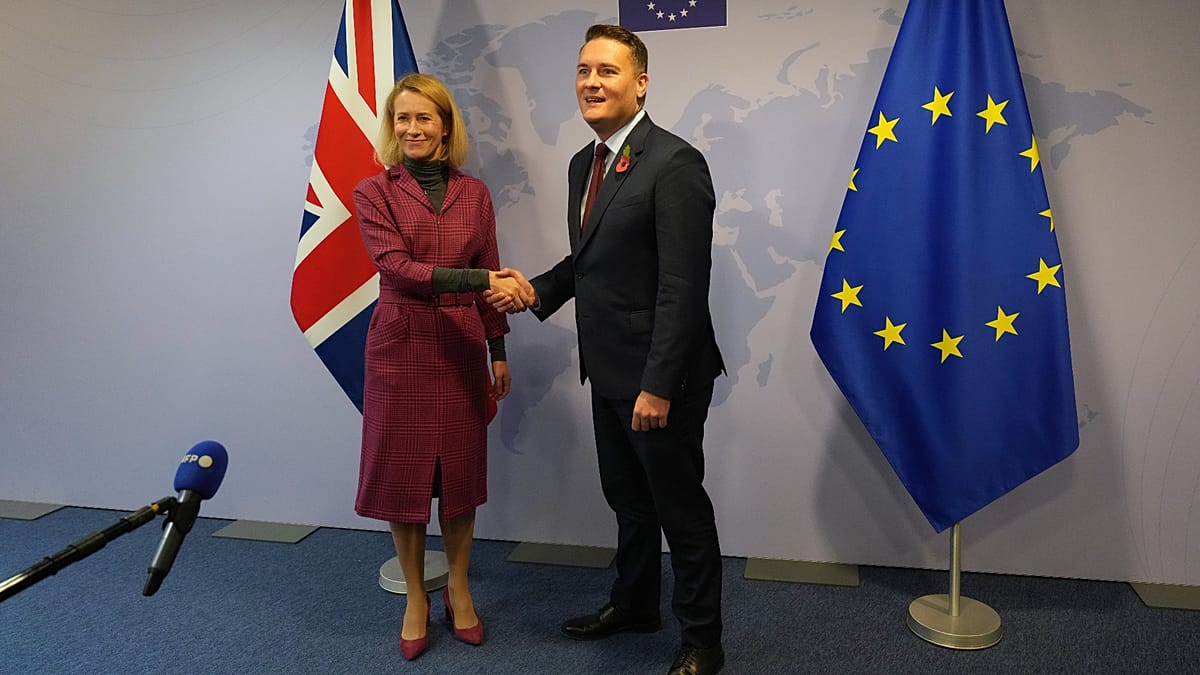
- EU foreign policy chief Kaja Kallas said Brussels remains "traumatised" by Brexit, urging a step-by-step approach to cooperation.
- The UK and EU are preparing for a summit on 20 November to bolster ties, particularly in defence and security.
- UK Defence Secretary Wes Streeting warned the EU against counterproductive protectionism in its defence industrial plans.
The European Union and the United Kingdom are meeting for a summit on 20 November, and both sides agree they need to strengthen their cooperation. But differences remain on how to achieve it.
In the short term, the United Kingdom should prioritise participating in existing EU defence frameworks rather than discussions about rejoining the bloc, EU foreign policy chief Kaja Kallas said on Monday.
Kallas was speaking ahead of a meeting with British Defence Secretary Wes Streeting, as both sides seek to strengthen cooperation before the EU-UK summit on 20 November. Streeting also held talks with European Commissioner for Defence Andrius Kubilius. Streeting is scheduled to meet German Defence Minister Boris Pistorius in Berlin later in the day.
Kallas indicated that some individuals within the EU remain "traumatised" by the difficult and often bitter negotiations that followed the UK's decision to leave the bloc.
She argued that relations must develop gradually, with both sides prioritising practical areas of cooperation before considering more ambitious steps.
"It depends on British citizens and a negotiated agreement, and there are many people in Brussels traumatised by Brexit," she said.
"These negotiations will be difficult, and we are not there yet," she added.
"What seems important to me is that we want a deeper relationship because you are very close, and we are stronger together, but let's move forward step by step," Kallas said.
The UK remains committed to exploring closer defence cooperation with the bloc, Streeting said, despite its decision last year not to take part in the EU's €150 billion SAFE (Security Action for Europe) defence loan programme.
London opted against joining the scheme after failing to reach an agreement with Brussels over an entry fee estimated at between €4 billion and €6 billion, which the British government said did not represent good value for money, British sources stated at the time.
The summit has drawn particular attention since new British Prime Minister Andy Burnham pledged to rebuild relations with the EU, notably through increased cooperation in trade, education, energy, and defence.
Burnham has also refused to rule out negotiations regarding a potential return of the UK as a full member of the EU.
However, even though Brussels looks favourably upon a rapprochement between the UK and the EU and might eventually agree to initiate talks on a British return, there is a strong consensus that reopening accession negotiations would be lengthy and politically divisive.
This is especially the case given the divisions within British society surrounding Brexit, as well as the taxing and burdensome nature of that experience for Europeans.
Streeting cautioned against getting ahead of the debate regarding a potential return of the UK to the EU. He nevertheless praised what he described as Burnham's "courageous" decision to reopen the discussion, given the political sensitivities surrounding the issue.
He welcomed the Prime Minister's decision to hold a "courageous conversation" with the European Commission, member states, and the British public.
"There is no doubt that leaving the EU hit our economy and that we are not as strong as we could have been," Streeting added.
Defence Cooperation and Ukraine
Today's discussions focused on Russia's ongoing aggression in Europe, including hybrid attacks, and Europe's growing responsibility regarding military support for Ukraine.
Both sides also addressed the future of the European defence technological and industrial base, with Streeting stating that the continent must significantly increase its industrial capabilities.
However, he warned against the EU adopting a protectionist approach that could ultimately undermine its own objectives.
His remarks were partly directed at the bloc's proposed "Made in Europe" industrial initiative, which aims to prioritise European manufacturers in key sectors, including defence.
The UK currently stands outside this initiative, as it is no longer part of the EU single market.
"We have to be careful" that the Made in Europe campaign "does not turn into counterproductive protectionism," Streeting said.
Also Worth Reading
Former US Ambassador to NATO: Trump Fears Midterm Election Defeat
NATO Commander Unveils Strategy to Render Any Attack on Alliance Futile
According to Kaja Kallas, the EU Remains "Traumatised" by Brexit
International News
Source: Euronews (فرنسي)

Comments (0)
You must log in to comment on articles.
Log in Sign upBe the first to comment on this article.