

Headscarf Controversy in French Schools: Divisions Within 'La France Insoumise' as Mélenchon Upholds 2004 Law
France’s left-wing party 'La France Insoumise' faces deep internal fractures over the 2004 law banning religious symbols in schools, with party leader Jean-Luc Mélenchon resisting mounting pressure from grassroots activists to repeal the ban.

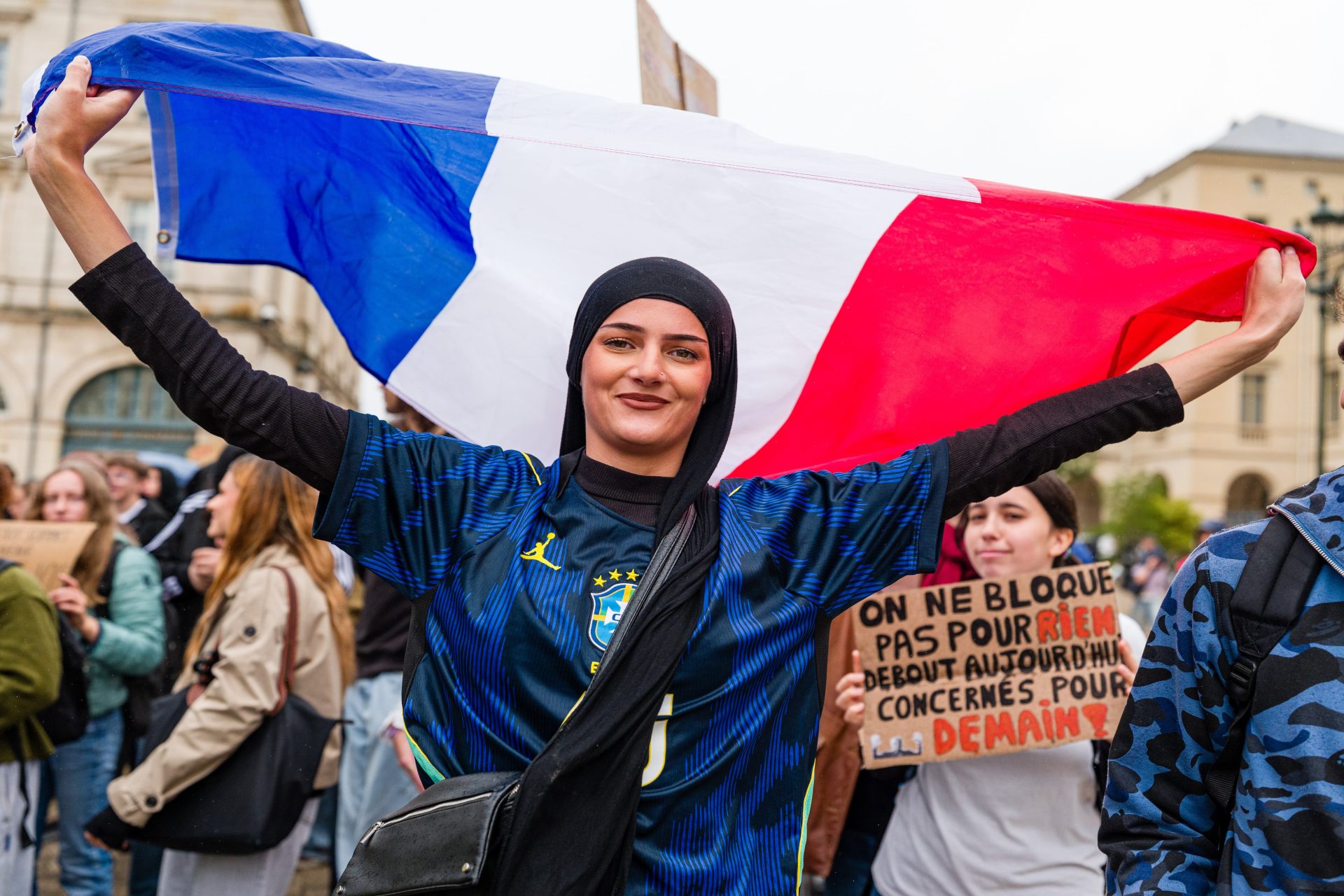
- Escalating pressure and demands from youth bases and activists within 'La France Insoumise' to repeal the law banning religious symbols in schools.
- Jean-Luc Mélenchon and party leadership refuse to include the repeal of the 2004 law in the official platform, deeming reopening the issue a political mistake.
- A growing internal division between lawmakers who view the law as discriminatory and fueling 'Islamophobia', and others committed to secularism and the party line.
Behind the scenes, the party 'La France Insoumise' (LFI) is experiencing an ideological and political conflict surrounding the law of March 15, 2004, which prohibits the wearing of conspicuous religious symbols—chiefly the Islamic headscarf—in French public schools. While a broad segment of the party's youth base and activists view the law as an infringement on the freedoms of young Muslim women and a catalyst for an anti-Muslim climate, the historic leadership headed by Jean-Luc Mélenchon insists on maintaining the text to avoid electoral suicide.
A Direct Confrontation with Alternative Media
This political embarrassment was clearly highlighted during an interview between Jean-Luc Mélenchon and the content creator 'TataDrapi', who commands a wide following and describes the law as 'a major restriction of freedoms toward Muslim women imposed under the guise of secularism.' Mélenchon pushed back by holding firm to his traditional stance, underscoring his enduring concern over 'burdening young minds with religious dictates' and asserting his rejection of displaying religious symbols within school walls, while acknowledging that this stance 'is not unanimous among his friends' within the leftist movement.
Testimonies from party lawmakers confirm that calls to repeal the 2004 law have been gaining strong momentum among grassroots members and activists, particularly those influenced by anti-colonial movements and prominent figures such as Houria Bouteldja, who was seen at the party's summer university joking with attendees about wanting to 'negotiate the repeal of the law.'
Avoiding a 'Political Mistake' and Electoral Caution
Despite the party leadership's awareness of the frustration felt by a segment of Muslim youth and civil liberties defenders, the updated version of the presidential platform 'L'Avenir en commun' (A Shared Future), released on November 6, was completely devoid of any reference to repealing the law. The party confined itself to pledges such as 'guaranteeing a secular public school system' and 're-establishing the Secularism Observatory.'
Party lawmakers, including Aurélien Taché, argue that reopening this debate at the present time would have constituted a grave 'political mistake' that would offer adversaries on the right and center an angle of attack, accusing them of undermining secularism. Lawmaker Antoine Léaument also clarified that the current official position is to retain the law, despite ongoing internal discussions regarding its real-world impacts.
Discrepancies and Divisions Among Parliamentarians
Despite outward cohesion, internal fractures appear evident; several party lawmakers and elected officials have previously expressed their public opposition to the law. Aly Diouara, the future deputy for La Courneuve, considered the law 'a pretext for Islamophobia and contrary to the Universal Declaration of Human Rights'—a position echoed by Bally Bagayoko in Saint-Denis, who deemed it an infringement on fundamental rights.
Lawmaker Alma Dufour also considers the possibility of lodging a 'priority question of constitutionality' (QPC) to challenge the text's constitutionality in the future, while lawmaker Danièle Obono belongs to a faction eager to debate this ban once the left attains power, following the models of other European nations such as Britain and Belgium.
Mélenchon, however, remains firmly in control of decision-making; in 2023, when activist Sabrina Ali Benali sought to advance an internal statement characterizing the 2004 law as 'racist' amid the crisis over the 'abaya' ban, Mélenchon personally intervened via the 'Telegram' app and refused to sign, urging his comrades not to provoke pointless media battles and affirming his commitment to the existing law until further notice.
Source: L’Express


Comments (0)
You must log in to comment on articles.
Log in Sign upBe the first to comment on this article.