

Record 3.1% Drop in China's Carbon Emissions Amid Oil Supply Crisis
China's carbon dioxide emissions fell by 3.1% year-on-year in the third quarter, marking the fastest decline since the COVID-19 pandemic, driven by Middle East supply shocks and renewable growth.

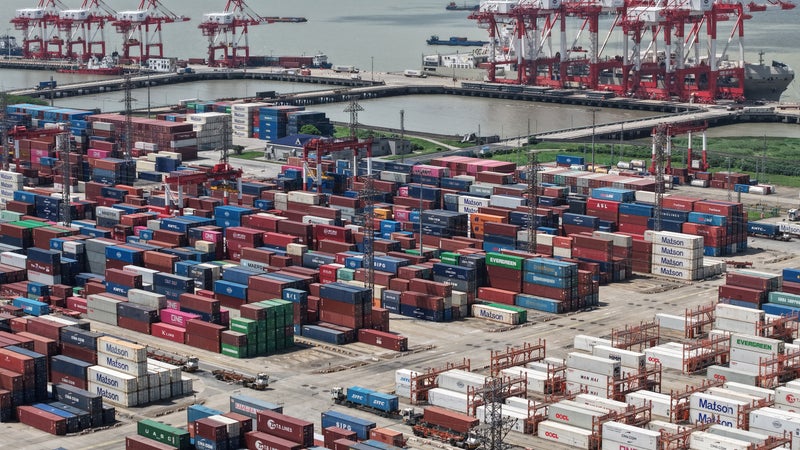
- China's carbon dioxide emissions dropped by 3.1% in the third quarter, marking the fastest decline since the COVID-19 pandemic.
- Navigation disruptions in the Strait of Hormuz directly impact oil supplies to China and reduce global transport fuel consumption by 9%.
- Coal consumption fell by 3% amid rapid renewable energy growth, while China remains the world's largest greenhouse gas emitter.
A recent study conducted by the Centre for Research on Energy and Clean Air (CREA) and published by the "Carbon Brief" platform reported that carbon dioxide emissions in China recorded a 3.1% year-on-year decline during the third quarter, marking the fastest pace of decline since the COVID-19 pandemic crisis.
Repercussions of International Tensions on Energy Supplies
This decline comes as part of the direct impacts of the war in the Middle East, where severe disruptions to maritime traffic in the Strait of Hormuz—resulting from military confrontations waged by the United States and Israel against Iran—have significantly affected oil supplies heading to China, the world's second-largest economy and the largest global importer of crude oil.
According to official and commercial data and analyses cited by the Centre, global oil consumption decreased by 4% year-on-year, while transport sector fuel consumption recorded a notable drop of 9%. In a statement to Agence France-Presse (AFP), Lauri Myllyvirta, co-founder and lead analyst at CREA, explained that China's oil consumption had likely peaked prior to this tension, emphasizing that "this shock clearly accelerated the shift toward the electrification of the transport sector and moving away from oil," while noting the possibility of a slight rebound in consumption if prices decline in the future.
Decline in Coal Consumption and Acceleration of Renewables
The decline also encompassed the coal sector, where consumption dropped by 3% year-on-year, despite China continuing to build new coal-fired power plants. Gao Yuhe, project manager at Greenpeace East Asia, pointed out that continuing to reduce reliance on coal in electricity generation represents a fundamental cornerstone for developing renewable energy projects and expanding modern storage systems in markets.
Despite the significant leaps China has achieved in boosting clean energy capacities and reducing the share of coal in its energy mix, it still ranks first among the world's highest-emitting countries, contributing more than 31% of total global greenhouse gases, ahead of the United States (12.7%) and India (8.3%). Chinese authorities reiterate their commitment to intensifying efforts to accelerate the green transition and achieve carbon neutrality by 2060.
Source: BFM TV



Comments (0)
You must log in to comment on articles.
Log in Sign upBe the first to comment on this article.