

Palestinian Citizens of Israel: Nearly Eight Decades of Institutional Discrimination and Political Marginalization
Nearly eight decades after Israel's founding declaration pledged full equality for all citizens, Palestinian citizens of Israel face entrenched institutional discrimination, systemic inequality, and escalating political exclusion.

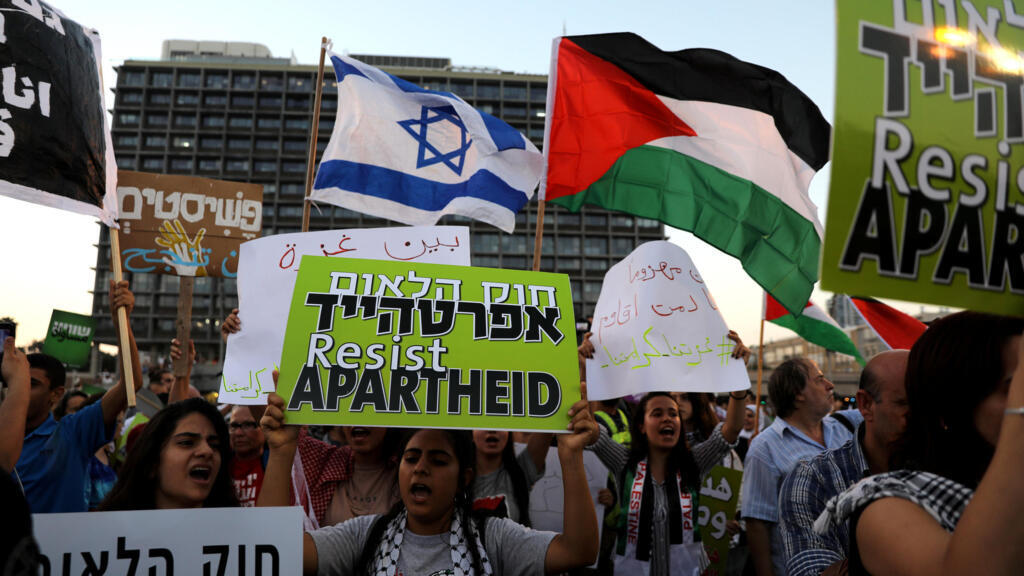
- Palestinian citizens of Israel make up more than 20% of the population and have endured a legal separation between 'citizenship' and 'nationality' since the Nakba.
- Repressive measures and surveillance have worsened significantly since October 7, amid a 38% poverty rate and record-high crime levels.
- Despite Arab parties achieving substantial gains in the October 27 legislative elections, the Arab minority faces continued political exclusion and mounting incitement.
Although the Declaration of the Establishment of the State of Israel on May 14, 1948, pledged complete equality of social and political rights to all citizens without distinction, the daily reality for Palestinian citizens of Israel, nearly eight decades later, reflects a deep chasm and an entrenched reality of systematic discrimination.
In 1948, approximately 150,000 Palestinians survived displacement and remained alongside 600,000 Jews, while around 800,000 Palestinians were expelled from their lands during the events of the Nakba (1947–1949). Those who stayed acquired Israeli citizenship and today account for more than 20% of the country's population—nearly two million people—including 350,000 Palestinians in East Jerusalem, most of whom hold only 'permanent resident' status. Demographically, this group is distributed among 80% Muslims, 8% Christians, and 9% Druze.
Token Citizenship and Deep-Rooted Discrimination
From the outset, Israeli authorities distinguished between 'citizenship' and 'nationality.' Arabs were denied unified national recognition and were categorized under 'Arab nationality' on identity cards until the early 2000s, contrasted with 'Jewish nationality' for Jewish citizens, which entrenched wide disparities in employment and land ownership. Between 1948 and 1966, Palestinian citizens of Israel lived under military rule that imposed severe restrictions on their civil liberties, a period marked by bloody events such as the 1956 Kafr Qasim massacre, in which around fifty Arab farmers were killed.
Tensions continued with the expropriation of 2,500 hectares in the Galilee in 1976, sparking a general strike that evolved into 'Land Day' on March 30, 1976, during which six Palestinians were killed and more than a hundred others wounded. With the eruption of the Second Intifada following Ariel Sharon’s storming of the Al-Aqsa Mosque compound on September 28, 2000, security forces met protests by Arab citizens with lethal force.
The Nation-State Law and the Erosion of Fundamental Rights
This legal approach was reinforced in 2003 with the adoption of the 'Citizenship Law,' which barred family reunifications between Palestinian citizens of Israel and residents of the occupied territories, whereas the 'Law of Return' grants immediate and full rights to any Jewish person worldwide. The decisive turning point arrived on July 19, 2018, when the Knesset passed the 'Nation-State Law of the Jewish People,' restricting the right to self-determination exclusively to Jews and stripping Arabic of its official language status in favor of Hebrew, thereby cementing the status of Arab citizens as second-class.
In this context, researcher and academic Karim Émile Bitar explains that ethno-nationalism has completely overridden theoretical promises of equality, emphasizing that political discourse now openly expresses racism that was once covert, accompanied by persistent efforts to erase Arab identity, particularly in areas such as Jerusalem and the Sheikh Jarrah neighborhood.
Post-October 7 and the Apartheid Designation
Since October 7, the authorities have imposed a strict policy banning any expression of solidarity with the residents of the Gaza Strip, including online surveillance and prosecutions, dismissals from work, and disciplinary measures against university students. Concerns have further heightened following National Security Minister Itamar Ben-Gvir’s decision to establish a 'National Guard,' which former Internal Security Minister Omer Bar-Lev described as tantamount to creating an armed militia that raises grave alarm.
These measures align with designations by international human rights organizations; in a 2022 report, Amnesty International confirmed that Israeli laws and policies have established a system of apartheid against the Palestinian people in both the occupied territories and inside Israel. Economically, approximately 38% of Arab households live below the poverty line as of 2024, and according to police data, Arab victims accounted for 241 of the 309 homicides recorded in the country in 2025.
Political Exclusion Amid Escalating Incitement
The recent legislative elections on October 27 saw a notable turnout among Arab voters, with their parties achieving significant results; however, the traditional political spectrum has continued to reject forming a coalition with them to establish a government. On November 4, Israeli President Isaac Herzog condemned racist attacks targeting this minority following the vote, at a time when Yair Netanyahu, the Prime Minister's son, declared that Arab citizens represent the greatest threat to the state after Iran's nuclear program—reflecting an escalating exclusionary rhetoric and attempts to deny the historical presence of Palestinians on their land.
Source: RFI



Comments (0)
You must log in to comment on articles.
Log in Sign upBe the first to comment on this article.