

Nigeria: State Police Proposal Balances Security Hopes with Fears of Abuse
A proposal to establish state police forces across Nigeria has cleared a major constitutional milestone after securing approval from 28 state assemblies, balancing hopes of addressing security deficits against concerns of political abuse.

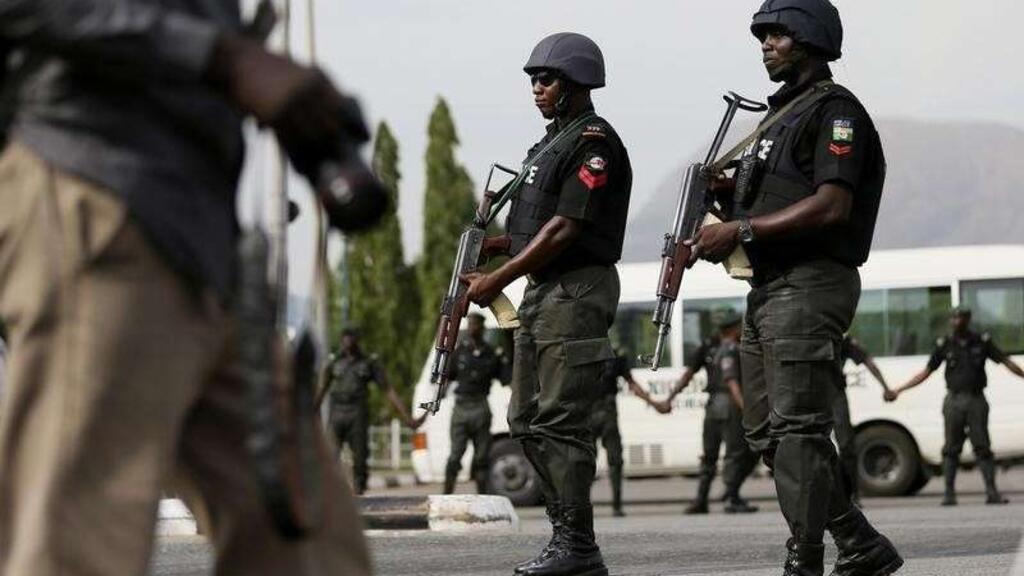
- Twenty-eight state assemblies approve a constitutional amendment bill allowing the creation of state police forces in Nigeria.
- The country suffers from a severe security deficit, with only about 400,000 police officers serving a population of over 200 million.
- Concerns mount regarding the funding of the new forces, alongside legislative safeguards designed to prevent their abuse by state governors.
The proposal to establish dedicated state police forces in Nigeria cleared a significant constitutional milestone on Tuesday, November 3, after securing the approval of 28 state legislative assemblies. This step paves the way for the creation of separate security apparatuses for each federated state, moving beyond the historical restriction of law enforcement to the federal police force. The move has raised widespread hopes of improving the security situation alongside parallel concerns regarding the risks of abuse of power by local governors.
Security Shortages and the Need for Officers Familiar with Local Realities
Habib Oladapo, Program Manager at the Civic Media Lab, affirmed that Nigeria suffers from a severe deficit of police personnel, with no more than 400,000 officers serving a population exceeding 200 million people. He explained that deploying community-level police officers who understand the local language and terrain has been a longstanding demand of Nigerians. He noted that the prevailing lack of security previously pushed the state to rely on the military or drove residents toward self-defense vigilante groups, which are increasingly struggling against armed groups; the new reform, however, would allow the integration of these groups' members into formal, trained police services.
Oladapo pointed out that the current federal system suffers from a clear structural defect, with officers dispatched to states whose languages they do not speak and whose geographic and social dynamics they do not understand, hindering them from performing their duties effectively. In contrast, funding stands out as a primary obstacle, as some states struggle to pay their civil servants' salaries, raising critical questions about their ability to regularly equip, train, and arm new security forces.
Legal Safeguards to Curb Abuse of Power
Another major challenge lies in preventing state governors from deploying security apparatuses to serve their own interests. In this context, Oladapo explained that the Senate has set explicit restrictions preventing the use of these forces for partisan, ethnic, or religious purposes. Governors are also prohibited from ordering the arrest of political opponents, obstructing criminal investigations, or interfering in electoral processes.
The new legislation includes a mechanism allowing a police commissioner to appeal to the planned "National Police Council" if directed to execute orders deemed unlawful, with the council's rulings being binding on all commissioners. Nevertheless, fears remain that the shortcomings of the federal apparatus—such as corruption and the absence of oversight—could be transferred to the local level, pending final presidential assent and the subsequent drafting of local legislation by willing states to govern the operations of these state-level forces.
Source: RFI


Comments (0)
You must log in to comment on articles.
Log in Sign upBe the first to comment on this article.