

France: Student Union Calls for 'Black Day' as Government Defends Use of Protest Dispersal Tactics
Tensions escalated in France as the student union UNEF called for university blockades and nationwide demonstrations, while Interior Minister Laurent Nuñez defended the continued deployment of tear gas and intermediate security measures.

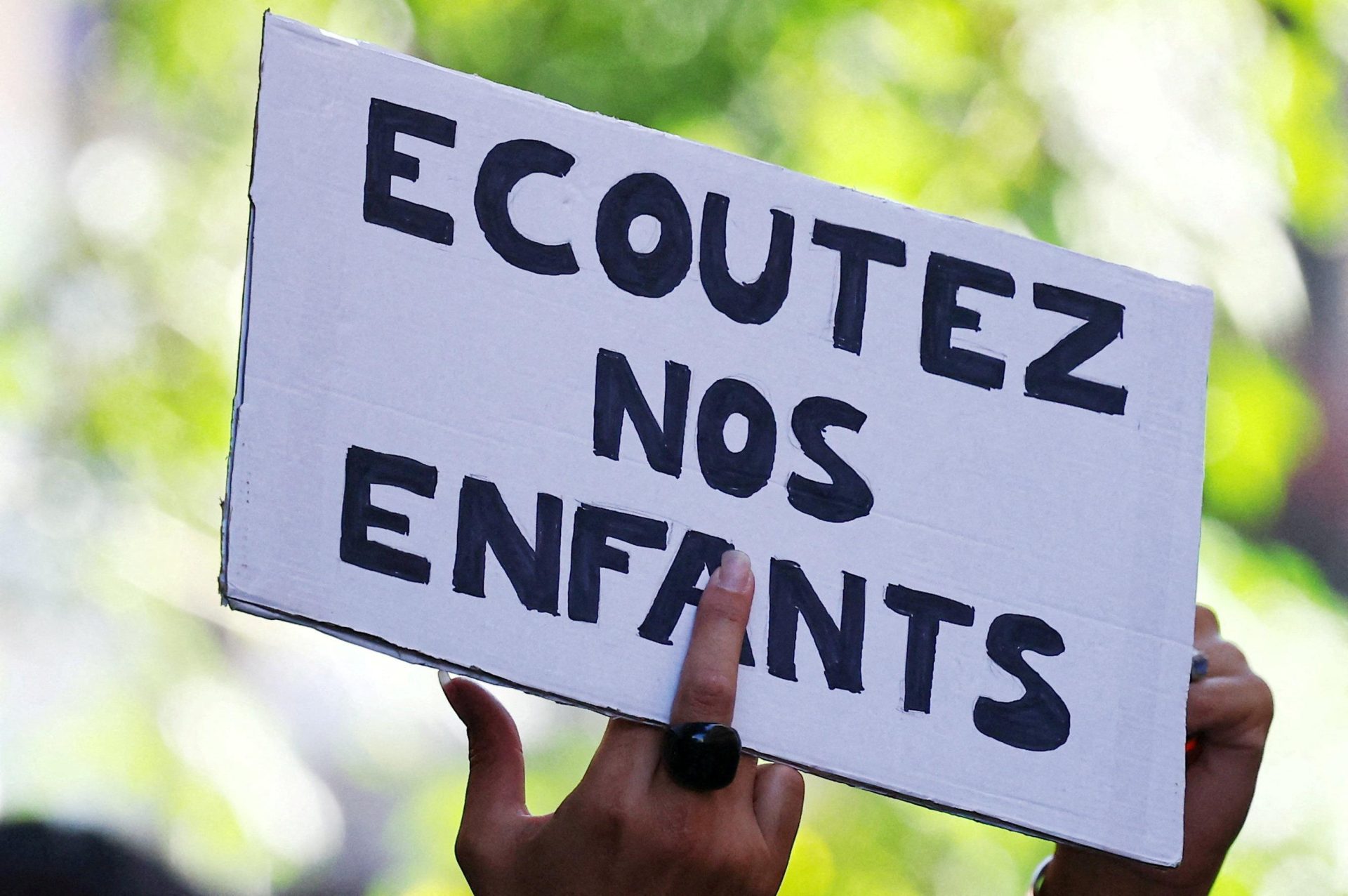
- The National Union of Students of France (UNEF) calls for university blockades on November 3 and mass street demonstrations on November 5.
- The Interior Minister refuses to back down on the use of tear gas and blast grenades, commending the resilience of security forces.
- The Ministry of National Education reports 41 high school blockades as classes resume, amid ongoing field unrest in several cities.
Tensions have escalated across France with the resumption of classes following the All Saints' school holidays, as the National Union of Students of France (UNEF) called on youth to stage a "black day" on Tuesday, November 3, through general assemblies and university blockades, followed by mass demonstrations on Thursday, November 5, accusing the current government of ignoring student demands.
Interior Minister Defends the Use of Tear Gas
Meanwhile, French Interior Minister Laurent Nuñez confirmed, during a hearing before the Law Commission of the National Assembly discussing the ministry's 2027 budget, that he "will not abandon any intermediate security intervention tools," such as blast grenades and tear gas. Nuñez justified this by highlighting the need for police officers to defend themselves when attacked during demonstrations, rejecting accusations of a "repressive" approach: "We are here to prevent breaches of public order, and my intervention is strictly limited to instances of violence, attacks on businesses and security forces, and the throwing of Molotov cocktails."
Addressing questions from lawmakers regarding the health effects of tear gas—particularly reported disruptions affecting women—Nuñez stated that no data confirms its toxicity, citing studies conducted between 2021 and 2022 showing that its effects dissipate quickly, and reiterating his refusal to suspend its use as a precautionary measure. The minister also conveyed a message of gratitude and appreciation to the security forces for their resilience over roughly a month and a half in the face of what he described as "unprecedented violence" directed against individuals and property.
High School Blockades and the Government's Position
On the educational front, the Ministry of National Education announced that blockades affected 41 high schools on Monday morning, representing approximately 1% of the 3,700 institutions nationwide, with three-quarters of the departments experiencing no disruptions. Minister of National Education Édouard Geffray stated that disrupting classes is "illegal, even if it is not illegitimate as a right to protest," calling for a sense of responsibility and emphasizing that the top priority remains the continuation of academic learning.
For his part, Minister of Higher Education Philippe Baptiste stressed the necessity of halting institution blockades, pointing out that "students are the first victims of these closures," and citing the €5 billion support package approved by the government to address needs. Meanwhile, Prime Minister Sébastien Lecornu expressed his willingness to receive high school representatives again next week to review the implementation of commitments and overcome obstacles.
Field Unrest and Arrests Across Multiple Cities
On the ground, Paris witnessed the partial or total blockade of several high schools, including Voltaire, Charlemagne, Victor Hugo, Sophie Germain, and Colbert, alongside the obstruction of the Paris Cité University entrance using dumpsters and construction barriers. Meanwhile, the "Interfac IDF" movement announced that the Paris police prefecture had banned the route of its demonstration scheduled for Tuesday toward the headquarters of the employers' organization (Medef), declaring its intention to take legal action before the administrative court.
The impact of the protests spread to other regions: in Saint-Denis, more than 80 staff members at the Paul Éluard high school voted in favor of a renewable strike to demand the dismissal of the institution's principal following a previous police intervention. In Montpellier, police arrested a 53-year-old school nurse after a violent altercation and scuffle outside the Jean Monnet high school, prompting condemnation from lawmakers representing La France Insoumise (LFI).
In Bordeaux, the local public transit operator (TBM) estimated property damage caused by vandalism at approximately €250,000 since October 17, amid an estimated 70% decline in network ridership. In Nantes, six individuals appeared in court under immediate trial procedures following the arrest of 56 people during clashes over the previous weekend.
Political and Union Reactions
The protests reverberated across the political spectrum. Member of the European Parliament Manon Aubry (La France Insoumise) commended the student movement, stating that none of their ten demands have yet been met. For her part, the General Secretary of the CGT union, Sophie Binet, remarked that the government's promises remain insufficient, criticizing the postponement of the repeal of the "Parcoursup" platform until late 2028.
In a related context, social-democratic candidate Raphaël Glucksmann called for a return to classrooms provided that financial allocations are incorporated into the budget, pointing out that 30% of school buildings are dilapidated and unfit, while announcing his participation in the general strike scheduled for Thursday.
Source: Le Figaro
Comments (0)
You must log in to comment on articles.
Log in Sign upBe the first to comment on this article.