

France: Debate Over University Admissions Heats Up Following Announcement to Scrap 'Parcoursup' Platform by 2027
France is preparing to replace its controversial university admissions platform, Parcoursup, by 2027, reigniting a fierce national debate between proponents of merit-based selection and defenders of universal open access amidst looming budget shortfalls.

- Minister of Higher Education Philippe Baptiste announces the end of the 'Parcoursup' platform by 2027 amid parliamentary debate over academic selection.
- Student unions and opposition parties demand open higher education access for all and the creation of up to 250,000 additional places.
- University leaders warn of an anticipated €2 billion financial deficit by 2030, while the right calls for ending automatic university admission for baccalaureate holders.
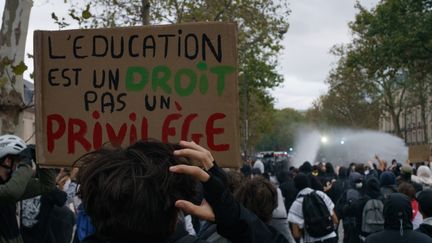
The issue of higher education orientation has taken center stage in public debate in France, directly impacting thousands of families and young people, including members of Arab and foreign communities who annually face the stress of passing the baccalaureate and securing a university seat. Following student protests with slogans such as "Our future is not an algorithm" and "Parcoursup, the national anxiety factory," Minister of Higher Education Philippe Baptiste announced on Monday, October 26, that the well-known admissions platform "Parcoursup" will be definitively replaced starting from the 2027 academic year.
The Dilemma of Limited Places and the Challenge of Selection
Minister Philippe Baptiste raised fundamental questions about the future tool before the National Assembly during a debate held on Wednesday, October 28, asking: "What do we really want? Clear and transparent selection, or a complete absence of any sorting?" The minister cited the example of the Faculty of Law at Paris 1 Panthéon-Sorbonne University, where 20,500 candidates competed for just 745 first-year seats, stressing the necessity of finding fair alternatives if both selective admission and lotteries are rejected.
Conversely, Socialist MP Pierrick Courbon criticized the platform, describing it as a tool for "managing scarcity" rather than a genuine means of guidance. Data from the National Union of Higher Education (Snesup-FSU) showed a decline in supply, with the number of places available via the platform dropping by 10,300 between 2025 and 2026 due to funding shortages. According to official figures for the latest baccalaureate session, more than 90% of students (603,910 applicants) received at least one admission offer, while approximately 57,000 students were left without a place.
Demands for Seat Expansion Amidst a Financial Deficit
Student unions and left-wing political movements are demanding that the right of every baccalaureate holder to enroll in the field of their choice be upheld. In this context, Green Party MP Jean-Claude Raux called for guaranteeing a seat for every student, with priority given within their educational district (académie), while the "La France Insoumise" party demanded the creation of 150,000 additional places and increased budgets for public institutions, in line with the constitution, which stipulates that the state guarantees the right to education and training for all. Youth organizations also demanded providing roughly 250,000 new places to meet rising demand.
In response, Hélène Boulanger, vice-president of "France Universités," described these demands as unrealistic given the shortage of lecture halls, seats, and professors. She pointed to a university funding report projecting a financial deficit of up to €2 billion by 2030, which could impose severe austerity measures curbing training programs and scientific research activities.
The Right's Vision: Excellence and Reducing University Dropout Rates
On the other hand, Senator Laurence Garnier of The Republicans party argues that admitting vast numbers of students unconditionally leads to failure. Data from the National Institute of Statistics and Economic Studies (Insee) for 2024 indicates that half of the labor force holds qualifications equal to or below the baccalaureate, while Ministry of Higher Education statistics show that 47% of students enrolled in the first year in 2019 dropped out of university without earning any degree after five years.
Garnier called for ending automatic university admission for baccalaureate holders, focusing instead on professional training and academic performance-based selection, asserting that the objective must be "to provide a career and a future for every young person." Meanwhile, Joseph Raimbaud, representative of the high school students' union federation, emphasized the necessity of opening places in career paths that guarantee genuine job opportunities and keep pace with modern demands—such as artificial intelligence and advanced technology—without neglecting vocational and manual trades, while reaffirming the right of young people to academic freedom of choice.
Source: France Info

Comments (0)
You must log in to comment on articles.
Log in Sign upBe the first to comment on this article.