

Following Poll Slump, Philippe Declares a 'Rupture' with Past Choices and Unveils Ambitious 2027 Platform
Horizons leader and prospective 2027 presidential candidate Édouard Philippe has announced a sharp shift in political strategy, pledging a decisive break from decades of fiscal laxity and presenting a sweeping reform agenda.

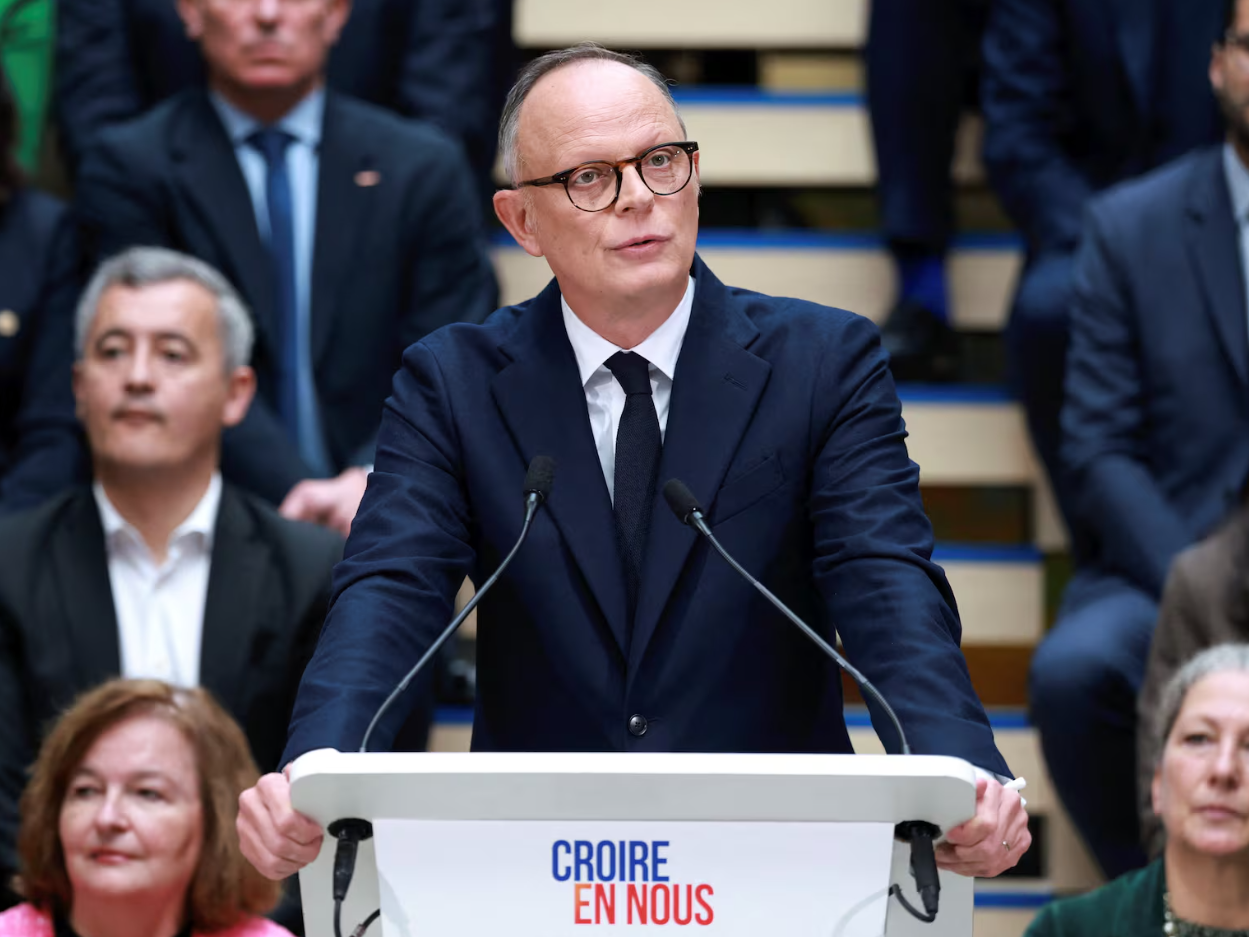
- Horizons party leader Édouard Philippe announced a new political strategy centered on a 'rupture' with legacy fiscal policies and administrative bloat, while reaffirming his commitment to the market economy, the Fifth Republic, and Europe.
- Philippe unveiled a reform platform for the 2027 presidential election that includes cutting the public deficit to 2% of GDP, abolishing the 35-hour workweek, gradually raising the retirement age to 65, and eliminating 250,000 public sector jobs.
- His proposals feature tougher security measures against 'rioters' modeled on counter-terrorism mechanisms, including preventive house arrests during high-risk demonstrations.
- The initiative aims to regain political momentum following a decline in opinion polls and intensifying competition across the political spectrum, while Philippe maintains an independent path and continues to reject party primaries.
"I want to break away": Philippe's new rhetoric
In clear and direct terms, Édouard Philippe, leader of the Horizons party and prospective candidate for the 2027 presidential election, summarized his political battle with the phrase: "I want to break away"—not from an individual, but from "fifty years of fiscal laxity" and outdated political solutions. At a time when opinion polls point to a decline in his standing, Philippe appears determined to overhaul his strategy entirely: presenting himself as a radical alternative rather than a continuation of the past.
A rupture: With whom and why?
Philippe emphasizes that "this rupture is not an isolation from a person or a party, but a break from outdated solutions crafted for a France that has completely changed." He clearly defines what he seeks to decouple from: the continuous rise in public debt, administrative inflation, and institutional frameworks that no longer reflect reality. At the same time, he explicitly sets his red lines: "I will not abandon the market economy, nor Europe, nor the rule of law, nor the Fifth Republic"—a clear move to distinguish himself from both the far right and the far left.
The "Radical Reforms" platform: A return to order
In presenting the initial phase of his platform under the title "First Volume of Proposals," Philippe unveiled a vision marked by boldness and candor:
— On the fiscal front:
He pledged to "restore order to our accounts" by gradually reducing the public deficit from over 5% to 2% of GDP within five years, while establishing two fiscal "golden rules" that would legally bind any government to maintain budgetary balance.
— On labor:
He proposed abolishing the 35-hour workweek, extending weekly working hours by two hours, and gradually raising the retirement age to 65, describing the move as a "necessary intergenerational solidarity."
— In public administration:
He recommended cutting 250,000 public sector positions, restricting permanent civil servant status strictly to sovereign and education sectors, and privatizing France Travail (formerly Pôle Emploi).
— On security:
He advocated for the use of preventive measures against "rioters" akin to those applied in counter-terrorism frameworks, including preventive house arrest during high-risk protests.
In response to criticism labeling his program as severe, Philippe responded plainly:
"There is no magic money," warning that "inaction today will mean devastating losses for French pensions and the future of their children tomorrow."
Regaining the initiative: Will the strategy succeed?
This offensive comes as Philippe faces stiff competition from Gabriel Attal in the center, Jordan Bardella and Marine Le Pen on the right, and Jean-Luc Mélenchon on the left. Notably, Philippe continues to refuse participation in a center-right primary, opting instead to maintain an independent course. He has also directed sharp rebukes at his political opponents, accusing both La France Insoumise and the National Rally of having an "unhealthy admiration" for Russian President Vladimir Putin, which he characterized as "deeply alarming for France's security."
Between audacity and risk
Through this rhetoric and policy package, Édouard Philippe is attempting to reposition his image: transitioning from "Macron's former Prime Minister" to "the candidate who dares to speak the truth."
It remains a high-stakes gamble; while French voters frequently voice an appetite for change, they remain cautious regarding austere measures. The coming months will determine whether his call for a "rupture" gains traction with the electorate or remains mere campaign rhetoric in what is shaping up to be one of the most complex presidential contests in modern French history.
Source: Lepoint
Comments (0)
You must log in to comment on articles.
Log in Sign upBe the first to comment on this article.