

Body of Tunisian Citizen Mistakenly Flown from France to Spain Instead of Tunisia, Son Demands Accountability
A Tunisian family has demanded an official investigation after the casket of their deceased father was mistakenly flown by Vueling from Paris to Malaga, Spain, instead of being repatriated to Tunisia for burial.

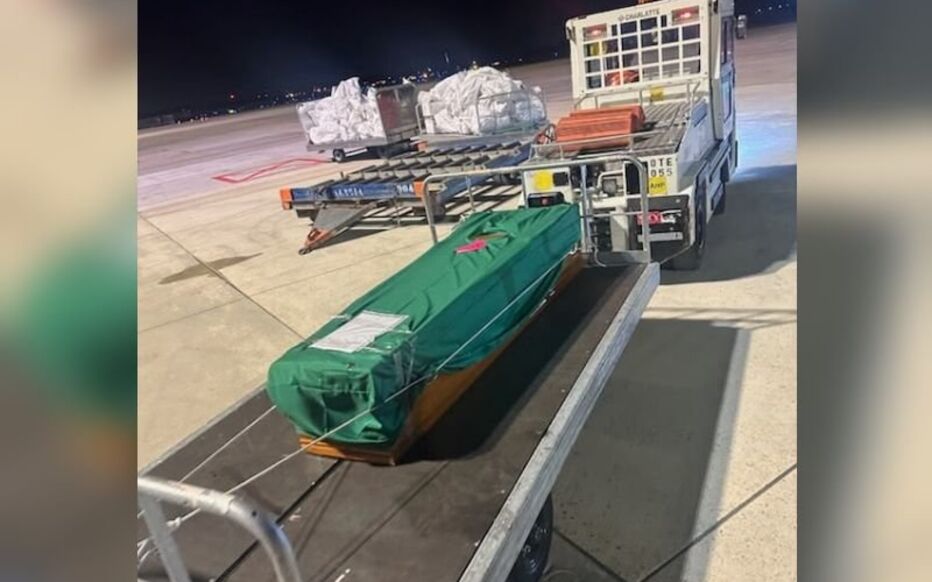
- The casket of a Tunisian citizen who died in France was erroneously flown to the Spanish city of Malaga via Vueling Airlines instead of being transported to Tunisia.
- Funeral and burial ceremonies in the Tunisian city of Monastir were postponed after around three thousand people gathered awaiting the arrival of the body.
- The body was recovered after strenuous efforts, returned to Orly Airport, and finally transported to Tunisia for the funeral rites.
- The deceased's son has demanded an investigation to determine and hold responsible parties accountable, while the Spanish airline issued an apology to the family for the incident.
Incident Details
Tunisian citizen Abdallah, aged 75, passed away on October 9 in the city of Meaux, located in the Seine-et-Marne department northeast of Paris. The deceased had expressed his wish to be buried in his native village near the coastal city of Monastir in Tunisia. His son, Abdelkarim—a teacher residing in the Paris suburbs—immediately initiated arrangements for the aerial repatriation of the body aboard a Tunisair flight departing from Paris-Orly Airport to Tunisia, scheduled to take off on the evening of Monday, October 12.
However, a delay involving a preceding flight, combined with the nighttime flight curfew imposed at Orly Airport, disrupted the flight and led to a route alteration. On the following morning—Tuesday, October 13—the family discovered that the coffin had been erroneously loaded onto an aircraft operated by the Spanish airline "Vueling", bound for the southern Spanish city of Malaga, rather than Tunisia as planned.
While the casket was traveling in the wrong direction toward the Iberian Peninsula, hundreds of villagers were gathering at Monastir cemetery, awaiting the arrival of the deceased's body for burial at 5:00 PM as scheduled, before receiving the distressing news that forced the family to postpone the funeral proceedings.
Repatriation of the Body and Demand for Accountability
Family members were only able to recover the body following arduous efforts. The coffin returned to Orly Airport from Malaga at a later time, before finally being flown to Tunisia, where funeral ceremonies took place after a delay of several days.
Speaking to the media, the son Abdelkarim expressed his profound indignation, stating: "How could an error of this scale happen? You have violated the sanctity of the deceased and our feelings." He announced that he is demanding an inquiry to identify those responsible for this grave error, describing what occurred as a severe affront to the dignity of his father and his entire family.
For its part, Vueling acknowledged the mistake and issued an apology to the family, expressing its deep regret for the pain and distress caused by this unfortunate incident. The exact circumstances that led to the misdirection of the coffin remain under review, amid calls to clarify cargo procedures for human remains at airports to prevent similar occurrences in the future.
Legal Liability of Airlines in Such Cases
First: International Legal Framework
International air carriage is governed by the 1999 Montreal Convention, ratified by France, Tunisia, and Spain, which serves as the primary legal reference:
- Article 17: Holds the air carrier liable for damage sustained in the event of the destruction or loss of, or damage to, cargo/shipments while under the carrier's custody.
- Article 19: The carrier is liable for damage caused by delay in the air carriage of cargo.
- Limits of Liability: Unfortunately, the Convention establishes financial limits that may not reflect the moral value of human remains, treating them as "cargo" subject to compensation caps based on weight rather than emotional and moral significance.
Important Note: Although the law treats human remains as cargo, courts recognize that human bodies preserve their dignity even after death, paving the way for claims regarding moral damages and psychological suffering endured by the family.
Second: Liability of Each Party in This Specific Incident
Party |
Nature of Liability |
The Booking Carrier (Tunisair) |
As the contracting party with the family, it is obligated to execute the contract of carriage according to the agreed destination. When changing the carrier or routing, it remains liable toward the customer unless it explicitly notifies them and secures approval for the change. |
The Carrier Executing the Mistaken Transport (Vueling) |
Bears direct liability for negligence resulting from the failure to verify the shipment's documents and destination, and the failure to follow dedicated procedures for the transport of human remains prescribed by international civil aviation regulations (IATA/ICAO). |
Orly Airport and Handling Operators |
May be held responsible for shortcomings in screening and sorting procedures if it is established that the error originated within their facilities. |
Third: What Is the Family Entitled to Claim?
1. Costs of redirecting the shipment to its correct destination: All extra expenses arising from the error—transport from Malaga to Tunisia and additional family costs—are to be fully borne by the responsible airlines.
2. Compensation for delay: For the days the delivery of the body was delayed.
3. Compensation for moral damages and psychological distress: This is the most crucial aspect of such a case, as the court may consider the compounding grief and deprivation from burying the father on schedule, granting appropriate compensation depending on the quality of legal arguments and evidence.
4. Postponed funeral costs: Any additional expenses incurred by the family due to the postponement of the burial rites.
Fourth: Practical Legal Steps to Follow
Statutory Deadline: A written complaint must be submitted to the airline within 21 days from the date of receiving the delayed cargo under the Montreal Convention.
- Step 1: Submit a detailed written compensation claim to the airline along with all supporting documentation and evidence.
- Step 2: In the event of a refusal or lack of response within two months, escalate the matter to the Tourism and Travel Ombudsman in France or the Directorate General for Civil Aviation.
- Step 3: File a civil lawsuit before the competent court; the action can be brought either in France (place of contracting) or in Tunisia (the family's residence and final destination).
- Step 4: Demand an official investigation to determine the exact point where the error occurred and identify the individual employee or entity responsible for the destination mix-up.
Fifth: Why Is This Case Important?
The significance of this case lies in highlighting a procedural flaw in the handling of shipments containing human remains. Existing protocols rely on paper documentation that may be lost or mixed up, whereas human dignity necessitates electronic tracking and unique identification for every coffin that leaves no margin for error. A favorable ruling for the family could establish a legal precedent compelling airlines to tighten their standards and procedures in the future.
Source: Le parisien


Comments (0)
You must log in to comment on articles.
Log in Sign upBe the first to comment on this article.