

For the First Time in Its History: French Navy Intercepts Semi-Submersible Loaded with Tons of Cocaine in the Atlantic Ocean
In an unprecedented operation, the French Navy intercepted a drug-trafficking semi-submersible in the Atlantic Ocean, rescuing and arresting four crew members who deliberately sank the vessel carrying tons of cocaine.

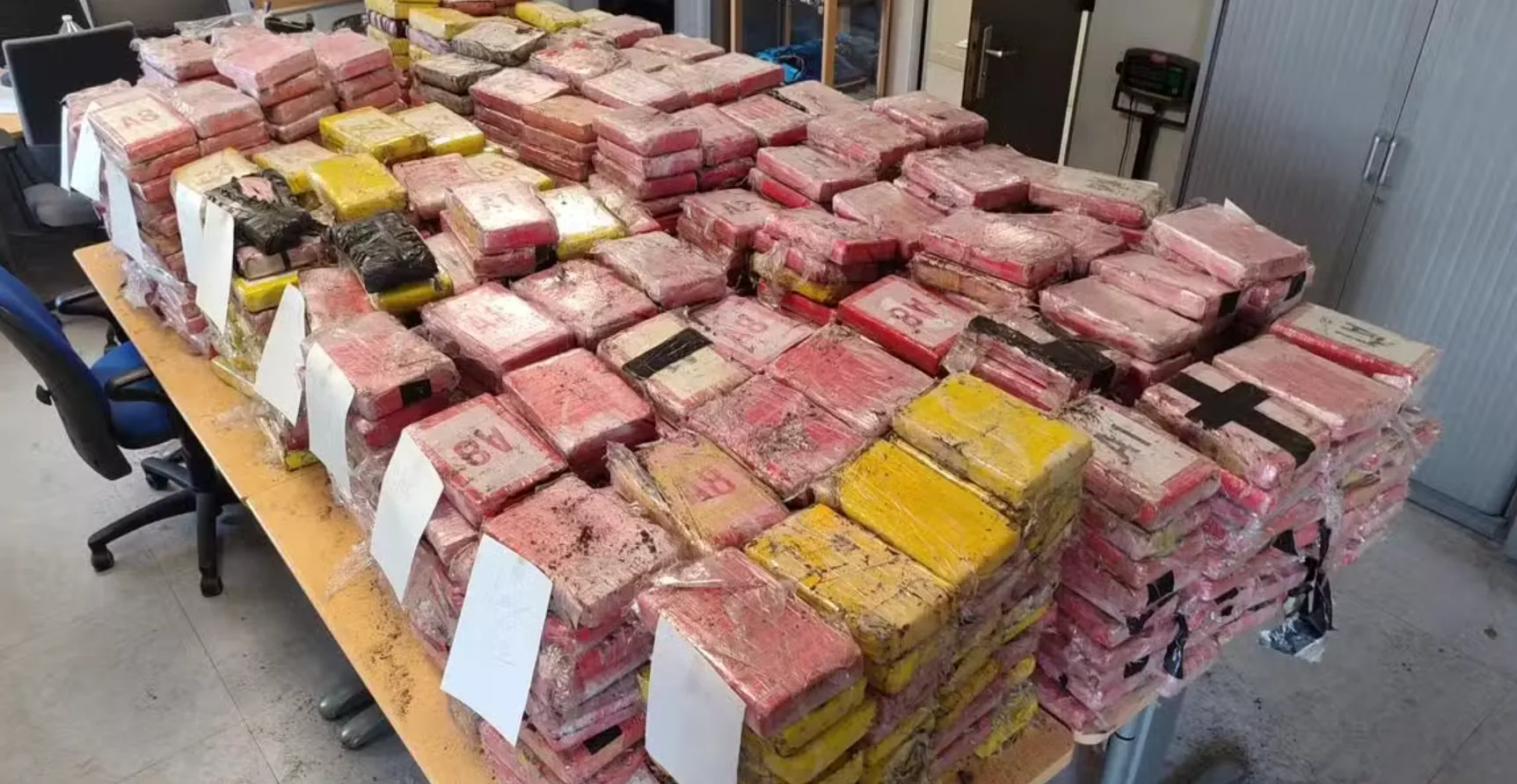
- For the first time in its history, the French Navy intercepted a semi-submersible vessel used to smuggle cocaine across the Atlantic Ocean, supported by U.S. aerial surveillance.
- The four-member crew intentionally scuttled the vessel within minutes to destroy evidence, sending tons of narcotics to the ocean floor.
- French forces rescued and apprehended all crew members, retrieving only 146 kilograms of floating cocaine packages.
- The detainees are under investigation by the French Anti-Narcotics Office (OFAST), with the operation believed to have occurred near the French Antilles.
Start of the operation: Detection and tracking on the high seas
The events of the operation took place on Thursday, November 12, 2026, when maritime surveillance units spotted a small vessel sailing without a discernible flag, engineered to sit exceptionally low in the water to evade radar detection. A French Navy frigate moved to intercept the craft, supported by an onboard helicopter and a U.S. maritime patrol aircraft operating under the Joint Interagency Task Force South (JIATF-S).
Escape attempt and deliberate scuttling: Crew apprehended
As French forces closed in, the four-person crew was caught off guard; three members immediately leaped into the sea in an attempt to escape, while the fourth remained aboard to trigger a rapid-scuttling mechanism, causing the vessel to plunge beneath the waves in less than three minutes. French forces successfully pulled all four individuals from the water and placed them under arrest. They also retrieved four floating packages of cocaine weighing a combined 146 kilograms, while the remainder of the cargo—estimated at several tons—went down with the vessel into the ocean depths.
A first for France: What are the "narco-submarines" used by traffickers?
French Minister of the Armed Forces Catherine Vautrin confirmed that this marks the first time France has intercepted this category of vessel. Often artisanally built and known as "narco-submarines" or "semi-submersibles," they are increasingly deployed by drug cartels to discreetly move massive consignments across oceans from production hubs in Latin America to European markets.
Stealth design and elusive targets: A rising challenge for maritime patrols
Experts note that these vessels are engineered to be low-cost and difficult to detect, traveling just beneath the surface with only a low-profile hatch exposed for air intake and navigation, posing a formidable challenge for coast guards and navies across the globe. Even when spotted, as demonstrated in this instance, crews routinely scuttle them deliberately to prevent authorities from confirming the full volume of narcotics and securing irrefutable evidence.
Ongoing investigations: Details on detainees and the operation's location
The four suspects are currently undergoing interrogation by the Caribbean branch of the French Anti-Narcotics Office (OFAST). While authorities have not officially disclosed the nationalities of the detainees or the exact interception coordinates, the operation is believed to have taken place in the French Antilles region near Martinique.
A milestone reflecting the scale of the challenge: The fight continues against global trafficking networks
The French Navy's successful detection and interception of the vessel represents a major milestone, penetrating the covert operations of narcotics cartels. However, it also underscores the growing magnitude of the threat facing nations confronting ever-evolving smuggling tactics.
While interdiction forces secured 146 kilograms, the loss of the broader shipment to the deep sea confirms that the struggle is far from over. Enhancing maritime surveillance capabilities and deepening international coordination among producer, transit, and destination countries remain imperative to dismantle these transcontinental syndicates. Until the root drivers are neutralized and the channels facilitating cartel manufacturing, financing, and distribution are sealed off, these high-stakes voyages across the world's oceans will persist.
France News / Agencies



Comments (0)
You must log in to comment on articles.
Log in Sign upBe the first to comment on this article.