

Estimates of 700,000 Russian Soldiers Killed in Ukraine: Paris University Researcher Analyzes Reasons for Domestic Silence

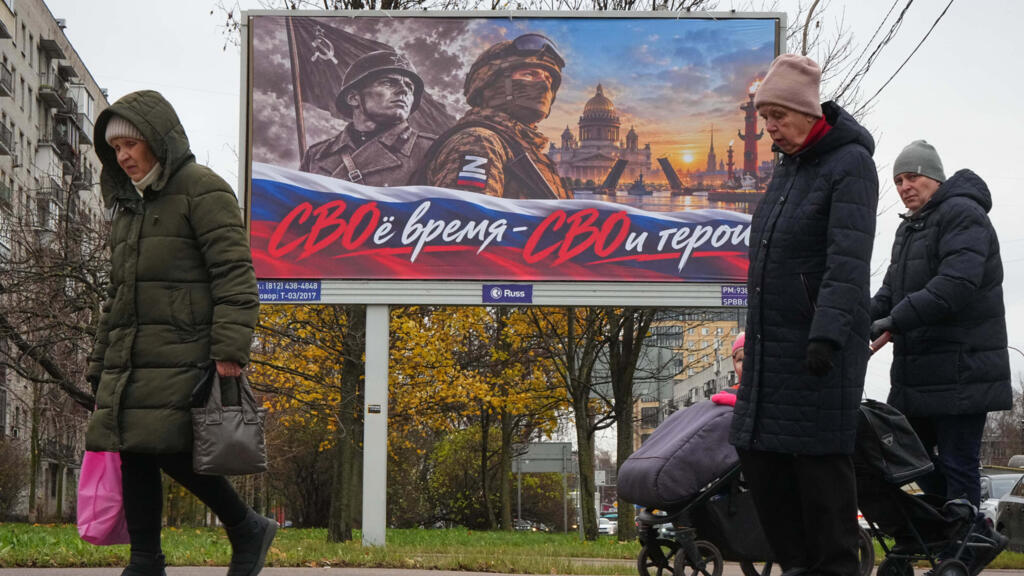
- Independent outlets 'Meduza' and 'Mediazona' estimate Russian military deaths at over 700,000 based on leaked statistical data.
- Paris-Nanterre University academic Anna Colin Lebedev confirms that Russians are aware of the heavy toll but avoid speaking publicly to evade severe criminal penalties.
- The dismantling of independent media and the shift toward paid contract recruitment have reduced public protest compared to the Chechen and Afghan wars.
Recent estimates published by independent Russian media outlets have once again highlighted the staggering human cost of the war in Ukraine. The websites Meduza and Mediazona (both banned inside Russia) estimated that more than 700,000 Russian military personnel have been killed since the full-scale conflict erupted in February 2022, based on cross-referencing hacked data from the Russian statistical agency. Meanwhile, the Kremlin continues to refuse to comment on these figures, referring inquiries to the Ministry of Defense, which has not released an official update on casualty figures since September 2022.
Public Awareness and Deliberate Avoidance of Public Debate
Analyzing this societal reality, Anna Colin Lebedev, a political science professor at Paris-Nanterre University specializing in Russian affairs, explained that those interested in knowing the scale of losses within Russia can access these figures via social networks and Telegram channels. She pointed out that Russians are generally aware of the heavy casualties; many know a relative who never returned from the front lines or have seen the newly added headstones in local cemeteries.
However, the researcher noted that Russia’s vast geography makes the country appear as an archipelago of isolated islands; citizens witness the losses in their immediate surroundings without necessarily connecting them to the overall nationwide scale. This is especially true given that current legislation criminalizes the publication of any information regarding front-line developments under severe penal sanctions, while state television limits its coverage to propaganda-driven heroic narratives.
Lebedev adds that discussions about conditions on the ground remain confined to close family circles, while individuals make painstaking efforts in public spaces and workplaces to avoid speaking about the war. This stems from a conviction that they are powerless to influence events—which they view as an uncontrollable storm—and fear that expressing any position, whether in support or opposition, could invite legal and security repercussions. Consequently, Russian society cannot be described as ignorant or passive, but rather as exerting daily effort to pretend to ignore the conflict.
Fundamental Differences from the Chechen and Afghan Wars
Addressing the question of why the soldiers' mothers' movement that rose during the Chechen wars has been absent, the France-based researcher stressed that the lack of effective protest is not due to a lack of awareness, but rather the destruction of the political and media infrastructure that existed in the 1990s. Back then, independent media and parliamentarians voiced the families' demands and amplified their reach—mechanisms that have been completely dismantled under Putin's rule.
Another fundamental difference lies in the profile of the combatants. During the Chechen wars and the Soviet invasion of Afghanistan, most soldiers were young conscripts (aged 18–20), whom society viewed as "children" needing protection from state brutality. Today, however, the military relies officially on contract-based recruitment, causing the fighter to be perceived as an adult who chose a hazardous profession in exchange for lucrative financial rewards. This significantly reduces public empathy should their families later voice complaints.
Lebedev points out that these financial incentives—while not bringing extreme wealth—have helped families in deeply impoverished regions pay off mortgages or cover medical expenses, fostering a degree of resignation to the status quo, even if it is not the sole driver of silence.
A Stunned and Paralyzed Population
The Paris-Nanterre University academic concluded that even if the death toll surpasses everything Russia experienced in Afghanistan and Chechnya, it does not necessarily trigger a regime-toppling shock through numbers alone; staggering figures like 700,000 remain abstract and difficult to grasp compared to compelling individual stories. She emphasized that the vast majority of Russians hope for an end to the war and would accept peace on almost any terms, describing the current public mood as one of "stunned paralysis" in the face of the tragedy, coupled with a persistent fear that conditions could deteriorate further.
Source: RFI
Comments (0)
You must log in to comment on articles.
Log in Sign upBe the first to comment on this article.