

On the 400th Anniversary of St. Peter's Basilica: Who Was the First Pope in History?
As the Vatican marks the 400th anniversary of the dedication of St. Peter's Basilica, a look back at the life of Saint Peter, the humble fisherman who became the first leader of the Christian Church and the first pope in history.

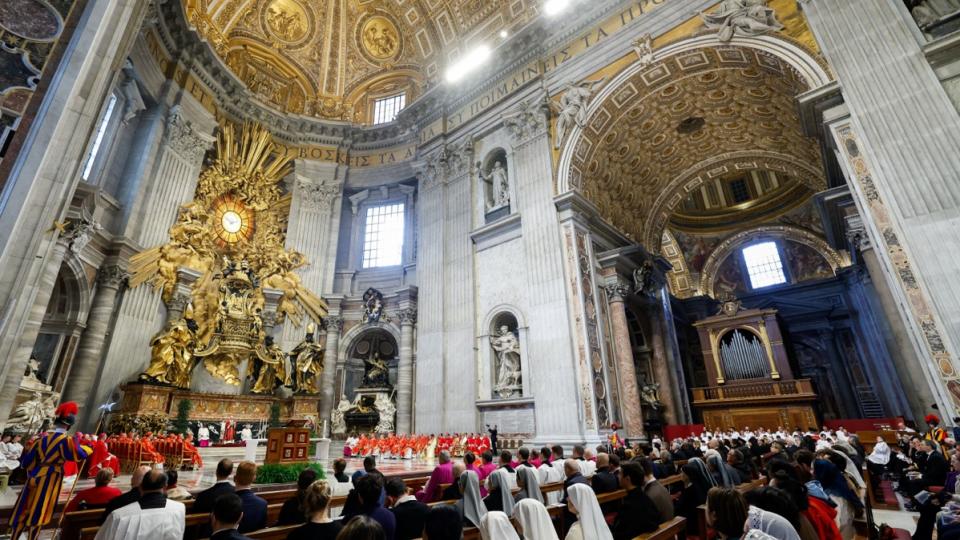
- Commemorating the 400th anniversary of the construction of St. Peter's Basilica with an official mass presided over by Pope Leo XIV.
- Revisiting key milestones in the life of Saint Peter, from fishing on the Sea of Galilee to leading Christ's disciples and founding the first church in Rome.
- The 1950 discovery of human skeletal remains beneath the basilica's altar, historically believed to belong to Saint Peter following his crucifixion after the Great Fire of Rome.
On Wednesday, November 18, the 400th anniversary of the construction of St. Peter's Basilica in the Vatican is being commemorated, an occasion honoring the memory of the saint after whom this religious landmark is named. Saint Peter is considered one of the most prominent figures in the history of Christianity, widely regarded as the first leader of the Christian Church and the first pope in history.
The commemorations feature a religious mass presided over by Pope Leo XIV starting at 4:00 PM inside the monument situated on the right bank of the Tiber River. The landmark's fourth centenary has been marked throughout the year with a series of activities dedicated to the history of the basilica, which reviewed the life journey of Saint Peter.
From Fishing to Leading the Apostles
The saint, whose original name was Simon bar Jonah, was born in Galilee during the first century BC and was among Christ's closest disciples, witnessing numerous miracles and standing by him during his arrest and trial. His acquaintance with Christ began when he was called while still working as a fisherman on the shores of the Sea of Galilee, before Christ gave him the name "Peter."
Following Christ's death, Peter assumed leadership to become the head of the apostles. The Gospel portrays him as a man subject to human nature and frailty, yielding to doubt to the point of denying his faith; biblical accounts, specifically in chapter 18 of the Gospel of John, record that he denied knowing his teacher to save himself in a perilous situation. Traditional accounts and narratives accord him an exceptional status as the bearer of the keys to heaven and hell.
Founding the Church of Rome and His Historical Fate
Saint Peter's name is closely linked to the founding of the first church in Rome. Historical documents cited on the basilica's website indicate that the Apostles Peter and Paul traveled to Antioch and then to the Italian capital to spread the Christian faith, and the chair used by Peter to deliver his sermons has been preserved to this day.
His final years were fraught with turmoil following the Great Fire of Rome, for which Christians were blamed. This led to his sentence of crucifixion, after which he was buried on Vatican Hill. In 1950, human bones were unearthed beneath the basilica's high altar, historically presumed to belong to the saint.
Source: CNews

Comments (0)
You must log in to comment on articles.
Log in Sign upBe the first to comment on this article.