

Pakistan Deploys Military Forces to Saudi Arabia to Bolster Defenses Following Escalating Houthi Attacks
Pakistani authorities have begun deploying military forces to Saudi Arabia to help reinforce the Kingdom's defenses, following an escalation in strikes launched by the Houthi group against strategic facilities.

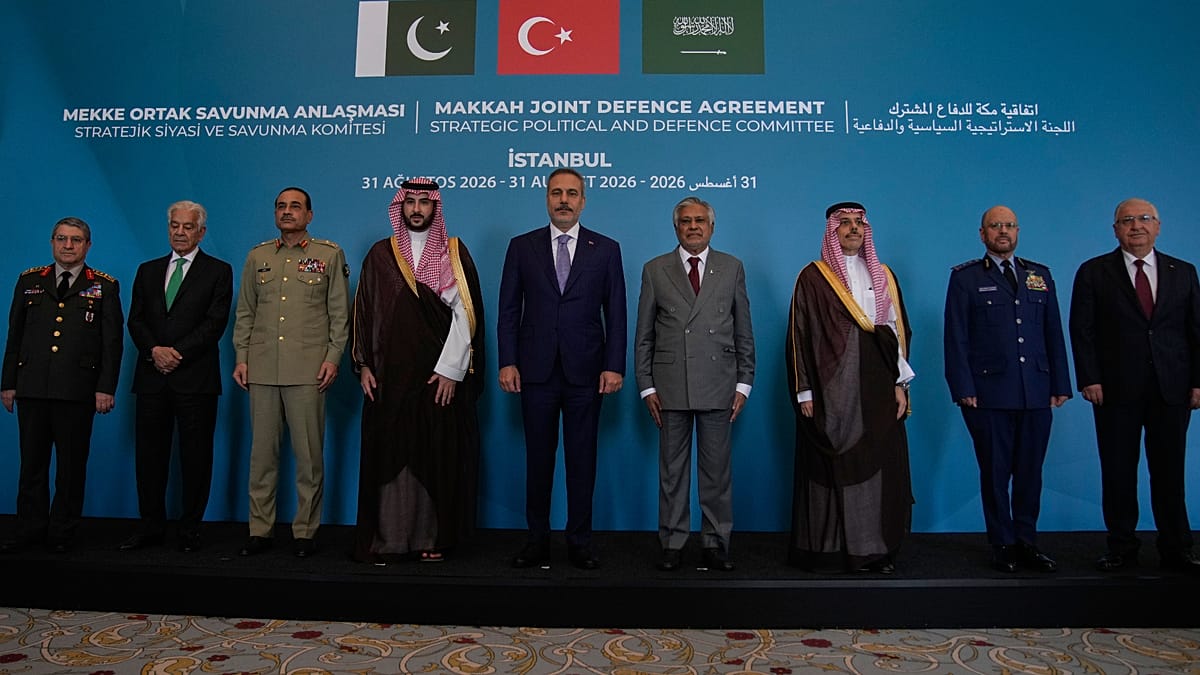
- Islamabad deploys military forces to Saudi Arabia under the mutual defense pact signed in Makkah alongside Turkey.
- Houthi attacks targeted King Khalid International Airport and Aramco oil facilities, leaving one Nepali worker dead and several others injured.
- The Riyadh-led coalition conducts retaliatory strikes, while Houthi leaders warn that any new military alliances are doomed to fail.
Strategic Shift in the Regional Security Architecture
In a significant development reshaping the security balance in the Middle East, Pakistani authorities announced the beginning of deploying military forces to help bolster Saudi defenses, following an escalation in attacks launched by the Houthi group against strategic sites and facilities inside the Kingdom.
The Pakistani announcement came in the context of activating the "Makkah Mutual Defense Agreement," signed on August 7 between Pakistan, Saudi Arabia, and Turkey, which stipulates that any armed aggression targeting one of the three nations is considered an aggression against the other signatory parties. Following a farewell ceremony for the departing troops, the military establishment in Islamabad affirmed that this step stems from an "unwavering commitment to protecting the Kingdom's sovereignty, territorial integrity, and the sanctity of the Two Holy Mosques," without disclosing the number of troops or details of their field missions.
Intensified Attacks Target Energy Facilities and Airports
This military move coincided with a new wave of missile strikes; the Saudi-led coalition announced the interception and destruction of several ballistic missiles over the weekend. Meanwhile, the Houthi group claimed responsibility for carrying out five attacks targeting King Khalid International Airport in Riyadh, radar systems in Abha and Khamis Mushait, and power stations in Al-Shaqeeq and Jazan, as well as vital Aramco facilities including the Jazan refinery and the Hawiyah gas plant.
On Thursday, the Jazan refinery was targeted in an attack that killed a Nepali worker and injured several others, causing a temporary disruption to some operational activities, according to Saudi authorities, while shrapnel from an intercepted missile fell over the power station in Al-Shaqeeq in the southern region without causing civilian casualties.
Political Reactions and On-the-Ground Escalation
In response to these strikes, the coalition announced the execution of military operations targeting sites and command platforms used by the Houthis to launch attacks and threaten international navigation in the Red Sea and Bab al-Mandab Strait, emphasizing its commitment to an immediate response to any attacks in accordance with international humanitarian law. These developments coincided with assessments by international research centers indicating Houthi attempts to pressure Riyadh to halt its operations, as their forces advance toward Yemen's western coast, threatening global shipping lanes and energy supplies.
Conversely, Mohammed Ali al-Houthi, a member of the group's Supreme Political Council, criticized Turkey and Pakistan's involvement in military agreements with Riyadh, asserting that newly formed military alliances will meet the same failure faced by previous coalitions. The Pakistani deployment comes weeks after Egypt announced its intention to provide defensive military support to the Kingdom, including air defense systems and aircraft, amid parallel diplomatic efforts in which Islamabad, alongside Qatar, is participating to mediate regional de-escalation talks.
Source: Euronews (فرنسي)


Comments (0)
You must log in to comment on articles.
Log in Sign upBe the first to comment on this article.