

What Do You Know About Initial Reception Platforms for Asylum Seekers in France (SPADA) and Why Are They an Essential Step?
Applying for asylum in France requires going through designated initial reception platforms (SPADA)—state-mandated associations acting as intermediaries with the prefecture to register claims and assist applicants through the legal process.

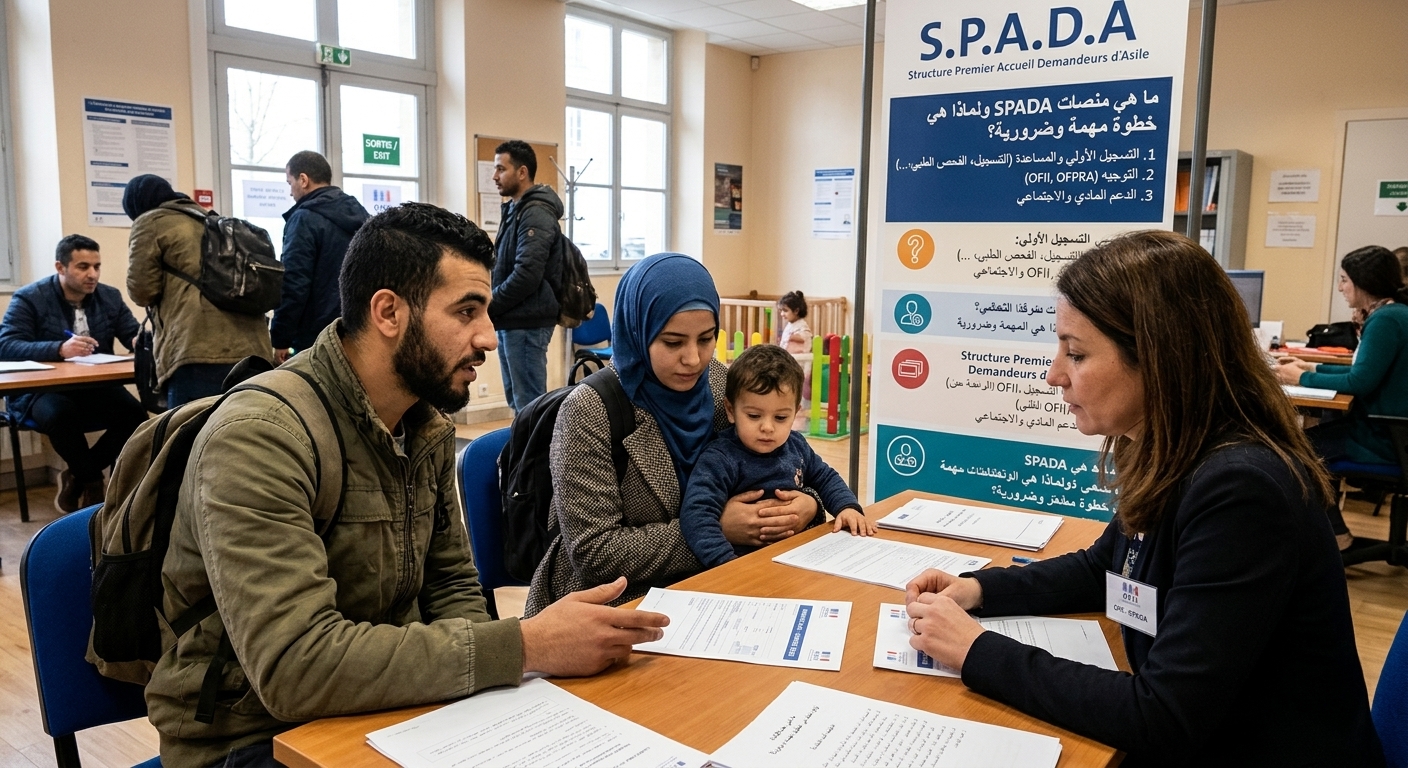
- SPADA platforms act as the mandatory first point of contact and intermediary between asylum seekers and the prefecture.
- In Île-de-France, appointments must be scheduled by phone via an OFII-operated call center.
- Applying more than 90 days after entering France may place applicants under an accelerated procedure with reduced reception conditions.
- Reception structures provide administrative address domiciliation, application preparation, and social guidance.
- CAES centers serve as temporary accommodation and screening facilities for evaluating administrative profiles.
To apply for asylum in France, applicants must go through initial reception platforms designated by the French state in accordance with legal regulations. These platforms are associations specialized in welcoming asylum seekers and act as intermediaries with the prefecture (police).
The nature and services of these associations vary from one region to another, but they generally assist applicants in drafting and translating their asylum narrative and preparing the asylum application file. The waiting time for the first appointment also varies, though it generally does not exceed 15 days. Therefore, the applicant must contact the association as soon as possible, either by phone or by appearing in person at its premises, to secure a first appointment.
- You can find the facility closest to your place of residence via the following link by selecting your region or department:
- Note: In the Île-de-France region (Paris and its suburbs), for instance, obtaining an appointment with the reception structure has been exclusively by telephone since May 2018. Applicants must call a dedicated line operated by the French Office for Immigration and Integration (OFII). The number is: 01.42.500.900.
During the call, an OFII official will ask questions regarding:
- Your date of entry into France.
- Your civil status and the status of accompanying family members.
- Your health condition, etc.
Subsequently, a text message will be sent to the phone number you provided, confirming the date and time of the appointment with the reception structure.
Please note that reaching the helpline can be difficult, requiring multiple attempts.
As part of modernizing administrative procedures, several prefectures have introduced telephone appointment systems. This has rendered asylum seekers largely invisible, forcing many to endure considerable hardship while waiting for an appointment to register their claims. If you are unable to reach the platform, you may file an appeal before the administrative court.
*- Warning: It is crucial not to miss your appointment with the reception structure and to respect the scheduled date and time.
You must go to the reception structure as quickly as possible (or contact the telephone platform).
- In practice, while there is no strict statutory deadline for claiming asylum in France and one can apply after residing in the country for several years, declaring upon application that you entered France more than 3 months (90 days) ago will lead the prefecture to place you under the "accelerated procedure" (procédure accélérée). This procedure is not in your favor and may result in the denial of material reception conditions, namely accommodation and financial allowance.
What Is the Role of the Reception Structure Managed by the Association?
The platforms or associations designated to receive asylum seekers provide extensive administrative support and guidance, performing several key functions, most notably:
01 - Providing Comprehensive Information on Asylum Procedures
Upon contacting the association, it provides information and guidance regarding the asylum process, along with informational materials prepared by the French Office for Immigration and Integration (OFII), the state agency responsible for asylum, immigration, and integration affairs.
02 - Assisting with Registration Procedures
During the initial appointment, the association assists you in filling out the registration form for your asylum application, verifies that your file is complete for forwarding to the prefecture, and books an appointment for fingerprinting.
- To complete the form, the intake officer will ask questions regarding:
- Your civil status (surname, first names, nationality, family status, etc.).
- The itinerary and timeline of your journey since leaving your country of origin.
- Your date of entry into France and method of entry (legal or irregular).
- Whether you have previously applied for asylum in France or another European Union member state, etc.
Afterward, the form and a photograph taken via webcam will be transmitted to the prefecture.
*- Note: Even if you do not possess a passport or national identity card, the reception structure is obligated to register your asylum application and record the information you provide orally.
- The questions asked regarding your journey help determine whether you transited through other EU countries, in order to apply the Dublin Regulation.
- Prefectures differ in how they handle the initial oral statements taken at the reception platform/association and recorded on the technical form sent to the prefecture.
Some prefectures only place individuals under the Dublin procedure if their fingerprints were previously recorded in the Eurodac or Visabio databases, whereas other prefectures scrutinize the statements made during the initial interview with the platform.
03 - Scheduling an Appointment at the Prefecture Desk
The reception structure helps you schedule an appointment at the prefecture's "Single Desk for Asylum Seekers" (GUDA) within the following three days (sometimes taking a week to 10 days if the volume of applicants is high) and issues a summons for this appointment.
If you are unable to access the reception structure within a reasonable timeframe, it is possible to lodge an appeal with the administrative court.
04 - Providing a Domiciliation Address for Mail
After attending the GUDA at the prefecture, if OFII has not assigned you permanent accommodation, you must return to the association/reception structure and notify them. The association will then:
- Provide you with an administrative address (a fixed domiciliation address, which is vital for receiving your mail).
- If you are not accommodated in an Asylum Seekers' Reception Center (CADA), a similar facility, or an Assessment and Examination Center (CAES), administrative domiciliation with the association/reception structure becomes mandatory.
This means you cannot provide any other mailing address for all your administrative procedures, including your asylum claim—unless you are a leaseholder or homeowner.
- Assist you in filling out the asylum application form for the French Office for the Protection of Refugees and Stateless Persons (OFPRA).
- Assist you in writing your asylum narrative and having it translated into French.
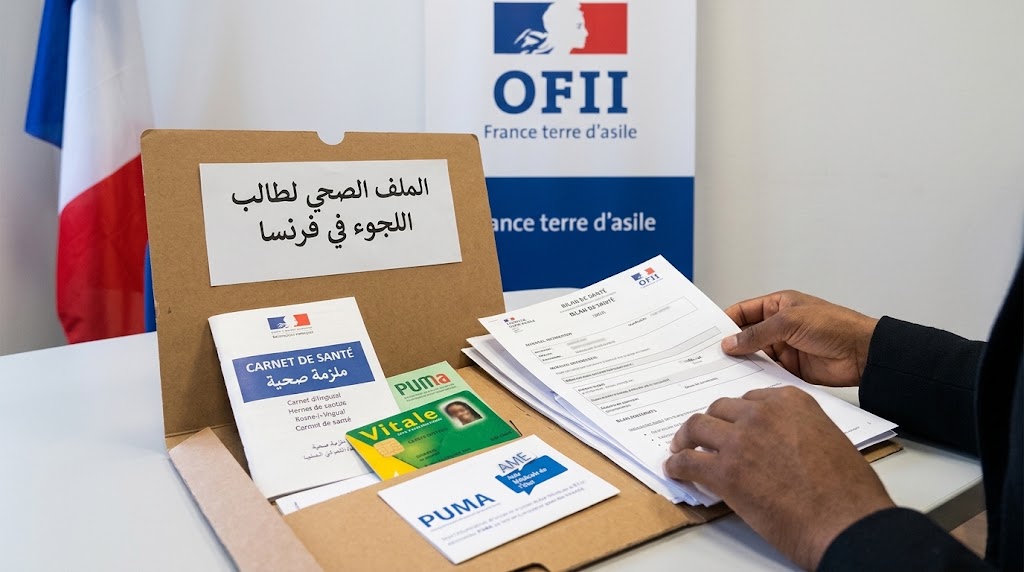
- Assist you in accessing the healthcare and medical coverage to which every asylum seeker is entitled.
- Provide emergency assistance (vouchers, food parcels) and direct you to municipal social services if necessary (Municipal Social Action Center - CCAS).
- The reception structure is required to assist you as it is a state-funded body subject to specifications set under immigration law. If the structure fails to provide adequate assistance, you may contact other organizations specializing in supporting migrants and asylum seekers.
Warning! : You must regularly visit the association/reception structure to collect and check your mail (or check for it on the platform's website where available, as in Bordeaux and the Aquitaine region).
- Failure to do so may lead the association to terminate your administrative address. More critically, if you are under the "Dublin procedure" and fail to collect your mail or miss appointments (prefecture/police appointments to renew your asylum application certificate, or summonses from OFPRA or the National Court of Asylum - CNDA), the prefecture may classify you as "absconding," which generally leads to the closure of your asylum file.
05 - Support and Integration for Beneficiaries of International Protection
The association assists you with all administrative procedures once your claim has been approved and you are recognized as a refugee. The reception structure/association will provide administrative guidance to facilitate your settlement, particularly in preparing the residence permit application and registering with various public bodies to obtain all the rights and benefits you are entitled to as a legal resident in France (OFII, CAF, France Travail/Pôle Emploi, etc.).
This support is usually limited to a period of 6 months, after which you are referred to specialized integration agencies and social service bodies such as the CCAS.
06 - Passing Through Reception and Situation Assessment Centers (CAES)
There is another framework distinct from what was mentioned above, known as Reception and Situation Assessment Centers (CAES).
The French government introduced this system in an effort to address deficiencies in the reception of asylum seekers. This model has been expanded nationwide to ensure immediate shelter and prompt administrative review before directing asylum seekers to appropriate accommodation based on their administrative status.
- Each CAES facility has a specific capacity for receiving asylum seekers. In principle, the stay should not exceed ten days, but in practice, it may last longer due to recurrent shortages of accommodation places for asylum seekers in France.
Files are assessed and prioritized according to administrative status; individuals seeking asylum may be directed to facilities with more restrictive operating environments. Often, individuals under the Dublin procedure are housed there, where they may be subjected to house arrest, monitoring, and administrative detention should judicial or prefectural authorities order their transfer.
- In the Île-de-France region, for example, to obtain a place in a CAES, one must have previously been accommodated in a day center for isolated individuals or the homeless.
Comments (0)
You must log in to comment on articles.
Log in Sign upBe the first to comment on this article.