

The Graduate and Labor Market Crisis in France: Are Institutes Producing an Elite Without Jobs?
A growing debate in France surrounds the disconnect between the higher education system and the labor market, as researchers warn of an "elite overproduction" that leaves thousands of degree holders facing underemployment and economic hurdles.

- The rapid proliferation of business schools and universities coincides with sluggish economic growth, creating a widening gulf between graduate ambitions and available jobs.
- The enduring monopoly of prestigious "Grandes Écoles" on senior positions leaves other graduates, including international students, facing career hurdles and severe homeownership barriers.
- Researchers warn of prolonged institutional and social instability extending beyond 2027, exacerbated by mounting public debt and the impact of artificial intelligence on educated professionals.
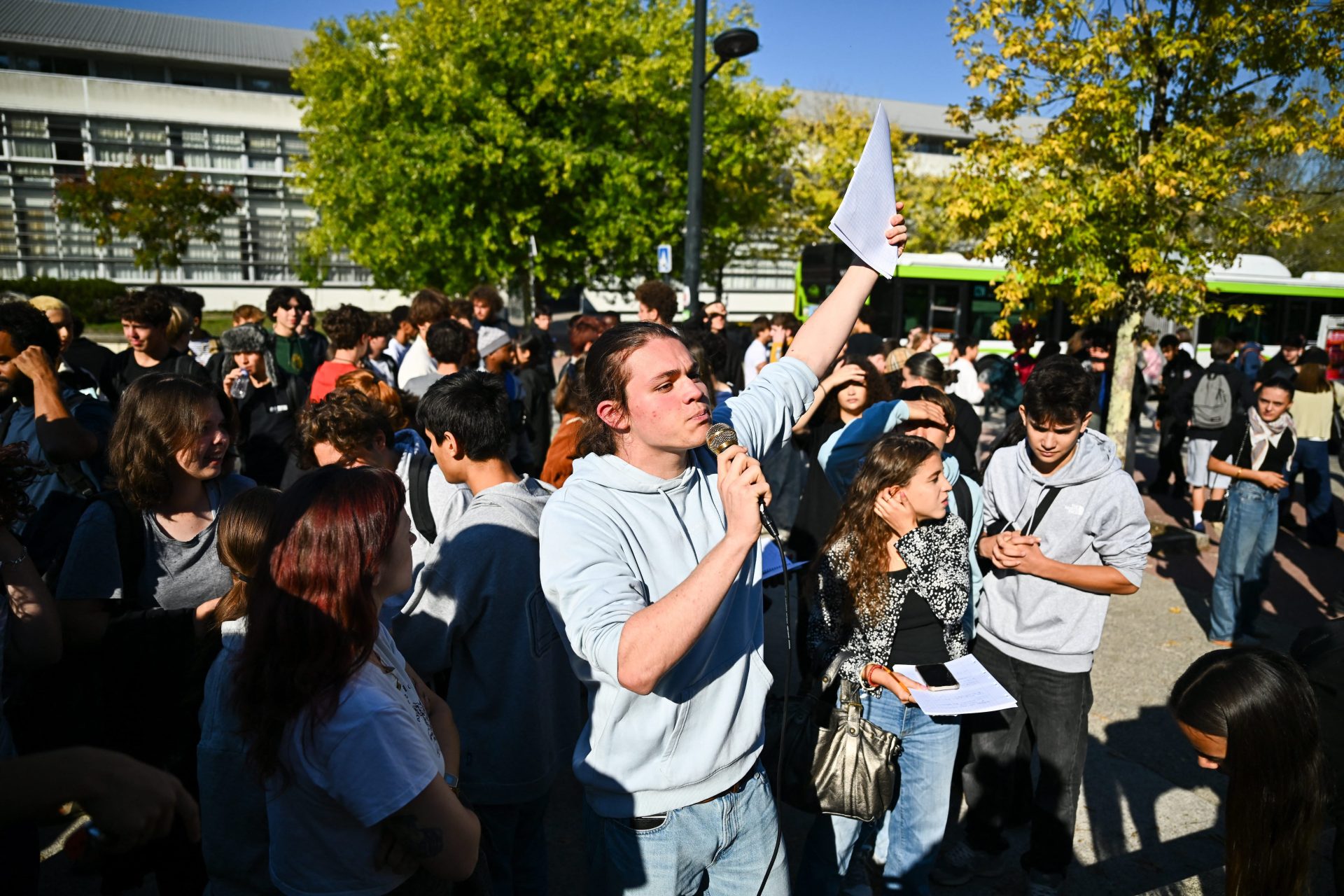
France is witnessing an intense public debate over the alignment between its educational system and the labor market, amid escalating student protests and growing discussion surrounding the phenomenon of the "overproduction of elites." Nicolas Salerno, a researcher at the National Centre for Scientific Research (CNRS) and president of the French Association for Cliodynamics (Cliodynamique), outlines the dimensions of this impasse, which confronts thousands of advanced degree holders with a complex economic reality.
Structural Imbalance Between Degrees and the Job Market
In a joint study covering the period from 1950 to 2023, drawing on the theories of researchers Peter Turchin and Jack Goldstone, Salerno based his analysis on the premise that major social crises arise when the number of aspirants for social and professional status outstrips the number of positions actually available. The researcher explained that France has witnessed a remarkable boom in the number of business and management schools training cadres for the private sector. However, current economic growth is far weaker than it was in the 1990s, confronting new graduates with disguised unemployment or career paths that fall short of their ambitions.
This dilemma is exacerbated for international students and descendants of immigrant communities who invest in private education hoping to legalize their residency status and enter the French labor market. The researcher points out that senior leadership positions remain largely the preserve of graduates from prestigious, historic "Grandes Écoles," such as the former National School of Administration (ENA), École Polytechnique, and HEC Paris, while graduates from other institutes face unequal starting conditions.
Cost of Living Hardships and Fading Promises of Upward Mobility
Although redistribution mechanisms in France maintain relative stability in direct material disparities, the gap is visibly widening in basic daily life indicators. Salerno noted that access to homeownership today requires mortgages spanning an average of about 23 years for individuals with a good income in urban areas, compared to only about 10 years half a century ago. This has made the promise of higher education as a definitive vehicle for social mobility appear increasingly unattainable for many young talents.
On the political front, the study demonstrated that the competition for positions is not confined to the corporate sector but extends to public representation. The average number of candidates per seat in legislative elections has doubled from approximately 5 candidates prior to 1990 to around 10 candidates afterward, driven by the expansion of education and the decline of traditional political recruitment networks, thereby intensifying fragmentation across the party and legislative landscape.
Fiscal Pressures and Years of Instability
These demographic and professional shifts coincide with a complex fiscal situation for the French state. Public spending accounts for 57% of GDP, compared to 37% in the United States, alongside sovereign debt constrained by European Union rules and foreign creditors amid rising real interest rates.
Addressing future challenges, the researcher warned of the impact of artificial intelligence technologies, which threaten to widen disparities among educated classes, citing sectors such as legal consulting and administrative services where machines are already completing a substantial portion of work at remarkable speed. Salerno concluded by emphasizing that the current crisis will not be resolved simply by holding presidential elections in 2027, urging preparedness for years of turbulence and friction, which could simultaneously offer an opportunity to reshape institutional rules and achieve a more balanced distribution of opportunities in French society.
Source: L’Express


Comments (0)
You must log in to comment on articles.
Log in Sign upBe the first to comment on this article.