

The 2,200-Kilometer Journey: An Extraordinary Humanitarian Operation Rescues Animals of Oleshky from Ukraine War
More than 100 pets, including dogs, cats, and parrots, have been evacuated from the war-torn town of Oleshky, completing a grueling 2,200-kilometer detour across borders to reach safety in Ukraine.

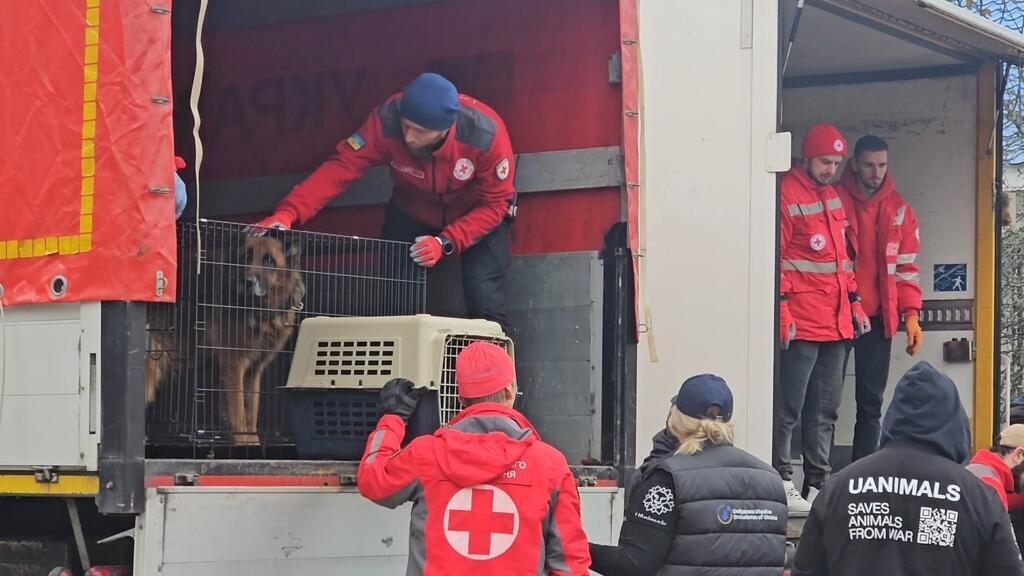
- 105 pets arrived in Kyiv after traveling 2,200 km via Belarus, despite their hometown being just kilometers from the frontline.
- Residents of Oleshky refused to leave conflict zones without their pets, amid harrowing testimonies of hunger and severe living conditions.
- The 'UAnimals' organization and veterinary clinics are treating malnourished and traumatized animals to reunite them with their families.
On October 31, 2026, Ukraine's northern border witnessed an extraordinary humanitarian scene. While aid workers and journalists were awaiting the arrival of civilians fleeing the horrors of war in the town of Oleshky, the first vehicle arriving via Belarus was carrying more than a hundred pets—including dogs, cats, and four parrots—all of which had traveled more than 2,200 kilometers to reach safety.
An Arduous Compulsory Route to Bypass Battlefields
Although the Kherson region town of Oleshky lies just 5 kilometers from Ukrainian positions and 8 kilometers from the city of Kherson, operational restrictions and conditions on the ground forced the convoy to take an exhausting 2,200-kilometer detour through Krasnodar Krai and Belarus before crossing into Ukrainian territory. The journey took two days by buses and airplanes amid extreme exhaustion and tension.
As soon as the truck arrived, filled with sounds of barking and meowing, Red Cross teams, in cooperation with the Ukrainian animal protection organization 'UAnimals', began opening the stacked crates. The deteriorated health condition of the animals reflected the scale of the tragedy endured by every living creature in that area under siege and years of shelling and devastation.
Clinging to Companions Despite Hunger and Devastation
Anastasia Hychuk, head of rescue services at 'UAnimals', explained that the organization took charge of 88 out of the 105 animals that crossed the border, while two dogs were able to return directly to their families. She emphasized that a large number of residents refused to evacuate without taking their pets, with some carrying nothing more than a pet carrier, a blanket, and a leash, preferring to remain under shelling rather than leave them behind alone.
These humanitarian scenes were accompanied by grim accounts from the returnees, including 29-year-old Valera, who described how life in Oleshky had turned into an unbearable hell with the town completely destroyed, to the extent that some were forced to eat grass to survive amid a severe disruption of basic supplies and food.
Veterinary Care and Rehabilitation Efforts
The animals were transferred to specialized veterinary clinics in Kyiv to receive emergency care, with several undergoing surgery for blast shrapnel wounds. Oleksandr Zhuk, director of one of the receiving clinics, noted that roughly 80% of the cases suffer from severe skin infections caused by parasites, malnutrition, and the total lack of vaccinations and medical care throughout the conflict, necessitating extensive time for both physical and psychological recovery.
Humanitarian teams continue to monitor the health of the animals in preparation for reuniting them with families displaced by the war. According to estimates by 'UAnimals', the organization has evacuated more than 11,000 animals, treated nearly 70,000, and provided aid to hundreds of thousands affected by the continuously shifting frontlines since 2022.
Source: RFI


Comments (0)
You must log in to comment on articles.
Log in Sign upBe the first to comment on this article.