

Spontaneous Marches in France: How Protesters Defy Security Restrictions with Undeclared Processions
Amid major national mobilization across France, undeclared spontaneous marches coordinated via encrypted messaging apps are increasingly emerging to bypass security restrictions.

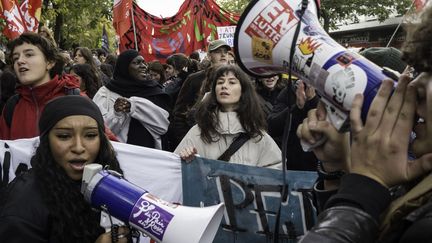
- Growing emergence of undeclared marches in Paris and major cities alongside national strike and protest days.
- Activists justify these moves as a direct response to authorities restricting the right to protest and imposing fixed routes.
- Security agencies and territorial intelligence step up electronic surveillance to track down and disperse these illegal gatherings.
Amid the major days of national mobilization in France—which in their latest round on Thursday, November 5, brought together between 575,000 and 1.6 million protesters—a striking phenomenon has emerged on the sidelines: the formation of parallel processions known as "spontaneous" or undeclared marches. Conducted in absolute secrecy and with lightning speed, these actions rely on coordination via encrypted messaging platforms such as Telegram to call for surprise gathering points, as occurred recently at Place de la Nation in Paris or near Rue d'Endoume in Marseille, with expectations of their recurrence during subsequent protest dates, such as Saturday, November 7.
Horizontal Organization and a Game of "Cat and Mouse" with Security Forces
These marches are characterized by their independent nature and the absence of a clear hierarchical leadership; they take shape within minutes or with advance planning of only a few hours, with participant numbers ranging between 20 and 200 people depending on circumstances. The protesters' primary plan relies on appearing suddenly in the streets and then rapidly dispersing to disorient police forces. Nonetheless, these maneuvers frequently turn into swift pursuits, as French law clearly stipulates that organizing or taking part in an undeclared demonstration not registered with the police prefecture (Préfecture) constitutes a legal violation granting law enforcement forces the authority to intervene immediately and disperse or arrest participants. This was confirmed by security sources, who noted that some gatherings are easy to control—such as when protesters were funneled toward Place de la République in Paris—compared to greater difficulties if they include radical elements seeking confrontation.
Protesting the Restriction of Demonstration Routes
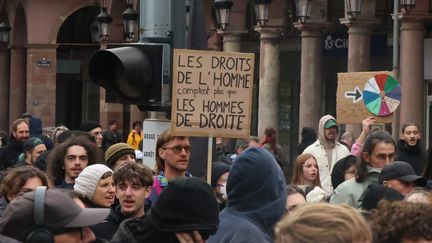
For their part, participants view these actions as a means of expressing rejection against what they consider increasing state-imposed restrictions on the freedom to protest. Zoé, one of the organizers of these marches in the Pas-de-Calais department, says these steps come in response to government decisions banning demonstrations in city centers, canceling routes, and prohibiting the use of certain sound equipment. In a related context, Nanterre University student Lou, who took part in similar actions in the capital comprising around 150 people, points out that these marches—which sometimes take on a musical, festive tone—convey a message of resilience and reaffirm the street's ability to reorganize itself in the face of sudden cancellations of official protest routes.
Inspired by Hong Kong Tactics and Tight Security Surveillance
This strategy is not entirely new in France, having previously appeared during the 2016 labor law protests, but it now appears far more organized. Some protesters cite the model of the 2019 Hong Kong democratic movement. Rahaf Harfoush, a digital anthropologist participating in the "International Festival of Democratic Resistance" in Paris on November 9, explains that this approach relies on combining smart on-the-ground mobility with digital coordination to distribute crowds and scatter the focus of security forces instead of remaining at a single fixed geographic point.
Conversely, security sources affirm that French territorial intelligence services (RT) are placing these movements under close scrutiny and digital surveillance across social media. As tensions persist, some protesters have begun resorting to direct, internal verbal coordination to reduce the risk of infiltration and security pursuits, in a climate that raises concerns among residents and foreigners in France over the consequences of accidental presence in the vicinity of gatherings that may expose participants to legal liability and immediate arrest.
Source: France Info


Comments (0)
You must log in to comment on articles.
Log in Sign upBe the first to comment on this article.