

Scientific Innovation Rescues Europe from Wind Turbine Waste via Flash Heat Shock
A newly developed flash heating technique offers a breakthrough solution to Europe's looming wind turbine blade waste crisis by transforming hard-to-recycle composites into high-value silicon carbide and graphene.

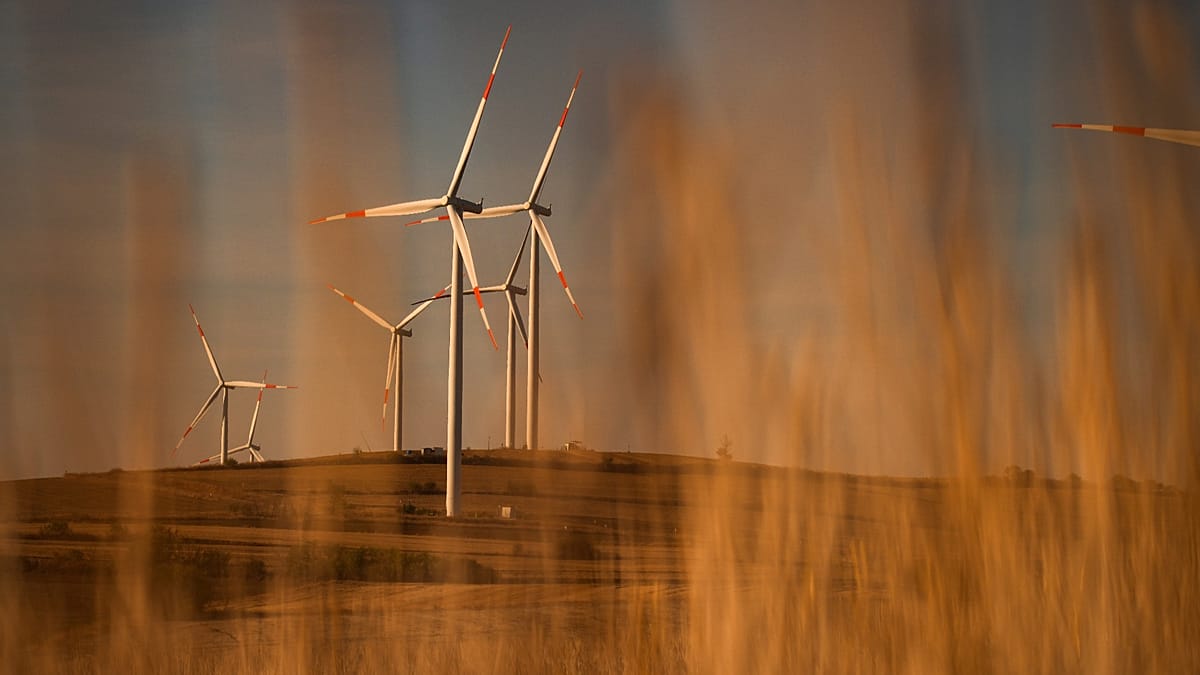
- Decommissioned wind turbine blade waste in Europe is projected to surge from 20,000 tonnes in 2025 to 55,000 tonnes by 2030.
- The 'Flash Joule heating' technique at 2,000°C successfully converts glass fibers and polymer resin into silicon carbide and graphene.
- The upcycled materials enhance the strength of new blades and reinforce calls for a binding landfill ban across the European Union.
As energy transition initiatives accelerate across France and Europe, an unforeseen environmental dilemma has emerged from the rapid expansion of wind farms. The continent faces the risk of becoming a dumping ground for hard-to-recycle turbine blades, according to a recent scientific study that unveiled a new technological solution based on ultra-high temperatures.
An Escalating Waste Crisis in European Landfills
Wind power stands as one of the most vital and cost-effective pillars in tackling the climate crisis. However, the turbines deployed across European land and seas are engineered to endure the harshest weather conditions, from intense ultraviolet radiation to gale-force winds and lightning strikes. While between 85% and 90% of a turbine's total mass can be recycled, the extreme durability of the blades makes processing their remaining components remarkably complex.
Consequently, many of these decommissioned blades end up in landfills or incineration facilities, typically after 20 years of operation. Projections indicate that the volume of turbine blade waste in Europe will rise from 20,000 tonnes in 2025 to 55,000 tonnes by 2030 as the oldest wind farms reach the end of their operational lifespans.
In response to this growing challenge, the European wind industry association (WindEurope) instituted a voluntary sector-wide ban on landfilling blades, urging European Union policymakers to enshrine this prohibition into binding legislation to accelerate the adoption of sustainable recycling technologies.
Thermal Shock Converts Waste into High-Value Materials
In the search for viable alternatives, a team of researchers has developed an innovative method to repurpose discarded blades by subjecting them to rapid, intense thermal shock. The study, published in the scientific journal 'Chem Circularity', demonstrates that 'Flash Joule heating' technology can transform the blades—largely composed of silica-bearing glass fibers and a carbon-rich polymer resin—into silicon carbide and graphene, two highly valuable materials in modern manufacturing.
The process works by heating the blades to approximately 2,000 degrees Celsius in just a few seconds. Under this immense thermal impact, the carbon reacts with the silica to produce silicon carbide—a robust, heat-resistant compound—while the remaining carbon molecules rearrange into graphene, renowned for its extraordinary strength and superior thermal and electrical conductivity.
Experimental results demonstrated that blending crushed blades with other materials prior to heating enhanced the performance of the resulting composite. Incorporating just 0.3% of the recovered material by mass increased the resin's stiffness and deformation resistance by 27% in tensile tests and 9% in flexural tests.
Chemical and environmental engineer Bing Deng from Tsinghua University, the lead supervisor of the study, affirmed that this composite could be reintroduced into the manufacturing of new turbine blades to enhance their mechanical and thermal properties. He stressed that this approach moves beyond conventional recycling toward 'upcycling,' transforming otherwise useless industrial waste into valuable manufacturing resources.
Source: Euronews (فرنسي)


Comments (0)
You must log in to comment on articles.
Log in Sign upBe the first to comment on this article.