

Power Struggle in the Indian Ocean: Washington Moves to Counter Russian Expansion in Mozambique and Madagascar
A high-level US AFRICOM delegation toured Mozambique and Madagascar to reinforce strategic partnerships and counter expanding Russian influence in a vital Indian Ocean corridor.

- A high-level US AFRICOM delegation visited Madagascar and Mozambique to enhance military cooperation and combat piracy and terrorism.
- Growing US concern over rising Russian influence in the Mozambique Channel and the port of Diego Suarez through arms supplies and Africa Corps training.
- US proposals for joint naval exercises that could include France and other allies to protect energy sea lanes and gas investments in the region.
The Indian Ocean region has witnessed intensive diplomatic and military maneuvers reflecting Washington's drive to solidify its strategic partnerships. A high-level delegation from the United States Africa Command (AFRICOM) conducted a tour of Mozambique and Madagascar between November 3 and 7, in a clear bid to counter the growing expansion of Russian influence in this vital zone for global trade and energy.
US Warnings Against the 'Russian Security Model'
Deputy Commander of the US Africa Command, Lieutenant General John Brennan Jr., stressed during a virtual press briefing held on November 10 that America's African partners are entirely free to choose their alliances, but underscored the necessity of recognizing the 'risks' associated with rapprochement with Moscow.
The military official explained that Washington harbors explicit concerns regarding Moscow's efforts to expand the security model it implemented in the African Sahel toward East Africa and the Indian Ocean, warning against the exploitation of natural resources and the undermining of sovereign national interests in the affected countries.
Escalating Russian Presence in Mozambique and Madagascar
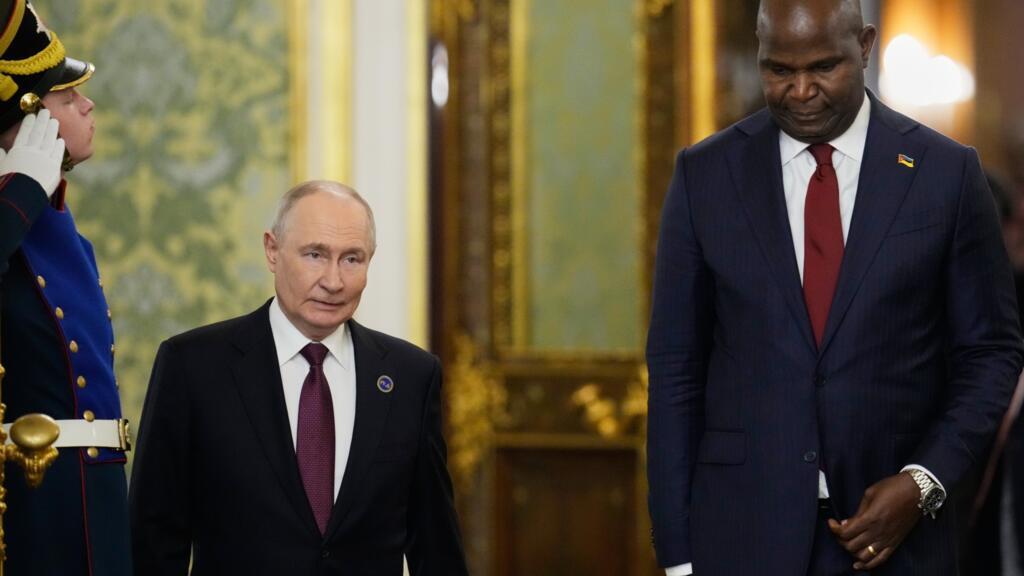
Moscow attaches great importance to the Mozambique Channel, which serves as a crucial transit route for international maritime navigation and transcontinental trade. On October 28, Mozambican President Daniel Chapo met with his Russian counterpart Vladimir Putin on the sidelines of the Russia-Africa Summit, where the Russian president announced that bilateral trade volume nearly doubled between January and August 2026, building upon historical ties established during the Cold War era.
Recent cooperation included inviting Mozambican civil servants for training in Moscow, the participation of lawmakers in observing Russia's legislative elections in September, and discussions on bolstering joint defense and security capabilities. In Madagascar, the island has witnessed accelerating Russian activity since a transitional government assumed power in October 2025, accompanied by arms transfers and military training provided by the 'Africa Corps'—the successor to the Wagner Group—amid distinct interest in developing a logistics platform at the strategic port of Diego Suarez.
International Coordination and Upcoming Naval Exercises
In response, AFRICOM presented a cooperation plan to the Malagasy Armed Forces during its visit to Madagascar on November 3 and 4, aimed at securing maritime lanes and combating piracy and trafficking operations. Washington also seeks to safeguard commercial trade routes connecting Southern Africa, the Middle East, and the Indian Ocean, particularly amid warnings over the growing naval capabilities of militant groups loyal to the Islamic State.
The United States is working to integrate Mozambique into a seven-nation regional intelligence-sharing network operating out of Madagascar, while intensifying joint exercises with US Special Forces to protect international natural gas investments in northern Mozambique. Furthermore, Washington is exploring the organization of multinational military exercises in the region, which may feature the participation of major nations invested in maritime and energy security, such as France, Italy, Japan, and South Korea.
Source: RFI

Comments (0)
You must log in to comment on articles.
Log in Sign upBe the first to comment on this article.