

Opening of France's A69 Motorway: Outrage and Resentment Over Village Isolation and High Tolls
The inauguration of the 53-kilometer A69 motorway linking Castres and Verfeil has sparked widespread anger among local residents and farmers due to exorbitant tolls and degraded alternative routes.

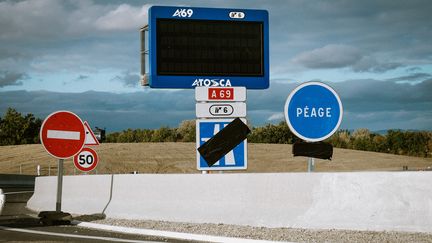
- The inauguration of the 53-kilometer A69 motorway between Castres and Verfeil sparks widespread resentment over tolls reaching up to €20.40 for a round trip.
- Village residents and farmers complain about the degradation of free alternative roads and the doubling of their daily commute times to serve commercial transport interests.
- Mayors and the Tarn Departmental Council denounce the Council of State's rejection of toll subsidies, amid fears of completely isolating rural towns.
After three years of continuous works, traffic disruptions, and detours, the new 53-kilometer A69 motorway linking the towns of Castres (Tarn department) and Verfeil (Haute-Garonne department) east of Toulouse has entered service. Although this new corridor reduces travel time to about 35 minutes instead of nearly an hour via the national road, its inauguration has triggered a wave of outrage among neighboring residents who find themselves paying the price of the project in their daily lives.
Exorbitant Tolls and Complex Routes
A round-trip ticket costs €17 for light vehicles, reaching up to €20.40 when including the section leading to Toulouse. This pricing poses a major obstacle for low-income earners, workers, and residents, especially with rising fuel prices. While politicians and economic stakeholders promoted the project as a solution to open up the "Castres-Mazamet" basin, residents maintain that the reality is completely different; those who prefer to use free routes are forced onto narrow, winding alternatives that lengthen their daily commutes to work, their children's schools, and essential services.
Marie, a speech therapist living in a rural town adjacent to the route, expresses her frustration, pointing out that the motorway has imposed a complicated and dangerous reality on local residents. Whereas accessing the national road used to require driving just 500 meters, residents must now navigate narrow municipal roads barely wide enough for a single car, emphasizing that they "were promised developmental solutions, but received only substandard roads and more daily hardships."
Agricultural and Environmental Damage
The project's fallout did not stop at motorists; it directly impacted the agricultural sector. Dominique Rougeot, a farmer in the Verfeil area, had his farmland split in two over a stretch of 1.3 kilometers and lost 8 hectares through expropriation for public utility. The farmer asserts that the financial compensation received from the operating company, Atosca, does not cover the ongoing losses, as earthworks and foundation infill severed natural and subterranean irrigation networks, complicating access to his land and crops and forcing him to drive long distances by truck for tasks that previously took minutes on foot.
Decline of Free Roads and "State Abandonment"
Users of the RN126 national road—which will soon be downgraded to a secondary local road—are also suffering from traffic degradation following the introduction of around 15 roundabouts and the motorway's absorption of three bypasses originally built with public funding to circumvent town centers. Alexandre Lafon, a history and geography teacher at a high school in Castres residing in Saint-Germain-des-Prés, notes that residents cannot afford tolls exceeding €6 to travel 20 kilometers to work, particularly as diesel prices reach record levels.
The crisis worsened after municipalities like Soual and Puylaurens issued decrees banning heavy goods vehicles from their centers to protect public safety, threatening to cut off supply trucks from towns in the heart of the corridor. For his part, Christophe Ramond, President of the Tarn Departmental Council, criticized the government's stance, describing the situation as an "eleventh-hour abandonment by the state" following the Council of State's decision to reject a proposal by local authorities to subsidize toll rates by a third for citizens, stressing that any infrastructure should be accessible to all and not an additional financial burden on households.
Source: France Info


Comments (0)
You must log in to comment on articles.
Log in Sign upBe the first to comment on this article.