

Mental Health Crisis Hits French Youth and Students Amid Escalating Protests and Future Anxiety
A silent mental health crisis is sweeping through French youth, as escalating protests over educational conditions merge with deep anxiety over academic and professional futures, leaving one in three young people grappling with anxiety or depression.

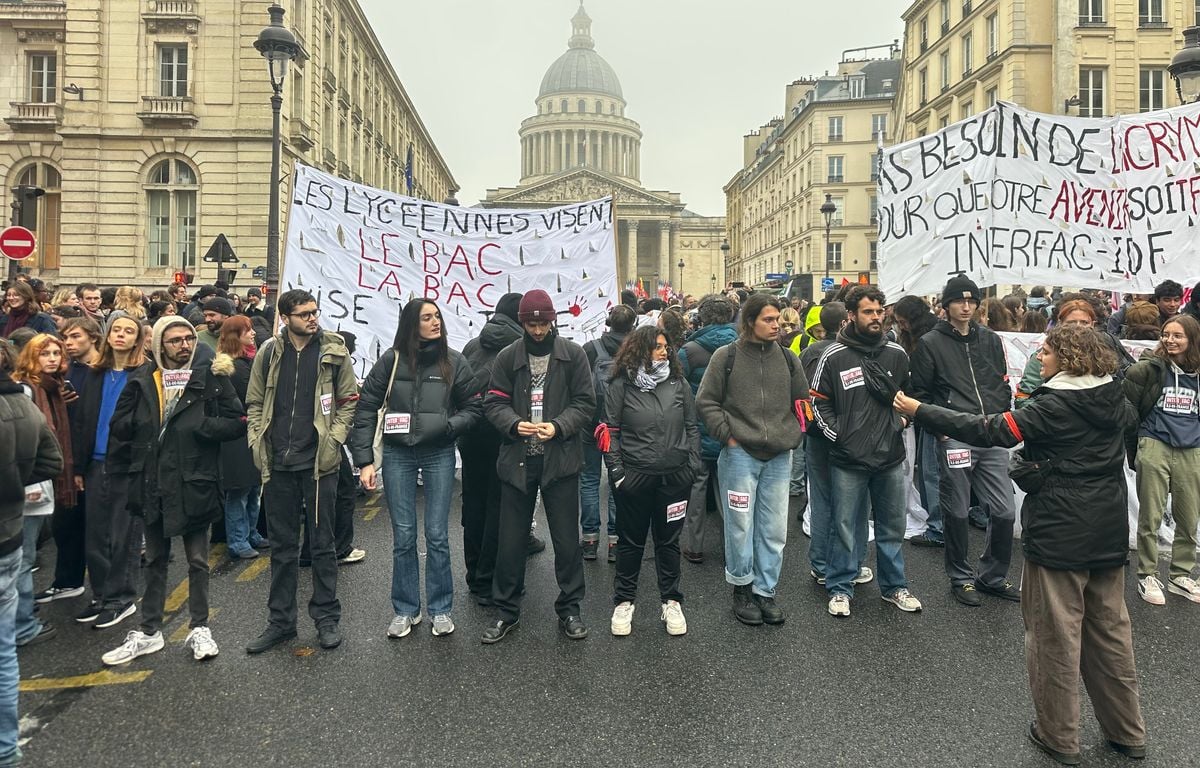
- One-third of young people in France (aged 11 to 24) suffer from symptoms of anxiety or depressive disorders.
- Uncertainty surrounding academic and career futures exacerbates stress levels among university and high school students.
- Clashes and security interventions during demonstrations leave psychological scars and trauma among participants in the youth movement.
Under Paris's overcast skies, schoolchildren, university students, and teachers gathered on Rue Soufflot in the tourist-heavy 5th arrondissement, not far from the Panthéon, to sustain the protest movement that began last September denouncing education and study conditions. Yet behind this street anger lies a silent crisis deeply affecting the daily reality of young people in France, where data indicates that a third of those aged between 11 and 24 show signs of anxiety or depressive disorders.
Lack of Prospects and Declining Confidence in Academic and Professional Futures
Clarisse, a 19-year-old Sorbonne University student, describes the general atmosphere as demoralizing, explaining that juggling class attendance—which is sometimes conducted remotely or cancelled altogether—with participating in protests creates a constant state of anxiety and bewilderment. Her peer Colombe agrees, pointing out that academic excellence no longer guarantees a secure future, noting that the Baccalauréat does not guarantee success at the Bachelor's level, a Bachelor's does not secure a Master's, and a Master's no longer guarantees finding a job, fostering a sense that an entire generation has been abandoned.
For many, this uncertainty has spiraled into sleep deprivation and persistent psychological stress; Raphin, an undergraduate theater student, explains that the government's lack of response to the protesters' demands, coupled with anxiety over the partial examination system, makes matters extremely complicated, especially for those who already suffer from psychological vulnerability.
Field Trauma and the Impact of Security Interventions
Psychological pressure does not end at the boundaries of the academic future; it extends to firsthand experiences during demonstrations. Nathanaël, a 15-year-old high school student, recounts his first experience at the protests, during which he was exposed to tear gas and a stun grenade detonated near him, leaving him living under intense fear and anxiety whenever his mother takes part in the marches.
For her part, Emma, a student at Sorbonne Nouvelle University, recalls the general assembly held on October 5 to join the high school movement, which witnessed a heavy-handed intervention by security forces and a cordon that lasted for several hours, according to students and teachers. These events revived post-traumatic stress disorder in her peer Adèle, who was forced to leave Paris and stay at her mother's house for two weeks, unable to do anything except endure continuous night terrors.
Between Daily Exhaustion and Clinging to Collective Hope
Victoria, a third-year undergraduate studying Spanish, highlights the persistent exhaustion and weeping caused by the sight of security reinforcements and police helicopters everywhere, even outside protest hours and across social media platforms. This climate also fosters a sense of guilt among students when missing mobilizations, as happened to Emma, who felt she fell short by failing to attend the demonstration on the 24th of the month.
Despite this suffering and the recourse to childhood memories in search of solace and emotional respite, protesters share a striking paradox: although the overall climate is profoundly anxiety-inducing, participating in activism and collective action serves as an essential outlet to preserve their psychological balance, reviving hope in the possibility of changing this difficult reality.
Source: 20 Minutes


Comments (0)
You must log in to comment on articles.
Log in Sign upBe the first to comment on this article.