

Medical Residence Permit (Titre de Séjour pour Soins): What Is It and How to Obtain It? A Comprehensive Guide
A comprehensive guide on the requirements, updated procedures, and evaluation criteria for obtaining the French medical residence permit (titre de séjour pour soins) via the ANEF portal.

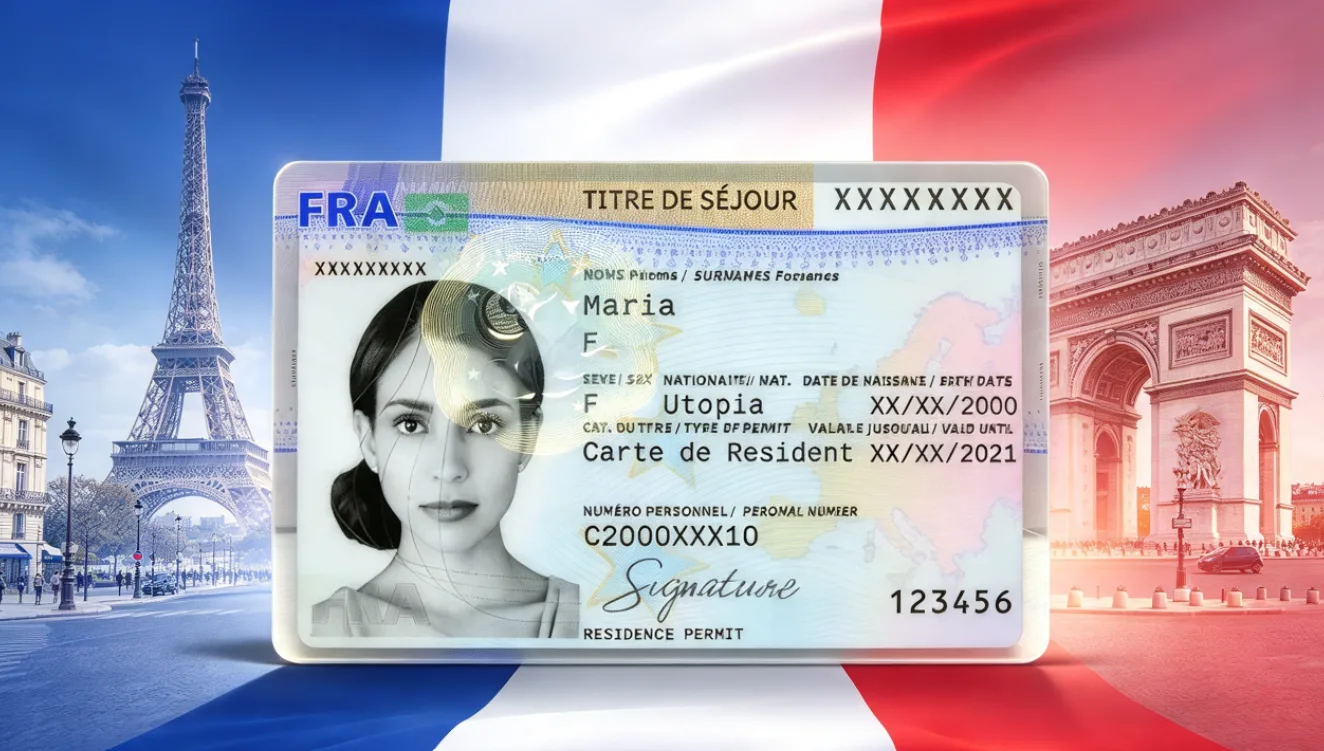
- France grants a temporary medical residence permit valid for one renewable year to foreign nationals whose health requires essential care that is effectively unavailable in their country of origin.
- Application and renewal procedures are now fully digitized through the ANEF portal, with an OFII medical board responsible for mandatory case evaluations.
- Current regulations provide medical exemptions from language and integration requirements for chronic conditions, alongside granting temporary residence authorizations with work rights to parents of sick minors.
- Algerian nationals remain subject to the substantive terms of the 1968 bilateral agreement, while adhering to newly established administrative and medical procedures.
These amendments have included the full digitization of application procedures through the Digital Administration for Foreigners in France (ANEF) portal, the updating of approved medical forms, and the enactment of specific exemptions from integration and language requirements for chronic health conditions.
Recent legislation has also reinforced the role of the medical board of the French Office for Immigration and Integration (OFII) in medical evaluations, while maintaining a balance between administrative rigor and the protection of the fundamental right to healthcare.
In this article, we review the essential criteria, updated procedures, and specific provisions governing accompanying guardians of minors and Algerian nationals.
01 — Essential Conditions and Criteria for Evaluating the Medical File:
Under Article L. 425-9 of the Code on Entry and Residence of Foreigners and Right of Asylum (CESEDA), a foreign national—whether having entered France legally or irregularly—is granted a temporary residence permit under the category of "private and family life" (often referred to as a "residence permit for care" on medical grounds), valid for one renewable year, subject to several fundamental criteria:
— Habitual Residence Requirement:
The applicant must establish habitual residence in France for at least one year and submit documents verifying their civil status and nationality to determine the country whose healthcare system will be assessed. In cases where residence has been established for less than one year, a temporary residence authorization (APS) may be granted at the discretion of the administration.
— Notice for Asylum Seekers: If you are an asylum seeker, this application must be submitted within a maximum of 3 months from the date your asylum claim is registered.
Notice for Stateless Persons: A stateless person (apatride) who entered France irregularly is entitled to apply for a residence permit on health grounds under Article L. 425-9, as French law specifically exempts this permit from the requirement of legal entry or a prior visa, with all applicable laws and conditions applying, including the maximum window of 3 months following entry into France.
— Necessity of Medical Care:
The applicant's medical condition must require care, the lack of which would lead to exceptionally severe consequences for their health.
— Lack of Effective Access to Treatment in the Country of Origin:
Taking into account the level of healthcare and the characteristics of the healthcare system in the country of origin, the patient must be unable to effectively access appropriate treatment there.
02 — Conditions Eligible for the Medical Residence Permit:
French law does not set an exhaustive list of medical conditions granting the right to a medical residence permit, as each case is evaluated on its severity and the unavailability of treatment in the country of origin. However, the cases most frequently approved by the OFII medical board include:
— Cancerous Diseases:
All forms of malignant tumors requiring chemotherapy, radiotherapy, or immunotherapy.
— Severe and Chronic Viral Diseases:
Human Immunodeficiency Virus (HIV / AIDS) and advanced chronic hepatitis B and C.
— Renal Diseases: Chronic renal failure requiring hemodialysis or kidney transplantation.
— Cardiovascular Diseases:
Severe heart failure, serious congenital heart defects, and post-heart transplant or complex cardiac surgery follow-ups.
— Severe Psychiatric and Neurological Disorders:
Schizophrenia, severe bipolar disorder, chronic psychosis, refractory epilepsy, and multiple sclerosis (SEP).
— Autoimmune, Genetic, and Rare Diseases:
Systemic lupus erythematosus, severe Crohn's disease, hemophilia, severe sickle cell anemia, and cystic fibrosis.
— Complex Endocrine and Metabolic Diseases:
Type 1 diabetes (insulin-dependent) accompanied by severe complications (renal, ophthalmological, or neurological).
— Severe Respiratory Diseases:
Chronic respiratory failure requiring continuous oxygen therapy, and drug-resistant tuberculosis.
— Organ Transplant Cases:
Post-transplant care (kidney, liver, heart, lung) and the lifelong requirement for immunosuppressive therapies.
— Severe Physical or Mental Disabilities:
Cases requiring continuous, specialized medical and rehabilitative care not available in the country of origin.
03 — Assessment Mechanism for Care in the Country of Origin:
— Care Provision (Infrastructure):
Health capabilities in the applicant's country are evaluated, including the presence of hospitals and medical centers, availability of specialized medical personnel, requisite equipment, and essential medications.
— Characteristics of the Health System (Effective Access):
Authorities examine whether the healthcare system in the country of origin provides the applicant with effective access to treatment without prohibitive financial or administrative barriers, such as the availability of healthcare coverage or targeted subsidy policies for specific groups (children, the elderly, pregnant women, persons with disabilities) or chronic conditions (diabetes, HIV, tuberculosis, hepatitis).
04 — Administrative Procedures and the Medical File:
All first-time and renewal applications must be submitted exclusively through the Digital Administration for Foreigners in France (ANEF) portal. All documents must be uploaded digitally with clear resolution, following these steps:
1 — Access the ANEF portal and log in with your Foreigner Number (Numéro étranger) or visa number. If you do not have an existing file or Foreigner Number, create a new account.
Then select the service from the main menu, and click on apply for or renew a residence permit:
«Je demande ou renouvelle un titre de séjour»
Next, select the ground by choosing private and family life: « Vie privée et familiale »
Then select foreign national in ill health / for health reasons: « Étranger malade / Raison de santé »
Then attach the file, which comprises:
— The Administrative Medical Kit:
Blank PDF versions of the "Medical Kit" (Kit médical) are currently unavailable for public download, as the French system generates a personalized form for each applicant containing their unique file number and QR code once the application is registered online. To obtain it, you must first register on the digital portal according to the procedures described above. Once completed, the medical kit will appear in your personal space. You must download and print the document, date and sign it in the designated section (Box 1), and then have your attending physician complete it.
The physician must draft the medical report using the updated standard form, signing and stamping all pages (including physical and psychological sections, even if empty) and clearly providing their RPPS professional registration number.
Important Note: No medical documents are to be uploaded to the ANEF platform in order to protect medical confidentiality.
— Proof of Identity and Nationality:
A complete copy of your passport (identity pages, visas, and entry/exit stamps) or a photo identity card; if unobtainable, a consular card with a photo or a consular certificate with a photo may be submitted.
A certificate of nationality issued within the past six months with a personal photograph.
— Proof of Civil Status:
A full copy of the birth certificate (Acte de naissance intégral), accompanied by a certified French translation; if married: marriage certificate and family record book (Livret de famille), in addition to a declaration certifying non-polygamy in France.
— Proof of Address (Under 6 Months Old):
An electricity, gas, or water bill, or a recent lease agreement in your name.
If accommodated by a third party: an accommodation certificate (Attestation d'hébergement) accompanied by a copy of the host's identity document and a recent utility bill in their name.
— Proof of Habitual Residence in France (For One Year):
Invoices, bank statements, school attendance certificates, previous filing receipts, or administrative correspondence demonstrating your continuous physical presence in France over the past 12 months.
— Digital Photo Code (e-photo):
Applicants must ensure they obtain a 22-character alphanumeric code accompanying an identity photograph taken in an approved booth, which is the code required during the online portal process.
— Republican Commitment (Mandatory):
Download the standard Contract of Engagement to Respect the Principles of the Republic, sign it, and attach it to the file.
— Supporting Medical Evidence:
The file must be supplemented with copies of laboratory test results, radiology reports, medical prescriptions, and hospitalization summaries substantiating the severity of the condition and the necessity of ongoing treatment. These documents must be placed inside the designated confidential envelope and sent via registered mail (with acknowledgment of receipt) to the OFII medical service within a strict deadline of one month from the date the application is submitted via ANEF.
— Administrative Costs and Fees:
Fees are paid upon permit approval and issuance by purchasing an electronic tax stamp from timbres.impots.gouv.fr or from a tobacco shop (Bureau de tabac).
— If the applicant entered with a valid long-stay visa: a €25 tax stamp.
— If staying irregularly without a valid visa: a €25 tax stamp plus a €200 regularization fee, totaling €225.
— Fees for 2026:
— Under the fee structures updated for May 2026, the initial issuance fee for a medical residence permit stands at €350 (€300 tax + €50 tax stamp), while the annual renewal fee is €250.
05 — Medical Assessment by the OFII Medical Board:
The medical evaluation is conducted by a board consisting of 3 physicians from the French Office for Immigration and Integration (OFII), acting under general directives issued by the Ministry of Health. The board's opinion is mandatory in the processing of the file.
06 — The Prefect's Decision and Right of Appeal:
The Prefect issues the final decision to grant or refuse the residence permit based on the opinion of the medical board and all elements of the application. If the medical board confirms that the medical criteria are met, the Prefect may only refuse the application by delivering a specially reasoned decision. In the event of an appeal before the administrative court, the law—specifically Article L. 425-9-1—permits OFII physicians to provide observations containing confidential medical data to the competent judge without this being deemed a breach of medical confidentiality.
07 — Renewal and Multi-Year Residence Permits:
The permit may be renewed for the entire duration of the prescribed treatment. After the first year, the beneficiary may obtain a multi-year residence permit (Carte de séjour pluriannuelle) corresponding to the projected duration of treatment, up to a maximum of 4 years.
08 — Exemption from Integration Requirements (2026 Update):
Although language requirements (levels A2/B1) and mandatory civic examinations apply from January 2026 for multi-year residence permits, individuals with chronic health conditions or disabilities benefit from a medical exemption upon producing a certified medical certificate attesting to their inability to fulfill these conditions due to their health.
09 — Status of Foreign Nationals Accompanying a Sick Minor:
Article L. 425-10 of the CESEDA grants accompanying foreign nationals of a sick minor the right to a temporary residence authorization (APS), provided their presence does not constitute a threat to public order. Those eligible under this provision are the parents of the foreign minor (both mother and father together) or the foreign national holding a court ruling granting them parental authority over the minor.
— Conditions and Rights:
Parents or guardians must demonstrate actual residence in France with the child and assume their maintenance and education. This authorization is valid for a maximum of 6 months, renewable for the duration of the child's treatment, and confers the right to work in France.
— Exclusion of Adult Companions:
This authorization is legally restricted to adults responsible for the care of a sick minor; it is not granted to companions of adult foreign nationals applying for medical residence permits, such as the spouse of an adult patient.
10 — Special Case: Algerian Nationals:
The legal status of Algerian nationals is governed exclusively by the provisions of the Franco-Algerian Agreement of December 27, 1968, as amended—specifically Article 6, Paragraph 7—which sets the terms for granting a one-year Algerian residence certificate (Certificat de résidence) on health grounds.
The distinct legal status of Algerians means that general CESEDA regulations do not apply to them regarding permit allocation criteria or document types, as their status is governed solely by the 1968 bilateral agreement.
Nevertheless, French law distinguishes, in the handling of Algerian files, between substantive conditions and permit types (which fall under the agreement) and the administrative and medical procedures (which are governed by modern common law, as detailed in this article).
Consequently, while Algerian nationals are subject to the bilateral agreement for substantive criteria and document categories, they are not exempt from the procedural rules outlined above, including applying via the ANEF portal, completing the approved medical form, and undergoing mandatory evaluation by the OFII medical board, on equal footing with other foreign residents.
11 — How Can I Get Assistance?
You can contact the Citizen Contact Center (CCC) for any inquiries regarding your case or other issues, either by filling out the contact form on the ANEF digital portal or by calling 0806 001 620, a toll-free number providing access to trained phone advisors.
For information regarding the procedure, you may also reach the Office for Immigration and Integration (OFII) via:
Phone number (toll-free call): 01 53 69 53 90
Email: infoem@ofii.fr
* — Comparison of Medical Residence Permits Across European Countries (2026 Updates):
Country
Permit Type / 2026 Updates
Key Requirements and Procedures
Spain
Residence under exceptional circumstances
(Humanitarian grounds / sudden illness)
(Residencia por razones humanitarias)— 2026 Update:
Expansion of scope (under Criterion 1/2026) to include parents and minor siblings of a child affected by a sudden, severe illness requiring care in Spain.
— The condition must be a sudden and severe illness arising within Spain, supported by a public health certificate confirming severity and unavailability of treatment in the country of origin.
— Automatically grants the right to work for one renewable year, and is unaffected by suspensions of asylum-linked humanitarian permits.Italy
Residence permit for medical care
(Permesso di soggiorno per cure mediche)— Must be requested within 8 days of entry on a medical treatment visa, or directly at the immigration police (Questura) for urgent cases present in the country.
— Requires a medical certificate and treatment plan from an Italian hospital, alongside proof of financial means or health insurance.
— 2026 Update:
Does not generally permit the holder to work and cannot subsequently be converted into a work permit.Germany
Residence permit for medical treatment
(Section 7)
(Aufenthaltserlaubnis zur medizinischen Behandlung)— Granted if treatment extends beyond the validity of a Category D national visa.
— Requires an official medical report verifying the necessity of completing treatment in Germany, with full coverage of medical and living costs without recourse to social assistance.Belgium
Residence permit on medical grounds
(Article 9ter)
(Séjour pour raisons médicales - Art. 9ter)— Application submitted through the Immigration Office (Office des Étrangers) with a standard medical certificate proving disease severity and the absence of effective treatment in the origin country.
— 2026 Update:
Applications undergo rigorous medical scrutiny regarding travel feasibility and drug availability in the origin country; approved individuals receive a renewable electronic A-card.Portugal
Temporary stay visa and residence permit
for medical treatment
(Visto de estada temporária / AIMA)— Granted for undergoing treatment in an official or accredited healthcare facility for under one year, renewable within Portugal via the immigration agency AIMA.
— 2026 Update:
Requires comprehensive health insurance covering the entire stay, with the option of an accompanying visa for a family member.Netherlands
Residence permit for medical treatment
(Verblijfsvergunning medische behandeling)— Submitted via the Immigration and Naturalisation Service (IND), provided it is proven that the Netherlands is the most suitable and technically available country for necessary care, per BMA medical assessment.
— 2026 Update:
Requires valid health insurance and independent financial resources covering all treatment and living costs without recourse to public funds (deportation postponement applies under Section 64 if travel presents a medical emergency).Sweden
Temporary residence permit
for exceptional humanitarian/medical grounds
(Särskilt ömmande omständigheter)— No standalone permit exists for medical tourism; temporary permits are granted through the Migration Agency (Migrationsverket) exclusively for life-threatening illnesses impossible to treat in the country of origin.
— 2026 Update:
Stricter mandates for comprehensive health insurance covering emergency medical care, hospitalization, and medical repatriation for all permits valid for under one year.Denmark
Residence permit on humanitarian grounds
(Section 9b)
(Humanitær opholdstilladelse)— Granted on an exceptional and highly restricted basis for severe physical or psychological illnesses requiring critical treatment unavailable in the origin country (most often requiring prior registration as an asylum seeker).
— Applications are managed directly by the Ministry of Immigration and Integration (Ny i Danmark), with decisions issued on a final, non-appealable basis.United Kingdom
Visitor visa for private medical treatment
(Standard Visitor - Private Medical Treatment)— 2026 Update:
The UK does not grant permanent or long-term residence for free healthcare; instead, it issues a visitor visa for 6 or 11 months for a fee of £234 as of the latest April 2026 update.
— Treatment must take place exclusively in private hospitals, supported by a consultant letter and proof of full financial capacity; holders are not permitted to work or access the public health system (NHS) free of charge.
Special report prepared by the France News team
Source: OFII / Service Public / ANEF



Comments (0)
You must log in to comment on articles.
Log in Sign upBe the first to comment on this article.