

Iran Offers the United States to Reopen the Strait of Hormuz Within Two Days, Under Conditions
Tehran stated on Monday that it is prepared to reopen the strategic Strait of Hormuz within two days instead of an initial seven-day plan, provided Washington accepts its conditions, amid ongoing mediated talks and mutual war rhetoric.

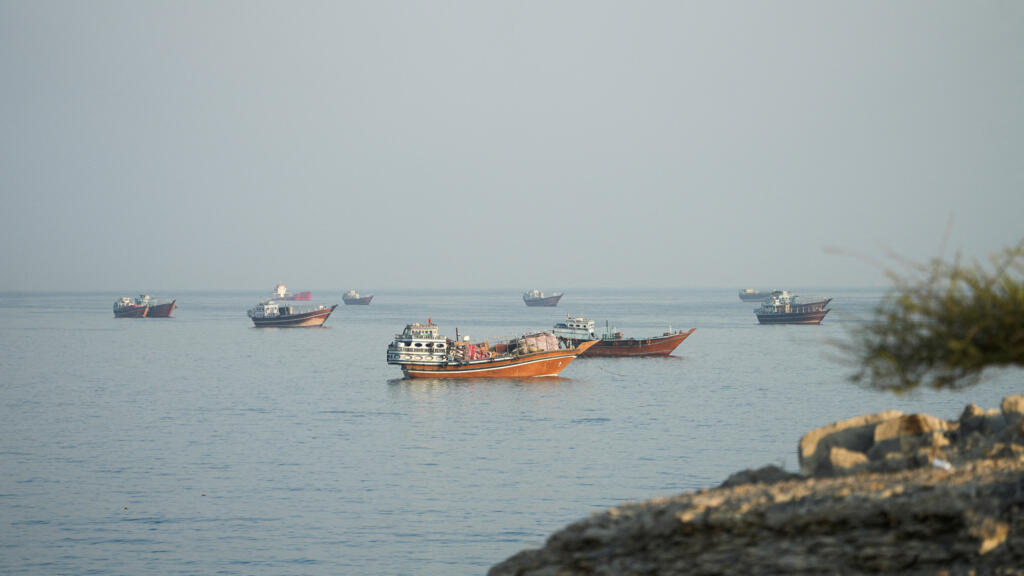
- Tehran proposes reopening the Strait of Hormuz within two days if Washington meets its demands.
- US Vice President J.D. Vance and Donald Trump express optimism regarding the prospects of reaching a negotiated deal.
- Iranian conditions include a regional ceasefire, the unfreezing of assets, lifting of oil sanctions, and ending the US naval blockade.
- Persian Gulf nations voice concern over further military escalation as diplomatic efforts mediated by Qatar intensify.
Tehran stated on Monday, November 2, that it was ready to reopen the strategic Strait of Hormuz in two days instead of the initial seven-day plan, provided Washington accepts its conditions. This proposal comes despite the threat of a resumption of war between Iran and the United States and while exchanges with the United States continue, according to Iranian diplomacy. For their part, US Vice President J.D. Vance asserted that he and Donald Trump are "rather optimistic" about the chances of reaching an agreement.
Published on: 02/11/2026 - 13:44Modified on: 02/11/2026 - 22:11
After 40 days of intense bombardments and an agreement that fell apart, exchanges via Qatar, a mediator in the conflict, have intensified in recent days in an attempt to revive negotiations in this conflict that is shaking the global economy and causing oil prices to surge.
Iranian Foreign Minister Abbas Araghchi reported "very intense" ongoing discussions with the United States through mediators in an attempt to avoid a resumption of hostilities. "Given the sensitivity and gravity of the current situation, consultations and deliberations are very intense," he declared in an interview with the official agency Irna, emphasizing "the very active mediating role" of Qatar and Pakistan in these negotiations. In an apparent effort to facilitate discussions, Supreme Leader Mojtaba Khamenei has "conferred certain powers to the government," according to President Masoud Pezeshkian.
"Everything depends" on Washington now, diplomatic spokesperson Esmaeil Baghaei told reporters in Tehran. "The possibility of implementing this plan in two days is a further sign of Iran's good faith," stated Esmaeil Baghaei. He stressed that "the exchange of messages continues" through mediators. "If Tehran's demands are met, it would be possible to restore security in the Strait of Hormuz and resume the negotiation process within a very short timeframe."
A Deal "Could Happen," According to J.D. Vance and Donald Trump
US Vice President J.D. Vance stated that he and Donald Trump felt "rather optimistic" about a negotiated agreement to end the war with Iran. "We've had a number of constructive conversations with the Iranians," he told reporters, noting that he had spoken earlier with Donald Trump. "The president and I are both rather optimistic about the prospects of eventually reaching a negotiated agreement," he added without setting a timeline.
Donald Trump also said an agreement with Tehran "could happen." "Oil prices are dropping like a rock (...) because people sense there will be no war with Iran. Iran wants a deal, as quickly as possible. It could happen!" the US president wrote on his Truth Social network, after saying on Sunday that he was prepared to deliver a "sledgehammer blow" to Iran.
Known Conditions
Since the beginning of the war, triggered by US-Israeli strikes on Iran on February 28, Tehran has claimed control of the Strait of Hormuz and regularly targeted vessels attempting to cross it without its authorization. In September, Iran had submitted, via Qatar, a seven-day plan to reopen the maritime route, but US President Donald Trump rejected it, while leaving the door open to continuing indirect negotiations.
Tehran conditions the reopening of this vital route for international commodities trade on a ceasefire across all regional fronts, the unfreezing of its assets held abroad, the lifting of sanctions on its oil sector, and an end to the US naval blockade against its ports. These points were already included in a US-Iranian memorandum of understanding reached in June, following an April ceasefire that halted 40 days of intense bombardments.
On Sunday, November 1, Foreign Minister Abbas Araghchi added to Iran's demands in an interview with Al Jazeera, emphasizing that Washington must also accept the "new route agreed upon between Iran and Oman for transit through the Strait of Hormuz." The Iranian diplomacy chief also mentioned a reduction of US military personnel recently deployed to the region.
Exchanges Between Trump and Netanyahu on Potential New Strike Against Iran
After weeks of calm, Washington and Israel have escalated their threats against Iran. On Saturday, October 31, US President Donald Trump, preparing for difficult midterm elections, stated that he still had to "take care of" one or two nuclear sites in Iran.
According to the American news outlet Axios, citing US and Israeli sources, the US president spoke by phone with Prime Minister Benjamin Netanyahu about the advisability and timing of intensifying military operations.
According to these reports, the outgoing Israeli Prime Minister, fighting for political survival following razor-thin legislative elections, pressed the president to strike Iran immediately after the US election scheduled for Tuesday, November 3, while the Republican leader expressed a preference to let negotiations run their course.
"Any act of aggression against Iran, any military attack against Iran, by whatever means, will face a powerful, immediate, and comprehensive response from us," Esmaeil Baghaei warned on Monday, November 2, following similar warnings from the supreme leader and the military.
Read also: War in Iran: despite Qatar talks, Tehran toughens tone toward Washington
Concern Among Persian Gulf Nations
Senior Saudi, Turkish, and Pakistani officials held talks with Iranian representatives in Tehran last week. Qatari officials also held meetings in Tehran and Doha over the weekend. "We do not want to see another confrontation in the region," said a senior United Arab Emirates official. Anwar Gargash added, however, that his country was nevertheless prepared for the worst.
The war has already proved very costly for Persian Gulf nations. Many US interests are located there, and Tehran has reportedly drawn up detailed target lists in retaliation for another US-Israeli attack: notably undersea communication cables and military bases. This strategy could spread the cost of the war beyond the battlefield, endangering energy infrastructure, desalination plants, and certain Gulf cities hosting US facilities.
Furthermore, these recent months of war have demonstrated to Gulf countries that they cannot rely on the protection of their American ally. This serves as a leverage point for Tehran: showing Middle Eastern nations that investing in a partnership with the United States is not profitable.
Brent crude dropped 6% to $106 on Monday, as talks between Iran and Qatar offered the prospect of a de-escalation in the Middle East conflict. At stake is notably the restoration of security in the Strait of Hormuz, a major crude trade artery severely disrupted since last February.
Is a resolution in sight in the Strait of Hormuz, or is this an effort to reassure American voters, who strongly oppose the war against Iran given its impact on gas prices at the pump? In any case, Qatar, one of the countries most affected by bombardments on its own gas facilities, is working more actively than ever to bring the discussions to fruition, and a degree of lull in fighting on the ground has been observed since September.
The fact remains that the Strait of Hormuz has been blocked by Tehran for eight months. While nearly half of Middle Eastern crude has found alternative export routes, the volume of refined products, such as diesel, shipped by Gulf countries stands at only 20% of its pre-crisis level. Crude prices remain elevated: over $100 per barrel compared to $70 prior to February 28 and the outbreak of the war by Donald Trump. By contrast, the US oil industry is taking full advantage of the surge in oil and gas prices, exporting unimpeded worldwide.
Newsletter: Receive all international news directly in your inbox
Follow all international news by downloading the RFI app
Source: RFI

Comments (0)
You must log in to comment on articles.
Log in Sign upBe the first to comment on this article.