

French Expert at Sciences Po: India's Growth Figures Are Exaggerated and Modi Faces a Real Impasse
Prominent French political scientist Christophe Jaffrelot challenges New Delhi's economic narrative, arguing that official growth figures are inflated while structural weaknesses, industrial stagnation, and strategic dependence on China hinder Modi's global ambitions.

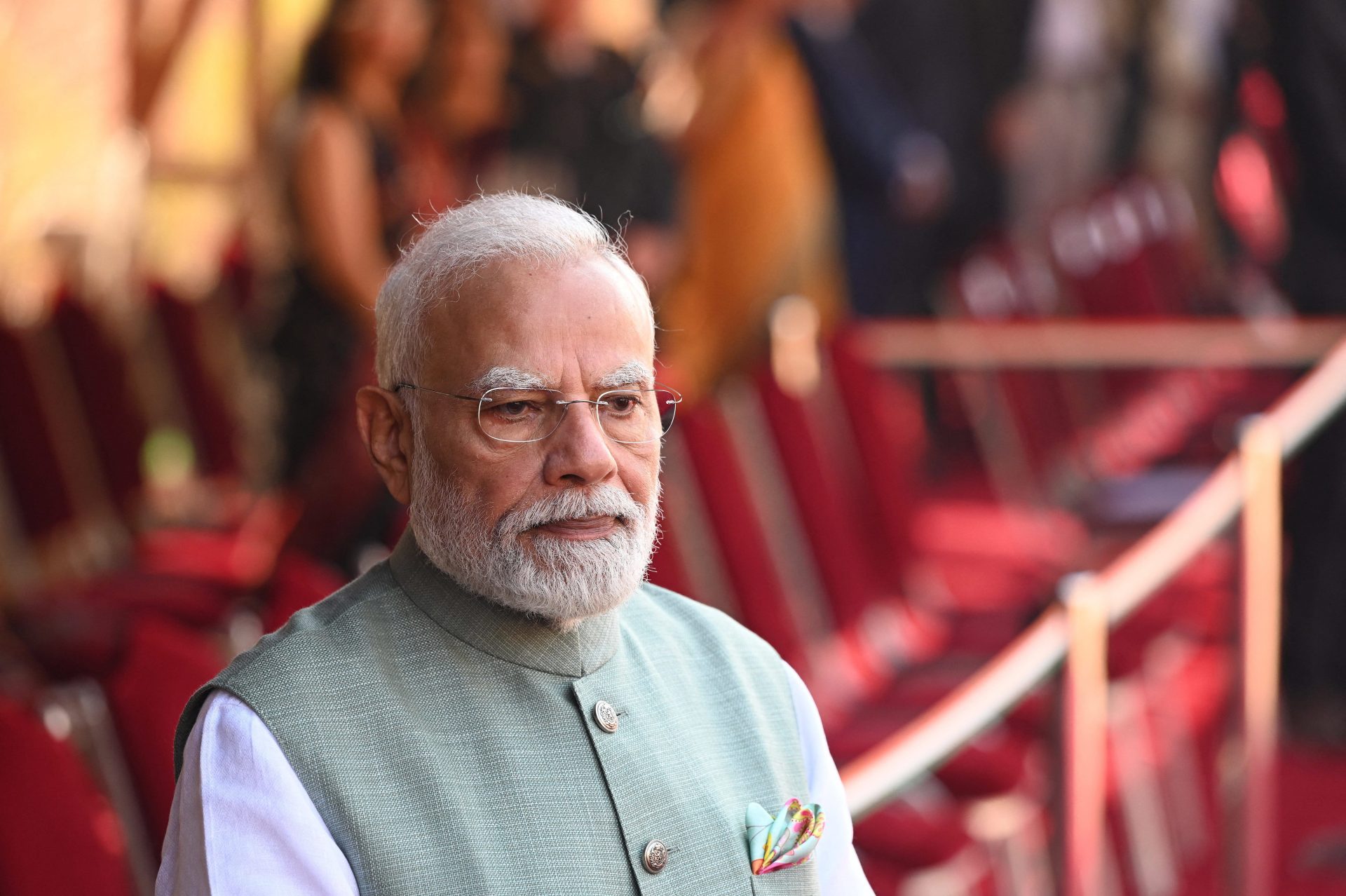
- CNRS researcher Christophe Jaffrelot argues that India's actual economic growth is far from 7% and may barely reach half the official figures.
- The failure of industrialization and the declining share of manufacturing in GDP deepen New Delhi's strategic and economic reliance on Beijing.
- New Delhi's strategy of transactional foreign relations and diaspora instrumentalization has failed to deliver genuine strategic leverage during crises.
In an in-depth critical reading of India's developmental and political experience, prominent French expert, professor of political science, and researcher at the National Centre for Scientific Research (CNRS) and Sciences Po Paris, Christophe Jaffrelot, deconstructed the track record of Prime Minister Narendra Modi since he took office in 2014. Speaking in an interview with L'Express magazine coinciding with the release of his book, "The Indian Ambition: Paradoxes of a New Power," Jaffrelot stated that talk of an exceptional economic boom involves substantial exaggeration unsupported by realistic indicators.
Misleading Figures and Structural Economic Imbalances
The French scholar questioned the accuracy of New Delhi's official growth data, noting that the International Monetary Fund issued a negative assessment of the transparency of official statistics due to their inconsistencies. He stressed that real growth cannot possibly reach 7% given falling consumption indicators, worsening unemployment, and sluggish industrial output. Jaffrelot estimated that the true growth rate might be half of what the government reports, amid a persistent paralysis of investments since the 2016 decision to withdraw 85% of cash liquidity, followed by the chaotic implementation of the Goods and Services Tax (GST) and the fallout of the COVID-19 pandemic, all of which dealt a severe blow to the informal economy, small merchants, and artisans.
The French expert explained that India has failed to achieve its industrial revolution, with manufacturing's share of GDP dropping from 17% to 13% between 2016 and 2026. This industrial weakness has left the state unable to absorb the rural workforce, as data indicates that the proportion of rural workers has rebounded to around 44%. He added that relying on a tech services sector oriented toward exports to Europe and the United States cannot resolve the crisis of a nation where nearly half the population lives in rural areas and adds approximately 10 million people annually. This is compounded by underinvestment in education, which receives no more than 4% of the budget, alongside the growing threats posed by artificial intelligence to programming jobs.
Transactional Diplomacy and Mobilizing the Diaspora
On the diplomatic front, Jaffrelot pointed out that Modi's government shifted from a historical "soft power" approach rooted in coexistence toward an assertive power dynamic linked to the rise of Hindu nationalism. While this policy relies on mutual interest without committing to binding alliances, the strategy has revealed its limitations; no major ally intervened to back India during its border clashes with China in 2020 or Pakistan in 2025.
The researcher highlighted the unprecedented role played by tycoons close to the government, such as Gautam Adani, alongside the mobilization of Indian diasporas abroad to influence domestic policies in host countries, as seen in the United Kingdom and the United States. However, this influence faces mounting obstacles, vividly illustrated by the recent tightening of U.S. policy regarding H-1B visas for skilled workers and the unprecedented hike in their fees.
Strategic Dependence on China
The India specialist concluded that the inability to develop a robust manufacturing base has left the "Make in India" initiative unable to attract Western capital, placing New Delhi in the paradox of courting Chinese investments despite ongoing military tensions on the border. Jaffrelot emphasized that India's inability to reclaim its territories in the Himalayas following the 2020 clashes that killed twenty soldiers is directly linked to its economic dependence on Beijing; the Indian pharmaceutical industry relies heavily on imported active pharmaceutical ingredients from China, as do smartphone assembly lines, solar energy components, and electric vehicles.
Source: L’Express

Comments (0)
You must log in to comment on articles.
Log in Sign upBe the first to comment on this article.