

France: Life Imprisonment for Two Drug Barons in Horrific Triple Murder Case Near Marseille
The Assize Court in Aix-en-Provence handed down life sentences to two prominent drug figures for their involvement in a brutal triple homicide linked to the drug trade near Marseille.

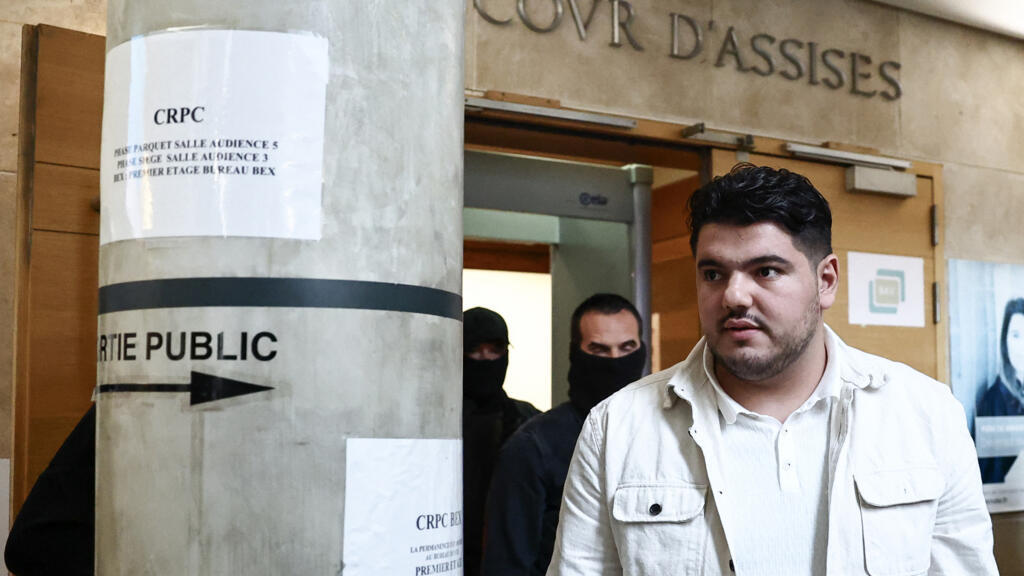
- The Assize Court sentences Amine Oualan and Karim Harrat to life imprisonment for their involvement in the assassination of three individuals near Marseille.
- Sentences ranging from 18, 25, to 30 years in prison were handed down to three other defendants who participated in committing the brutal crime and disposing of the bodies.
- Activist Amine Kessaci, brother of one of the victims and Marseille's deputy mayor, described the verdict as a decisive message shaking the foundations of drug cartels.
The Assize Court of Aix-en-Provence (Bouches-du-Rhône) concluded a tense, month-long trial by handing down life sentences on Monday, November 16, to two of the most prominent figures in France's drug trade for their involvement in the bloody liquidation of three individuals in 2020. The case highlights the unprecedented level of violence among drug trafficking networks that have claimed the lives of nearly a hundred people in recent years in and around the city of Marseille.
Severe Sentences for Organized Crime Leaders
The court convicted Amine Oualan (32), considered a key figure in the "DZ Mafia" network, and Karim Harrat (38), a former drug baron, of executing and directing the triple murder, sentencing them to life in prison in line with the prosecution's requests. The prosecution identified Oualan as the "hit squad leader" on the ground, while Harrat was the "mastermind" behind the operation from Dubai, aimed at eliminating Ibrahim Chaabani, Rida Khaldi, and Nassim Loubani, all of whom were involved in drug trafficking circles. Defense lawyers for the convicted men announced their intention to appeal the verdict.
The sentences were not limited to the maximum penalty for the principal defendants; the judicial panel also imposed heavy prison terms on three other accomplices. Zakaria Ben Sassi received a 30-year prison sentence, while Malek Kriba, nicknamed "The Butcher," was sentenced to 25 years after confessing to dismembering the body of one of the victims. An 18-year sentence was handed down to Nedim M'Baye, who admitted to stealing the car used to transport the victims.
Extreme Brutality and a Message Against Toxic Networks
Authorities had discovered the charred bodies of the three victims near Marseille, with gunshot wounds to the head; one of the bodies had also been dismembered, in an incident described by the prosecution as reflecting "baseness and savagery pushed to their extreme." This sentence is the harshest to date on the record of Amine Oualan, who has spent nearly half his life behind bars before imposing his bloody influence within the turf wars over drug dealing spots in France's second-largest city.
This crime served as the catalyst for the activism of the victim Ibrahim's brother, Amine Kessaci, who established a platform to defend the families of drug-related violence victims. He was eventually appointed deputy mayor of Marseille and now lives under tight police protection due to continuous threats. His family suffered another tragedy with the daylight assassination of his younger brother Mehdi (20) in November 2025, despite him being completely disconnected from the drug world—a case in which investigators seriously consider Oualan among the potential suspects.
Rare Confessions and Technical Evidence Support the Conviction
Following the delivery of the verdict, Amine Kessaci, accompanied by his mother Wassila, who attended the hearings daily, expressed his relief, saying: "This message is directed at the 'narcocracy'—at this system that is trembling today after losing one of its pillars, and we will continue working until it collapses completely."
The prosecution built its case on a massive arsenal of forensic evidence, including DNA samples, vehicle tracking data, wiretaps, as well as encrypted messages via the "Sky ECC" application. Adding to the weight of the case were rare confessions for such complex trials; defendant Zakaria Ben Sassi revealed during proceedings Oualan's role as the "shooter" and Harrat's role as the "coordinator," which proved decisive in the court's deliberations.
Source: RFI
Comments (0)
You must log in to comment on articles.
Log in Sign upBe the first to comment on this article.