

France: Escalating Surveillance of Protests Using Drones and Helicopters Sparks Controversy Over Civil Liberties
The intensifying use of drones and helicopters by French police to monitor protests and disperse crowds has triggered widespread legal and civil liberties concerns.

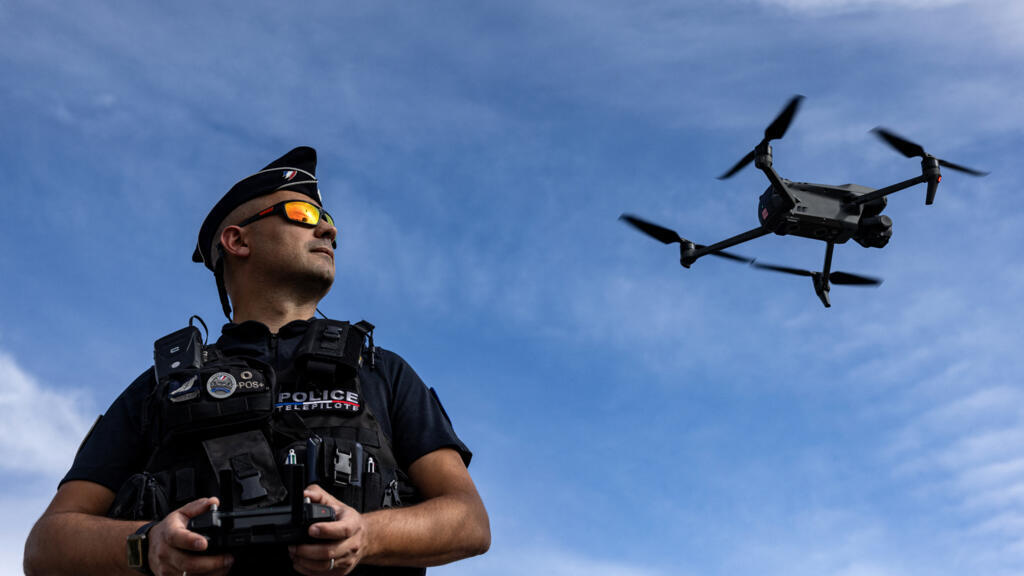
- French police are heavily deploying drones and helicopters to issue dispersal orders and monitor marches in Paris, Montpellier, and other cities.
- The new 'Ripost' law grants authorities broader powers to deploy surveillance aircraft without prior authorization in emergencies and to curb urban rodeos.
- Rights organizations and administrative courts raise objections and legal challenges against disproportionate infringements on privacy and the right to protest.
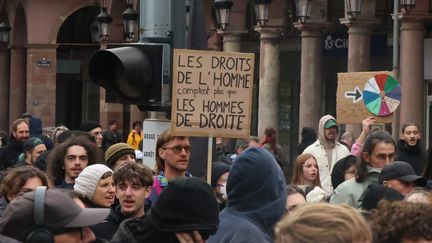
The roar of drones and helicopters has become a familiar scene in the skies of the capital, Paris, and several French cities, as police and gendarmerie forces deploy these aerial technologies to monitor protest movements. This security escalation was particularly noticeable during the recent trade union demonstrations on November 5, when a police helicopter used loudspeakers to broadcast direct orders to protesters in Place de la Comédie in Montpellier to vacate the area and disperse, while a drone carried out the same mission at Place de la Nation in Paris.
Heightened Surveillance and Security Justifications
Since the riots and looting that accompanied the protests of October 17, which caught security forces off guard, these aerial devices have been regularly hovering over marches and monitoring compliance with entry bans on certain public squares and sites. In Paris, aerial patrols on the night of October 19 covered vital sectors subject to partial bans, such as Les Halles, Place de la République, and Avenue des Champs-Élysées, continuing the following day with six drones.
The Paris Police Prefecture and other police departments justify this measure as the most effective means to obtain a wide-angle, comprehensive view while minimizing the need to deploy security personnel on the ground. They maintain that no alternative means achieve the same objectives with less intrusiveness. However, these justifications face growing commentary and criticism on social media, reflecting deep concerns over the erosion of civil liberties.
Legal Facilitations via the 'Ripost' Law
Although the use of airborne cameras is subject to regulations requiring an official authorization specifying the geographical scope and duration, civil and digital rights associations have expressed concern over the expansion of these powers. The advocacy group 'La Quadrature du Net' points to the 'Ripost' law passed in July, Article 7 of which permits the use of drones to combat serious traffic offenses, specifically 'urban rodeos involving motorcycles and cars.'
Article 42 of the same law also allows prefects to deploy these aircraft in emergency situations requiring immediate intervention to protect security personnel, without waiting for prior authorization, provided the situation is formalized by publishing the decision within one hour. This makes it increasingly difficult for affected parties to mount prior legal challenges or know the operational scope of their use.
Legal Challenges and Political Debate
Legal challenges occasionally succeed in the courts. On November 5, the Administrative Court of Grenoble issued a ruling suspending a prefectural order authorizing drone flights over eight municipalities in the Haute-Savoie department, including Annecy and Annemasse, deeming the measure disproportionate to the risks of public disorder and a serious and illegal infringement on the right to privacy.
Politically, Minister of the Interior Laurent Nuñez strongly defended the reliance on drones during protests before the National Assembly, considering them an essential tool to rein in 'Black Bloc' groups and ensure the continuation of peaceful marches. This argument was supported by right-wing and center-right parties, leading the bill to pass by a majority of 366 votes to 182. In line with this approach, Paris police announced in advance that helicopters and drones would continue to be deployed over the capital to monitor the demonstrations of November 7.
Source: France 24


Comments (0)
You must log in to comment on articles.
Log in Sign upBe the first to comment on this article.