

European Court Authorizes Pushing Back Migrants in Cases of 'Political Instrumentalization' of Migration Flows
In a precedent that could reshape asylum rules in Europe, the European Court of Human Rights ruled that states may push back migrants at their borders if they arrive from a country engaging in the 'political instrumentalization' of migration, provided they are not in a state of evident personal vulnerability.

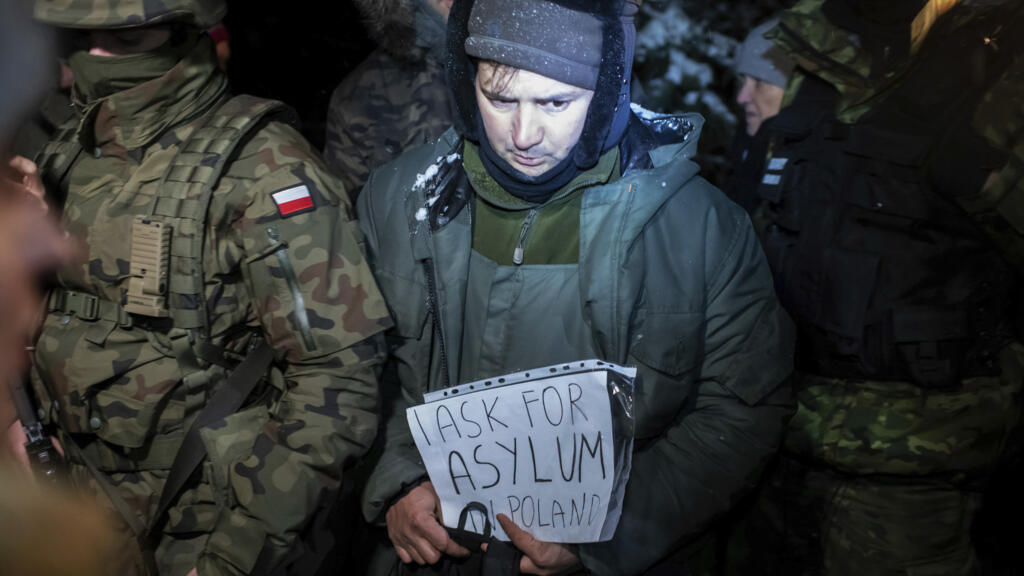
- The European Court of Human Rights permits states to push back migrants in cases where migration is politically instrumentalized, unless the individuals are in an evident state of vulnerability.
- The ruling stems from the 2021 Belarus border crisis and complaints brought by asylum seekers of Afghan, Iraqi, and Cuban nationalities.
- Latvia and Poland were condemned in specific cases involving young children and violations of court orders, amid rights concerns over restrictions on the right to asylum.
In a judicial precedent that could reshape asylum and border protection rules on the Old Continent, the Strasbourg-based European Court of Human Rights (ECHR) has ruled that states are entitled to push back and return migrants at their borders if they arrive from a state that engages in the "political instrumentalization" of migration, provided that these migrants are not in a state of evident personal vulnerability.
Background of the Decision: The Belarus Crisis and the Eastern Border
This judicial shift comes through three final rulings issued in the wake of the 2021 migration crisis, when thousands of migrants flowed from Belarus toward the borders of Poland, Latvia, and Lithuania. The Court considered that the Minsk regime orchestrated these waves "with the aim of destabilizing" its neighbors and the European Union, in retaliation for sanctions imposed on Alexander Lukashenko's regime following the crackdown on the opposition in 2020.
The Court had received complaints from groups that included Afghan, Iraqi Kurdish, and Cuban migrants, who accused the states that pushed them back of violating their fundamental rights by forcibly returning them to Belarus and depriving them of the opportunity to submit formal asylum applications.
Conditions for Exception and Specific Condemnations
The European Court of Human Rights clarified that return measures are legitimate in the context of the "instrumentalization of migration," except in cases where the personal vulnerability of migrants is evident—such as the elderly, the sick, persons with disabilities, or those who can demonstrate a real and immediate risk to their lives or of being subjected to ill-treatment.
Based on this criterion, the Court condemned Latvia for pushing back families with young children, and also condemned Poland for returning a man whom the Court had explicitly requested not to be deported to Belarus. Meanwhile, it dismissed the applications of the remaining migrants who failed to prove an exceptional state of vulnerability, despite being deprived of applying for asylum.
Major Implications for European Asylum Policies
The ruling sparked condemnatory reactions in legal circles. Lawyer Daria Sartori, who represented four Cubans whose complaint against Lithuania was rejected, considered the decision a real shock that appears to roll back the absolute nature of the prohibition of torture and degrading treatment, warning that this precedent will cast a shadow over all future migration cases and deportation policies in Europe.
This jurisprudence comes at a time when the European political arena is witnessing widespread pressure from several countries to scale back the protection granted to migrants and give national authorities greater flexibility in executing deportation decisions, particularly with renewed border debates following recent migration waves in Ceuta and other European entry points.
Source: RFI



Comments (0)
You must log in to comment on articles.
Log in Sign upBe the first to comment on this article.