

In Ukraine, Russia Destroys and China Reconnects: "Beijing Seeks to Profit from the War from All Sides"
While Moscow relentlessly strikes Ukraine's energy infrastructure, Beijing supplies Kyiv with solar panels, batteries, and generators to keep the lights on, walking a delicate geopolitical tightrope.

- Despite being Russia's strategic partner, China supplies Ukraine with nearly 90% of its imported batteries and key electrical equipment.
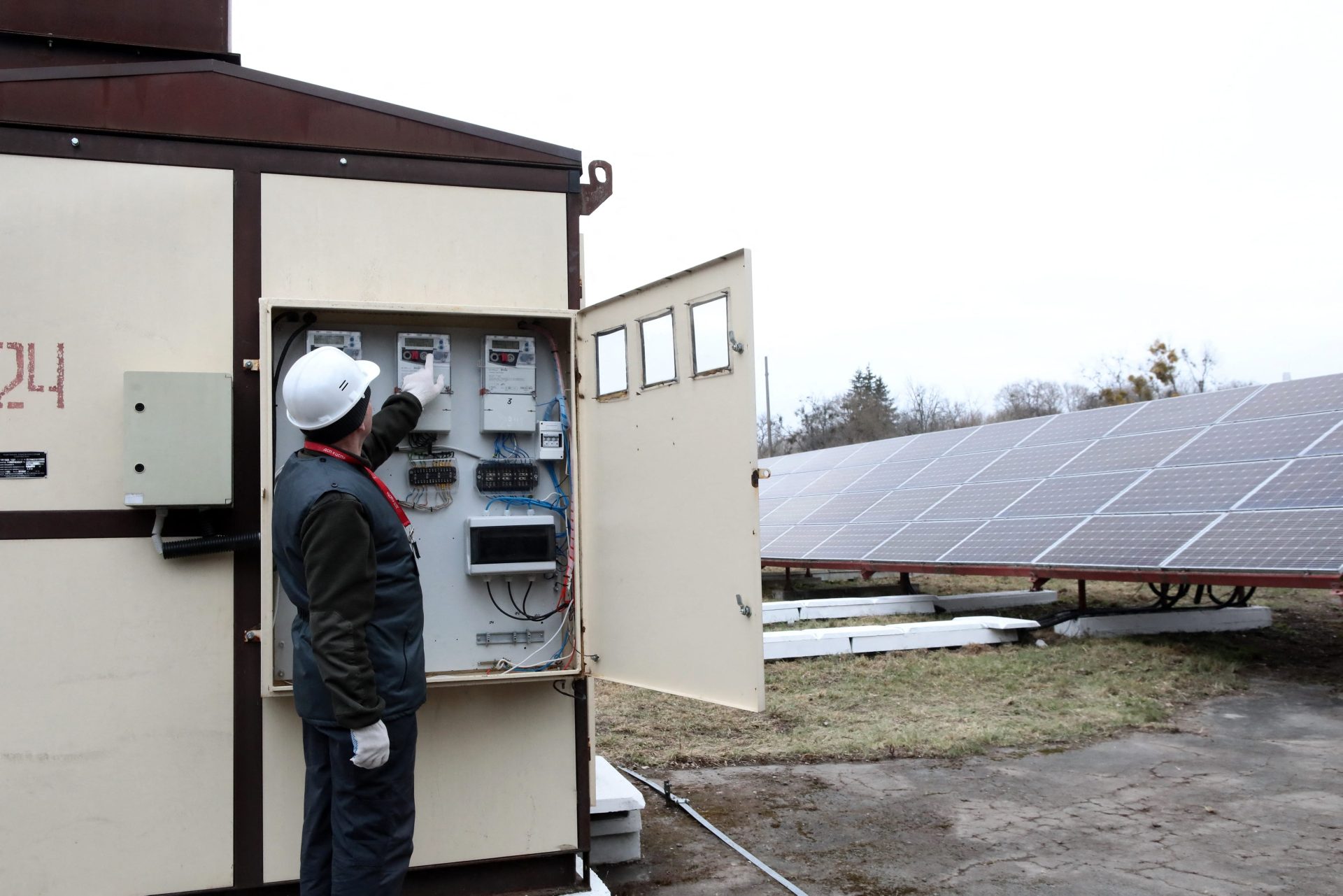
- Ukrainian households and businesses are rapidly installing Chinese-made solar modules and generators to build a decentralized and resilient power grid.
- Experts believe Beijing has no specific geopolitical favoritism toward Kyiv, but is simply monetizing its industrial overcapacity.
- Concerns linger over cybersecurity risks linked to Chinese inverters, though the immediate priority remains surviving winter strikes.
Can the friend of my enemy be my friend? War sometimes creates curious paradoxes, and the one in Ukraine is no exception. While Russia conducts methodical and repeated attacks against energy infrastructure, its strategic partner is supplying Kyiv with the equipment required to keep the lights on in homes. While Vladimir Putin's regime seeks to break society's resilience by forcing it through the worst possible winter, Xi Jinping's provides it with the means to resist. Indirectly, to be sure, through its manufacturers and the dynamics of global trade. But the outcome is no less tangible: solar panels and batteries made in China are helping Ukraine build a more decentralized and less vulnerable power grid.
The figures are staggering. Between January and September, the country imported $3.18 billion worth of batteries, 3.5 times more than a year earlier. Nearly 90% of this value comes from China, according to customs service data. The pattern is similar for purchases of transformers, inductors, and inverters (88% Chinese), as well as electric motors and generators (94%). Beijing has even reclaimed the top spot for generator set imports, overtaking Romania, the Czech Republic, and Turkey. "We use a lot of Chinese equipment, quite simply because it is the easiest to find," summarizes Oleksandr Kharchenko, managing director of the Energy Industry Research Center in Kyiv.
This dynamic is also evident on building rooftops and balconies, where photovoltaic panels are proliferating. According to the Ukrainian Solar Energy Association, the country installed 1.1 gigawatts (GW) of new capacity in the first half of the year and could reach 2 GW across the full year—a figure that has steadily climbed since the war began. Households and businesses are acquiring solar modules, frequently paired with electricity storage batteries, to cover their own consumption and reduce reliance on the national grid. Here again, they source overwhelmingly from Beijing. In the absence of a distinct statistical entry for solar panels, one must look at the customs classification that lumps them with LEDs and chips. The conclusion is unmistakable: between January and September 2026, China accounted for 94% of that import bill.
For Beijing, Cooperating Wherever Possible
The situation mirrors the global market: China dominates the value chains for most green technologies. Like everyone else, Ukraine is taking advantage of these goods supplied at competitive prices, without Beijing having implemented any deliberate strategy toward the country, observes Konrad Szatters, a member of the "China Observers" research consortium for Central and Eastern Europe. "In solar and batteries, China faces overcapacity and its sectors rely heavily on exports. Ukraine is merely another market to supply. This aligns with its overarching approach: cooperate wherever possible, while consistently putting its own interests first," notes the Brussels-based political scientist.
"China seeks to profit from this war from all sides," agrees Oleksandr Kharchenko. "I think it favors Russia, but it does not stop Ukraine from purchasing certain equipment." According to him, several Chinese enterprises are actively prospecting the Ukrainian market from their offices in Poland—perhaps a way to gain a foothold in the future reconstruction effort.
To date, Moscow appears not to have publicly objected to its strategic partner's balancing act. "Yet we do not know what is happening behind the scenes," adds Konrad Szatters. "One can assume Russia is hardly pleased. On the other hand, prosecuting this war would be substantially harder for it without China. It is difficult, therefore, to stand up to its ally by protesting its stance."
The Inverter Vulnerability?
Beyond Beijing's ties with Moscow, it is China's grip on such equipment that raises alarms, both in Kyiv and Brussels—particularly regarding inverters, devices that convert direct current into alternating current. Since May, citing security grounds, the European Commission has ceased funding solar, wind, or energy storage initiatives incorporating Chinese-made inverters. In June, Serhiy "Flash" Beskrestnov, then an adviser to the Ukrainian Defense Minister and currently serving President Volodymyr Zelensky, likewise issued a warning about manufacturers' potential remote access to inverters and internet-connected backup setups.
Could such a loophole destabilize the entire power grid? Not necessarily, says Oleksandr Kharchenko. Although Chinese hardware dominates the residential sector, its share across large-scale industrial installations remains low, dampening the fallout from any potential cyberattack. "Supposing Chinese intelligence could and wished to shut down all the inverters across the country, households would simply fall back on the national grid," the expert maintains. "The equipment might be rendered unusable, but it would not endanger the system as a whole."
A lesser evil, since swapping out small devices that are already installed would prove a logistical headache. "Most consumers buy complete packages: solar panels, batteries, inverters. Replacing existing hardware is technically feasible, but it would take a colossal effort to reach every affected home. And who would cover the bill?" asks Caspar Hobhouse, an analyst at the European Union Institute for Security Studies (EUISS). That dilemma, he notes, is in any event far from the primary concern of a Ukraine bracing for a fifth winter under bombardment: "The vulnerability stemming from the war is vastly more critical than where the energy equipment originates." Even if it is manufactured by the friend of their enemy.
Source: L’Express

Comments (0)
You must log in to comment on articles.
Log in Sign upBe the first to comment on this article.