

Collapse of the Washington-Moscow Diesel Deal: Why Did Russian Oil Tankers Divert Their Course?
The controversial diesel agreement between Washington and Moscow appears to have fallen apart after three Russian oil tankers abruptly shifted course away from US shores, amid legal hurdles, domestic opposition, and stringent European sanctions.

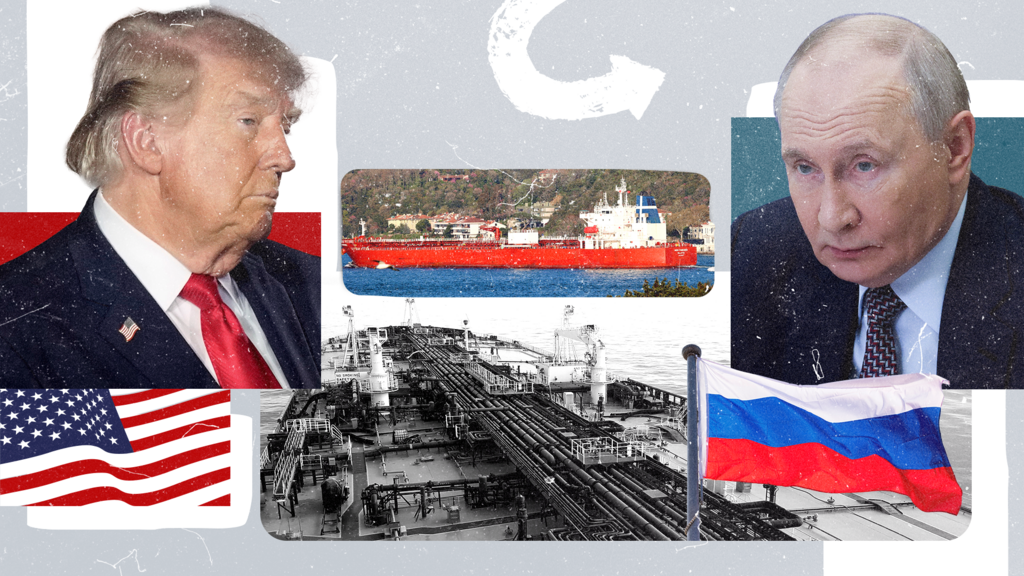
- Three Russian oil tankers diverted their routes away from US ports, heading instead toward Brazil, entering the Mediterranean, or awaiting new instructions.
- Strict EU and UK sanctions, alongside stiff resistance from US state governors, presented formidable legal obstacles to finalizing the fuel import deals.
- Experts suggest the deal's announcement may have been a political maneuver tied to the midterm elections, with no genuine intent to discharge the cargoes in the US.
The oil tanker "Agioi Fanendes" had become the final opportunity for US President Donald Trump to bring to fruition his controversial diesel import deal with Russian counterpart Vladimir Putin. However, the Malta-flagged vessel is no longer officially bound for US shores, with its status updated to "awaiting orders," making it the last of three Russian tankers to turn their backs on the United States, according to the Financial Times.
Sudden Route Diversions
The internationally sanctioned Russian tanker "Talisman," which set sail from the St. Petersburg region on October 22, abruptly altered its route to steer away from the Atlantic Ocean and enter the Mediterranean Sea. Meanwhile, the "Leruo"—subject to sanctions by the European Union, the United States, and the United Kingdom—continues its voyage across the Atlantic, but with Brazil listed as its newly declared official destination.
Matt Smith, lead oil analyst at maritime data intelligence firm Kpler, explained that the "Agioi Fanendes" was anticipated to arrive in New York around the weekend of November 7, but suggested it would ultimately end up selling its cargo elsewhere. Kevin Rowlands, a maritime security expert at the Royal United Services Institute (RUSI), noted that while the agreement remains theoretically in effect, it is practically dead in the water, characterizing the deal as having been "shaky from the start."
Legal Impasse and Governors' Threats
Donald Trump had announced the pact on October 9 in response to surging fuel prices, pledging an influx of millions of tons of Russian diesel following waivers issued by the US Treasury Department permitting domestic companies to purchase and resell the fuel. In return, Moscow lifted its export ban, which had previously been enacted following fuel shortages caused by Ukrainian strikes on its oil facilities.
Yet, the agreement swiftly encountered fierce pushback within the United States, particularly due to statutory barriers; critics argued that Trump's executive action conflicted with the 2022 Russian Oil Import Ban legislation, which mandates congressional consent. Furthermore, local governors ratcheted up their rhetoric, with New Jersey Democratic Governor Mikie Sherrill threatening legal action and multimillion-dollar fines against terminals that receive Russian fuel—noting that the vessel was slated to dock at facilities partly under her state's jurisdiction.
The Weight of European Sanctions and Political Calculations
For his part, Maximilian Hess, founder of the consultancy Enmetena Advisory, emphasized the decisive impact of European and British sanctions targeting Russian oil. These measures deter US firms from risking entanglements with European insurers or banks that could face regulatory fallout, framing the tankers' retreat as a testament to the efficacy of Europe's stringent regime.
Additionally, Dirk Siebels, a maritime security specialist at Risk Intelligence, suggested that the voyages might never have been genuinely intended for the United States, but rather served as a political gambit to send positive signals to financial markets ahead of the midterm elections, before the cargoes were redirected to their real target markets, such as Brazil, once the polling concluded.
Source: France 24



Comments (0)
You must log in to comment on articles.
Log in Sign upBe the first to comment on this article.