

Amnesty International France Official: "The Precariousness of Foreigners Is Not an Exception... It Is Structural in Our System"
An official at Amnesty International France has warned that the precarious situation of foreigners has become a structural crisis rather than an exception, driven by bureaucratic backlog and administrative hurdles, amid heated political debate over a proposed bill to regularize undocumented workers.

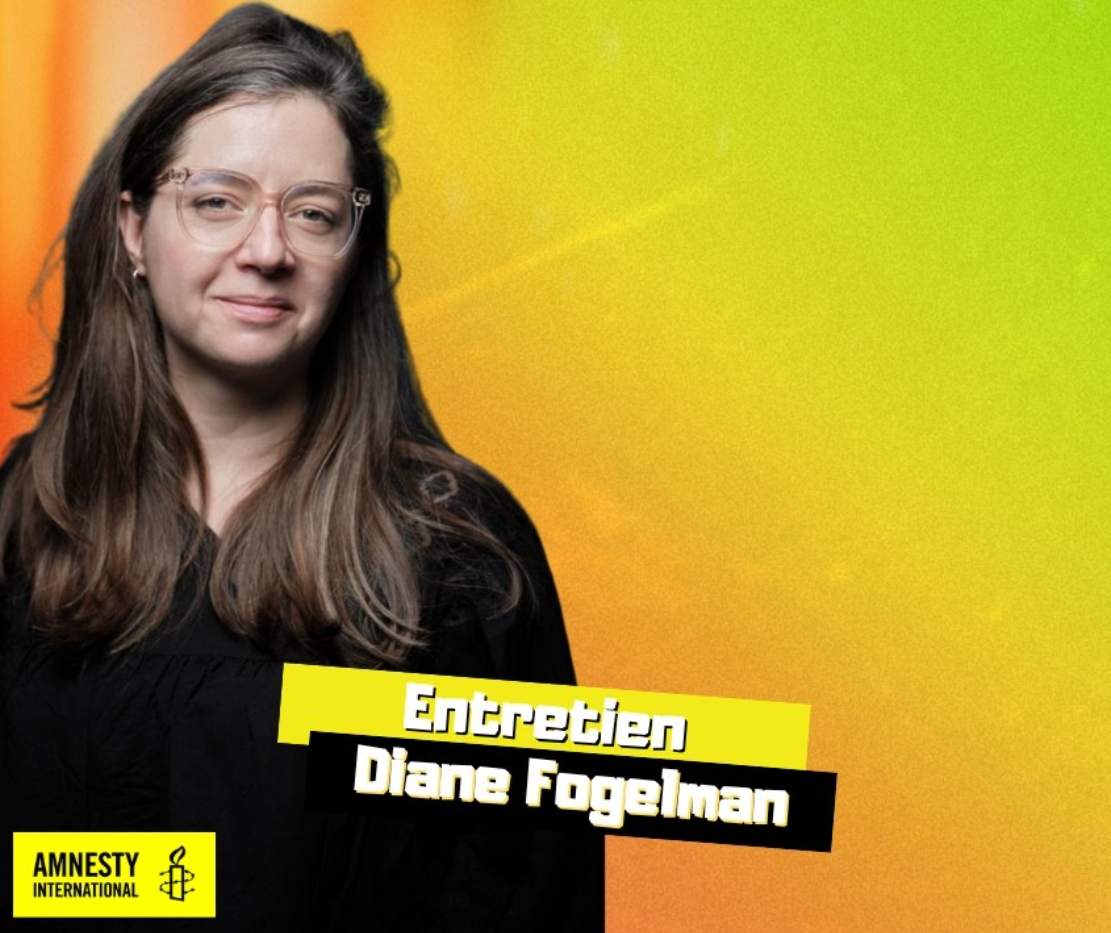
- An official at Amnesty International France affirmed that the precarious situation of foreigners has become a structural crisis rather than an exception, amid bureaucratic complexities and a backlog of around 930,000 pending applications.
- The current administrative situation carries a heavy cost affecting the humanitarian stability of foreigners, disrupting employers' operations, and draining public administration resources through overcrowding and appeals.
- The Socialist Party introduced a bill to regularize approximately 300,000 undocumented workers who have worked for at least 6 months over the past two years, aiming to secure their legal rights.
- The proposed bill has triggered a political divide, backed by left-wing forces and human rights organizations, while opposed by the government, right-wing, and far-right parties on the grounds of rejecting automatic regularization.
A Real Crisis Ignored by Political Discourse
The author points out that prevailing discourses—especially during the presidential election period—focus exclusively on further tightening and control, while ignoring a genuine crisis that the system experiences daily:
— In a decision issued in early May 2026, the Council of State ordered the French government to ensure proper access to the digital platform for the administration of foreigners' affairs, "ANEF".
— Six months later, the Minister of the Interior himself admitted before the National Assembly that the issue "has not yet been resolved", with the number of people waiting for decisions on their applications reaching 930,000 in April 2026.
— Hundreds of thousands of foreigners do not merely have their rights suspended; their entire lives are put on hold pending endless administrative procedures.
The Triple Cost of Maintaining the Current Situation
Diane Voguetman explains that this precarious situation incurs a cost extending beyond the humanitarian dimension to encompass economic and institutional aspects:
|
Affected Party |
Nature of Impact |
|
Foreigners Themselves |
Impossibility of planning for the future, difficulty in securing housing, changing jobs, pursuing training, or family reunification |
|
Employers |
Hiring delays, disrupted contracts, difficulty in maintaining teams that have worked with them for years |
|
The Administration Itself |
Chronic congestion, multiplication of complaints and appeals, continuous waste of resources in reviewing files whose circumstances have not changed |
"By continually adding procedures, conditions, and controls, we achieve the exact opposite:
more complexity, more uncertainty, and more bureaucracy."
Precariousness Is Not an Exception... It Is Structural
The author believes that what was previously perceived as exceptional individual cases has now become a structural feature of the system:
— An individual loses their job due to a delay in the delivery of a residency renewal receipt, despite their legal status; an employee cannot renew their contract even though their residency permit remains valid.
— An employer refrains from hiring a person due to a lack of confidence in the speed of administrative procedures.
These are not isolated incidents, but rather the direct product of an overly complex system exhausted by successive amendments.
The Proposed Bill: An Opportunity to Rebuild Trust
In this context, the bill submitted by the Socialist Party to regularize undocumented workers—debated on November 19—comes as a first step on the path of reform:
— Main condition: Proof of professional activity for at least 6 months (consecutive or non-consecutive) over the past two years.
— An estimated 300,000 individuals who work and pay taxes and social contributions without enjoying their rights are expected to benefit.
— The author calls for going beyond regularization: developing multi-year residency cards, simplifying procedures, and ensuring the continuity of rights without interruption.
"Building a system that offers protection, reliability, and respect for everyone's dignity. This is not a lax policy, but rather a more credible and effective one."
Reactions of the Parties to the Bill Regularizing Undocumented Workers
Here are the key positions of political parties and concerned entities so far:
1 — Supporters:
The Socialist Party and the Left-Wing Bloc
Deputy Paul Christophle presented the bill, supported by presidential candidate Raphaël Glucksmann, who described it as a "matter of dignity and equal rights".
The head of the Socialist group, Boris Vallaud, said: "We cannot continue pretending that we value work while ignoring those who work in our kitchens, on our construction sites, and care for our parents."
Beneficiaries are estimated at 300,000–400,000 people working in construction, catering, agriculture, and domestic services.
Amnesty International and Human Rights Organizations
— Consider it a necessary step to end the "systematic exploitation" of these workers, who pay taxes and contributions without enjoying their rights.
— Civil society figures demanded in an open letter published in the newspapers Le Parisien and Les Echos the stabilization of the status of foreign workers essential to the economy.
Employers in In-Demand Sectors
— Representatives of certain sectors experiencing severe labor shortages expressed support for simplifying procedures, but prefer solutions limited to urgent professions rather than a general regularization.
2 — Opponents:
National Rally (Far-Right)
— Described the project as "extremely dangerous" and said it would "encourage smugglers and human trafficking".
— Calls for focusing on the deportation of those who entered illegally and tightening border controls.
Renaissance Party (Presidential Majority)
— The majority of the party's deputies oppose the bill. Deputy Jean Terlier: "Work is a path to integration, but it does not, on its own, automatically grant permanent residency rights."
— The Ministry of the Interior officially announced its opposition to the bill and is working with the Ministry of Labor to draft an alternative solution exclusively for in-demand professions.
Horizons Party (Édouard Philippe)
— The party stated: "There is not, and should not be, an acquired right to automatic regularization."
Note: The article expresses the opinion of its author in her capacity as an official at Amnesty International France, and does not necessarily represent an official position.
Source: Media part


Comments (0)
You must log in to comment on articles.
Log in Sign upBe the first to comment on this article.