

Netanyahu Offers Rotational Premiership with Eisenkot First Amid Widespread Opposition Rejection
Israeli Prime Minister Benjamin Netanyahu has proposed a power-sharing rotation agreement that would see Yashar party leader Gadi Eisenkot take the premiership first, a move swiftly rebuffed by key opposition figures.

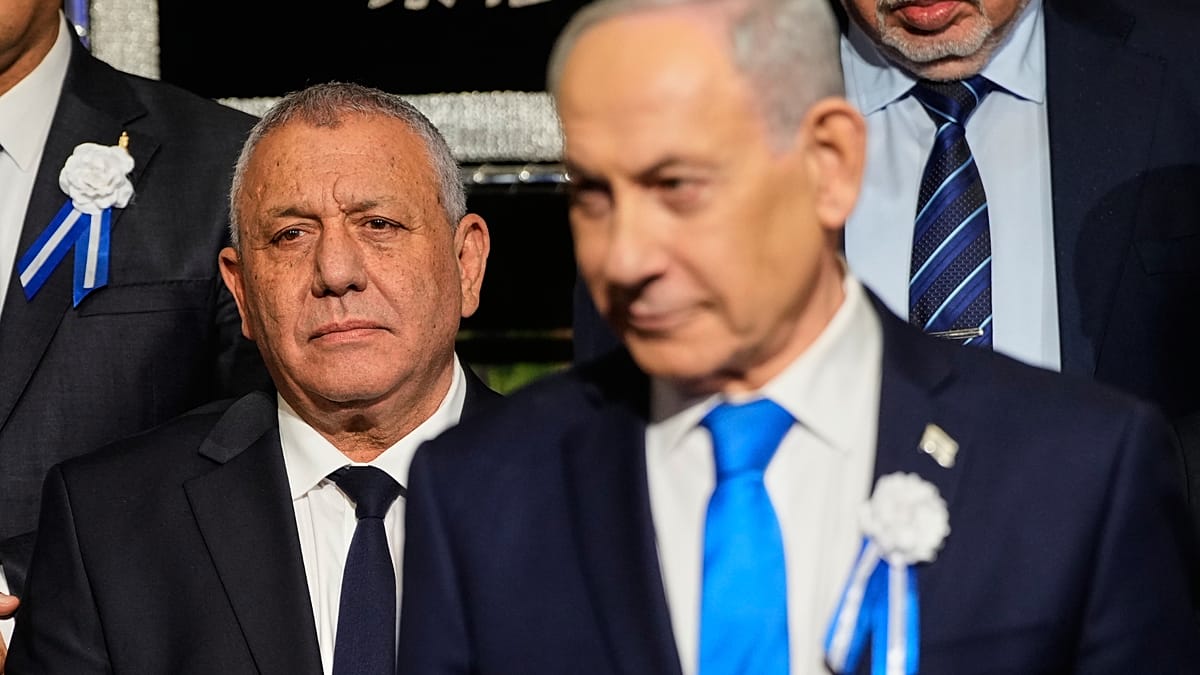
- Netanyahu proposes a power-sharing arrangement under which Eisenkot serves as prime minister first, while he retains the roles of deputy and acting prime minister.
- Lapid and Golan reject the initiative as a political maneuver, while Smotrich expressed full support and offered to act as guarantor for the agreement.
- Eisenkot faces challenges in securing a 61-seat majority ahead of his constitutional deadline on December 6.
Power-Sharing Offer Amid Government Formation Crisis
Israeli Prime Minister Benjamin Netanyahu announced in a statement on Saturday his willingness to let "Yashar" party leader Gadi Eisenkot serve as prime minister first under a power-sharing framework, aimed at breaking the political deadlock following October's inconclusive elections.
Netanyahu stated that although he maintains the leadership of any national unity government belongs to the head of the largest party, he is ready to make concessions in the face of what he described as an "existential threat." This is conditioned on his appointment as acting prime minister and deputy prime minister at the start of the legislative term, as he called on the other side to engage in urgent negotiations and make reciprocal concessions.
Legal Dimensions of the Alternate Prime Minister Position
Netanyahu's proposal is anchored in a legal mechanism introduced into Israeli Basic Law in 2020 during the prior power-sharing pact with Benny Gantz. The position holds a unique judicial status: unlike other cabinet ministers, Israeli law does not mandate the resignation of a prime minister or an alternate prime minister if criminal charges are filed, allowing Netanyahu to remain part of the cabinet despite his ongoing legal prosecution.
Sharp Split in Political Reactions
Leading opposition figures promptly dismissed Netanyahu's overture. Yair Lapid, the number two figure in "Beyachad," characterized the offer as an insincere trick, asserting that an Eisenkot-led government must be sworn in before any coalition expansion can be explored. Similarly, Yair Golan, leader of "The Democrats," called for respecting the voters' will and assembling a government without Netanyahu's involvement.
Conversely, Finance Minister Bezalel Smotrich endorsed Netanyahu's proposal, confirming on his "X" account that the initiative is genuine and the product of extensive discussions in which he participated. Smotrich declared his readiness to guarantee the agreement with Eisenkot, while warning against the creation of a minority government reliant on other factions.
Complexities of Knesset Seat Calculations
This development unfolds as neither political bloc commands a viable parliamentary majority. President Isaac Herzog tasked Eisenkot with assembling the government after receiving endorsements from 67 lawmakers, setting a formal deadline of December 6, with the option of an extension of up to 14 days.
Although Eisenkot has reached preliminary understandings with "The Democrats" and "Yisrael Beiteinu," this potential four-party alliance accounts for only 48 seats, compared to 53 seats held by Netanyahu's bloc—both well below the 61-seat absolute majority required in the 120-member Knesset. Consequently, reaching an accommodation with the Likud party or securing backing from other factions remains essential to establishing a government.
Source: Euronews (فرنسي)
Comments (0)
You must log in to comment on articles.
Log in Sign upBe the first to comment on this article.