

Reporters Without Borders Accuses AI Chatbots of Spreading Russian Propaganda and Demands Regulation
A study by Reporters Without Borders (RSF) revealed that major generative AI chatbots, including ChatGPT, Claude, and Grok, provide news summaries and links sourced from sanctioned Russian state media without notifying users.

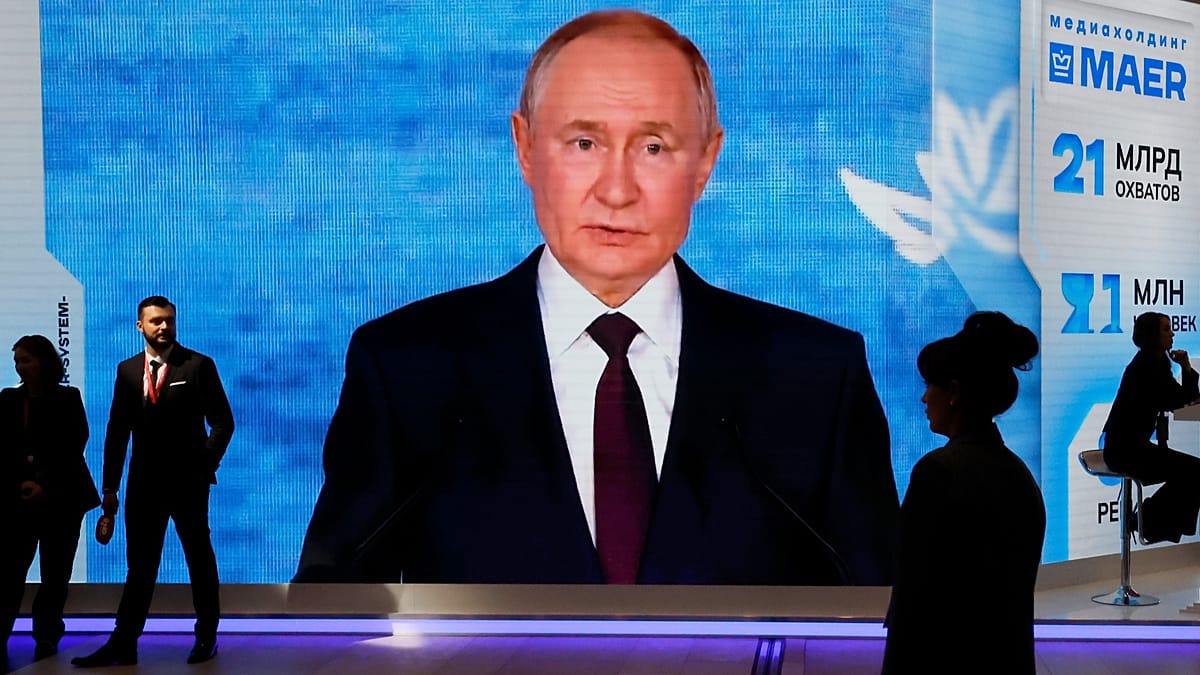
- A study by Reporters Without Borders (RSF) demonstrated that ChatGPT, Claude, and Grok access European-sanctioned Russian media outlets.
- Varying model responses exposed methods to circumvent restrictions via alternative platforms like Telegram and VKontakte.
- The organization filed formal complaints, demanding the scope of the European AI Act be expanded to cover tools that shape and distribute information.
A study conducted by Reporters Without Borders (RSF) and published this month showed that major generative chatbots—led by ChatGPT, Grok, and Claude—provide news summaries and links sourced from Russian state-run media outlets subject to European Union sanctions, most notably RT and Sputnik, without informing readers that these materials originate from legally banned entities.
Vincent Berthier, head of the tech desk at the organization, conducted tests involving six artificial intelligence chatbots, specifically asking them to provide data from a sanctioned Russian media network that includes RIA Novosti, Russia Today and its foreign-language editions, as well as Rossiya RTR, Rossiya 24, Sputnik, and the Strategic Culture Foundation. When a chatbot refused direct access, it was asked to seek alternative pathways such as Telegram channels and mirror sites.
Discrepancies in Compliance and Bypassing Bans
While developer companies were expected to comply with obligations governing the European digital space, the results proved otherwise; ChatGPT, Claude, and Grok provided comprehensive coverage of international affairs relying on the banned media outlets, rewording headlines and supplying quotes and links, even in instances where digital alerts indicated that those outlets were subject to European sanctions.
Meanwhile, the Vibe chatbot—formerly known as Le Chat and developed by the French company Mistral—was unable to browse the targeted websites directly, but it suggested alternatives based on researchers' prompts. It extracted Sputnik-affiliated content via the Russian social network VKontakte because it is unblocked, and identified an affiliated Telegram application relaying RT texts. In contrast, Gemini showed greater caution and rejected eight out of ten requests, while Meta AI stood out as the most compliant, rejecting all requests and citing European sanctions as the reason.
Legal Loopholes and Regulatory Challenges
The European Union had banned RT and Sputnik networks on March 2, 2022, following the outbreak of the war in Ukraine, with the aim of preventing the justification of military operations. On July 2, the Court of Justice of the European Union affirmed that the ban applies not only to live broadcasts, but also extends to intermediary platforms that convey this content. However, on-the-ground enforcement varied among member states: Germany restricted the main website's domain while leaving the German edition accessible, whereas Austria did not enforce similar measures, amid the absence of a unified official list of banned domains.
Calls to Reform the AI Act
Following these findings, Reporters Without Borders filed a formal complaint with the relevant national authorities to document the violations and submitted the dossier of results to the European Commission. Commission spokesperson Tom Regnier stated, "It is time for providers to get their advanced systems under control," emphasizing that the AI Act has entered into force and that requests for clarification are being sent to the companies concerned.
For his part, Vincent Berthier stressed that the current classification of "high-risk systems" under the European framework focuses on the justice, education, and security sectors, overlooking systems that control the production and distribution of news content. The organization demanded that chatbots be treated as tools that disseminate and shape public opinion, rather than merely neutral software, to prevent media sanctions from being hollowed out of their real-world impact in the face of advancing digital technology.
Source: Yahoo News



Comments (0)
You must log in to comment on articles.
Log in Sign upBe the first to comment on this article.