

Macron Welcomes Fuel Price Drop Amid Resumption of Student Protests in France
French President Emmanuel Macron has welcomed falling fuel prices driven by strategic reserve releases, even as high school and university students resume nationwide protests.

- Macron highlights a diesel price drop of over 10 cents per liter without tax hikes, enabled by tapping strategic oil reserves.
- Conflicting figures on school strikes, with the Ministry of Education counting 41 disrupted high schools while a student union claims 169 closures.
- The Ministry of Economy convenes a meeting with fuel distributors as Mousquetaires (Intermarché) forecasts price stability through January.
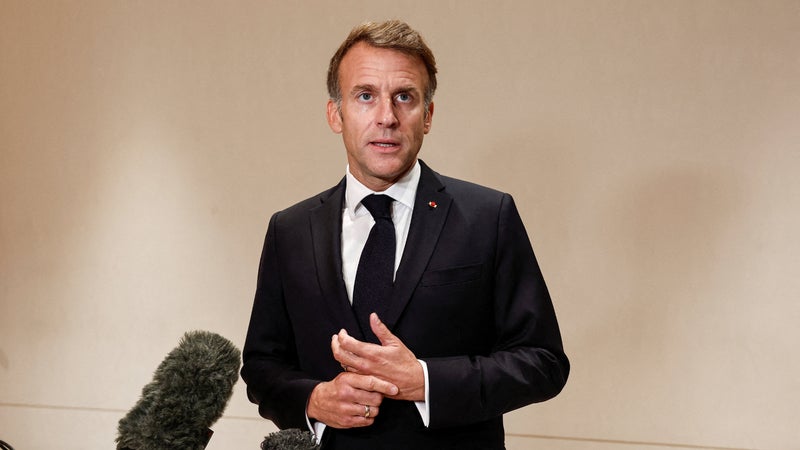
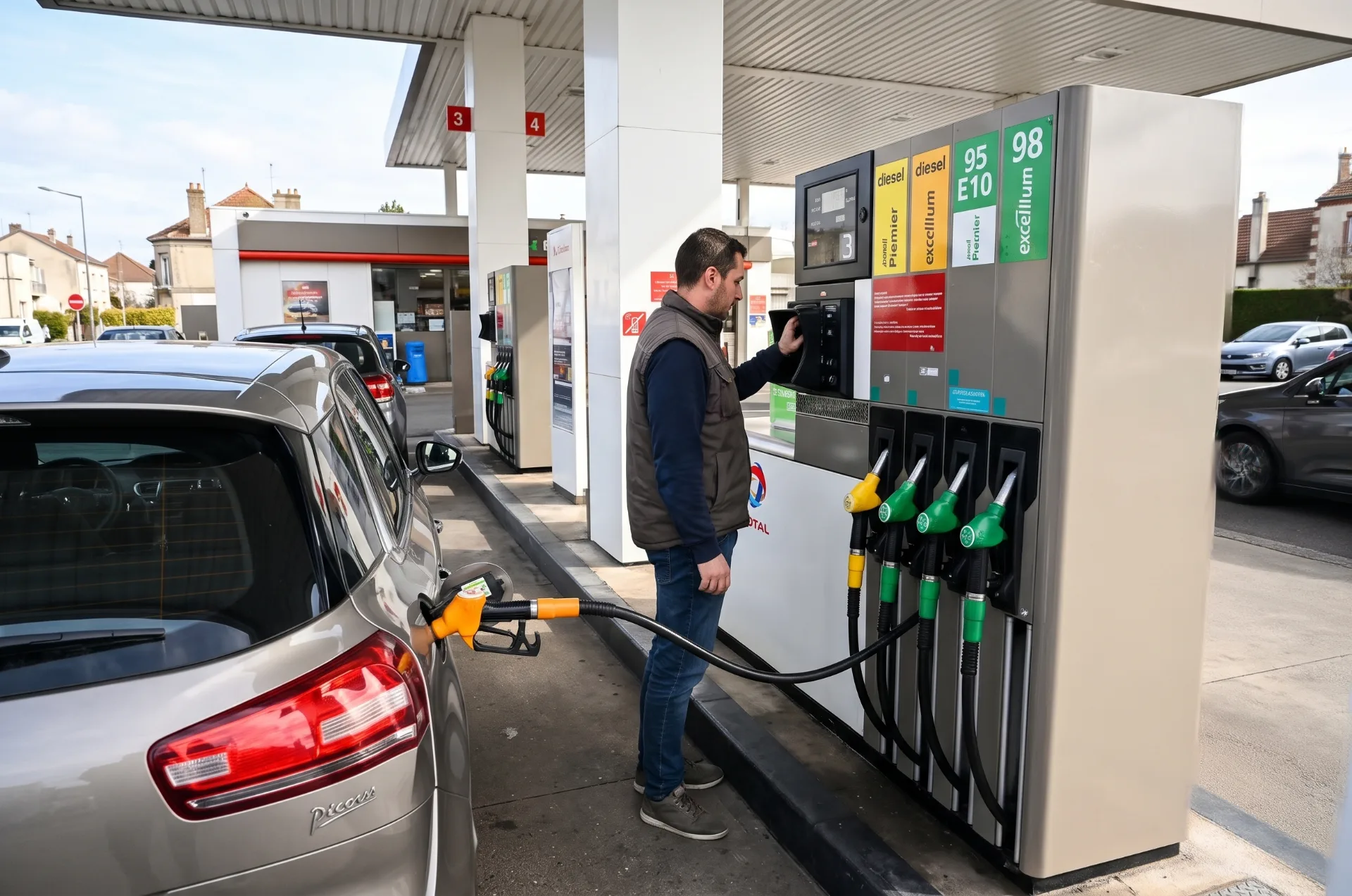
French President Emmanuel Macron has welcomed the decline in fuel prices at filling stations, noting on his "X" account that the price of a liter of diesel has dropped by more than ten cents. Macron considered this decrease to be the result of "tangible solutions bearing fruit without touching taxes and without populism," primarily driven by the release of 10 million barrels from the country's strategic reserves.
Upcoming Meeting at Bercy and Expectations of Continued Decline
In a related context, Thierry Cotillard, head of the Mousquetaires group—which includes over 2,000 Intermarché and Netto stores—announced that his network would record an average price drop between 20 and 21 cents per liter of diesel by the end of the week, anticipating this price stability to continue through next January thanks to the release of strategic reserves.
The Ministry of Economy and Finance at Bercy is hosting a meeting tomorrow with fuel distributors to evaluate the field impact of these measures, attended by Minister of the Economy Roland Lescure, Minister for Small and Medium Enterprises, Trade, Crafts, Tourism, and Purchasing Power Serge Papin, along with representatives from the office of Government Spokeswoman and Minister Delegate for Energy Maud Bregeon.
Resumption of Student Movement and Conflicting Figures
On the ground, high school and university students resumed their protest actions following the two-week All Saints' Day (Toussaint) vacation, despite government measures aimed at easing tensions. The Ministry of National Education reported that disruptions remained limited, with no blockades recorded in three-quarters of departments and only 41 high schools closed, representing approximately 1% of institutions nationwide.
Conversely, Riad Rani, president of the Union Syndicale Lycéenne (USL), confirmed the closure of 169 high schools across the country, calling for a "general mobilization" to shut down all high schools and universities in the coming days to demand greater educational investments, revisions to the "Parcoursup" university admissions platform, and the recruitment of new teachers.
University Mobilization and the Government's Position
In higher education, Minister Philippe Baptiste stated that roughly 15% of universities experienced varying disruptions, including the closure of some lecture halls and the suspension of activities in several laboratories, while expressing caution regarding the movement's trajectory in the coming days. Student unions, including the National Union of Students of France (UNEF), have urged an escalation of the movement and the convening of general assemblies to push for their demands.
For her part, Government Spokeswoman Maud Bregeon stressed that "permanent disruption cannot be a solution," while the Matignon Palace announced that Prime Minister Sébastien Lecornu is prepared to hold a new meeting with high school student representatives next week as part of continued social dialogue.
Field Tensions and Security Repercussions
Frictions erupted in several areas surrounding the blockades; the arrest of a 53-year-old school nurse outside a high school in Montpellier sparked outrage among trade unions and left-wing lawmakers. In addition, the Paris Police Prefecture rejected a proposed route for a student march planned from the Place du Panthéon to the headquarters of the employers' organization (MEDEF), suggesting it be redirected to the outskirts of the capital for security reasons.
Regarding the fallout from previous unrest, Minister of Culture Catherine Pégard announced that the Limoges City Hall has been placed under historical monument protection for up to twelve months following an arson attack on October 17, while a public fundraising campaign for its reconstruction had collected more than one million euros by midday.
Source: BFM TV

Comments (0)
You must log in to comment on articles.
Log in Sign upBe the first to comment on this article.