

France: Widespread Outcry Over Ministerial Directives to Dock Pay of Teachers Backing High School Protests
French educational and political circles have been stirred by controversy following leaked ministerial instructions directing academy rectors to dock the pay of teachers who strike or support student-led high school blockades.

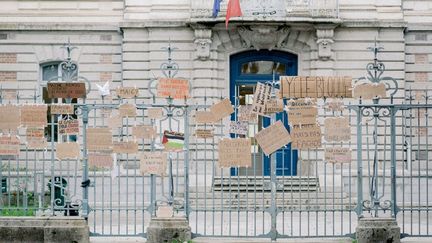
- An October 15 directive instructs rectors to deduct pay from striking teachers, participants in school blockades, and those refusing remote teaching.
- Minister of National Education Édouard Geffray defends the move as a routine administrative measure to deduct pay for unperformed duties.
- Education unions report the directives have not yet been implemented on the ground and challenge the legality of mandating digital instruction during protests.
French educational and political circles have witnessed widespread discontent following the revelation of an email sent by the Ministry of National Education to academy rectors (les recteurs) on October 15, issuing instructions to deduct pay from striking teachers or those who did not deliver their classes amid a wave of student-led high school protests and blockades.
Details of the Directive and Accusations of "Authoritarian Drift"
The controversy erupted after Marie Mesmeur, a Member of Parliament for La France Insoumise representing Ille-et-Vilaine, shared a screenshot of the communication on X (formerly Twitter). In the memo, the ministry's secretary-general called for docking the salaries of teachers who were absent without a valid excuse, those who refused to receive students in open schools, and those who declined to ensure "pedagogical continuity" by delivering remote lessons or sending homework assignments in blockaded high schools.
The memo also explicitly called for ensuring that "teachers who took part in blockading institutions alongside students and were identified by the administration are legally counted as strikers," prompting MP Mesmeur to denounce what she termed an "authoritarian drift" and an attempt to penalize teachers standing in solidarity with the student movement.
Official Response and Justification as a "Routine Procedure"
In response, Minister of National Education Édouard Geffray defended his department's position during a visit to René Descartes High School in Champs-sur-Marne, outside Paris, asserting that the communication was merely a "standard circular sent by the administration during any strike or protest movement to apply daily pay deductions." He explained that under civil service regulations, any teacher who fails to carry out their duties without prior notification is automatically deemed to be on strike.
Addressing further questions, the minister's cabinet later clarified that being present outside high school gates does not necessarily constitute participation in a strike, provided the teacher fulfills their required working hours. The cabinet denied any form of "monitoring or blacklisting" of teachers, noting that the failure to conduct video lessons alone does not warrant salary deductions, but rather the outright refusal to carry out any instructional duties.
Legal Ambiguity and Union Concerns
On the ground, union leaders stated that these directives have not yet been put into practice. Bruno Bobkiewicz, General Secretary of the National Union of School Heads (SNPDEN), remarked that no colleagues had received operational instructions on the matter, questioning the ethical and professional framework that would enable a principal to monitor a teacher's performance remotely. Laurent Kaufmann of CFDT Éducation echoed these concerns, warning that pushing school administrators to surveil their peers risks escalating tensions within the educational community.
For his part, education law specialist Antoine Fauré pointed out that compelling teachers to provide remote instruction could infringe upon the principle of "pedagogical freedom" and might be legally questionable given the absence of a statutory framework obligating staff to perform digital work under such circumstances. Meanwhile, Isabelle Vuillet of CGT Éduc'action described the measure as symptomatic of a "ministry in crisis seeking to suppress protests at all costs."
Source: France Info


Comments (0)
You must log in to comment on articles.
Log in Sign upBe the first to comment on this article.