

France: Trial of Parents of the 'A10 Motorway Martyr' Begins in Blois Decades After Little Inass's Death
The trial of the parents of Inass Tolloub, known in the media as the 'martyr of the A10 motorway,' opened Monday before the Assize Court of Loir-et-Cher in Blois, nearly 39 years after the four-year-old girl's tortured body was found.

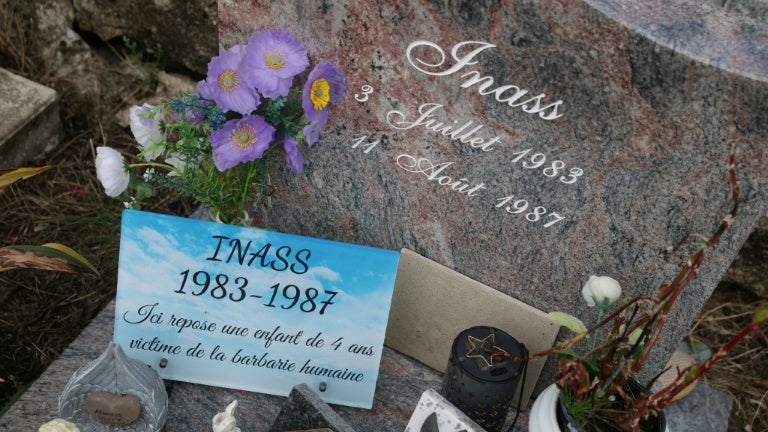
- The trial of Halima El Bakhti and Ahmed Tolloub has begun before the Assize Court of Loir-et-Cher over charges related to torturing their four-year-old daughter, Inass, to death in 1987.
- The mystery surrounding the child's identity was unraveled in 2017 through a DNA match with one of her brothers, after she had remained unidentified for 30 years.
- The court rejected the municipality of Suèvres' petition to join as a civil party and approved an additional psychiatric evaluation for the father after he cited memory issues.
On Monday, the trial of the parents of Inass Tolloub, known in the media as the "martyr of the A10 motorway," commenced before the Assize Court of Loir-et-Cher in the French city of Blois. The child's body was discovered nearly 39 years ago bearing severe signs of torture. Her mother, Halima El Bakhti, is charged with "acts of torture and barbarity leading to death without intent to cause it," while her father, Ahmed Tolloub, is being tried for "complicity" in the same acts. Both face life imprisonment in proceedings scheduled to run through November 18.
A Tragedy Dating Back to the Summer of 1987
The origins of the case date back to Tuesday, August 11, 1987, when the body of an unidentified four-year-old girl, wrapped in a blanket, was found at around 3:30 p.m. behind safety barriers on the side of the A10 motorway heading toward the provinces, specifically within the commune of Suèvres near Blois. A forensic report at the time revealed that the victim had suffered severe beatings, burns, and bruises, along with multiple human bite marks, concluding that her death likely occurred gradually as a result of hemorrhagic shock and fatal traumatic injuries.
The victim's identity remained unknown for nearly three decades, and orders dismissing the case were issued twice, in 1991 and 1997, due to insufficient evidence, before the investigation was reopened in 2006 at the prosecution's request based on advances in DNA technology. In 2017, efforts led to a decisive breakthrough following the arrest of the girl's brother in northern France in connection with an act of violence; his genetic profile matched traces found on the blanket that had wrapped the body, enabling investigators to identify the parents, arrest them, and formally indict them in June 2018.
Tensions at the Opening Hearing and an Investigation into Defendant Intimidation
The first day of the trial witnessed a series of tensions, beginning with the selection of the jury composed of six men and four women, followed by a defense objection to a broadcast feed interruption in the press room near the courthouse, and culminating in an incident where defendant Halima El Bakhti and her lawyer, Camille Radot, were pursued outside the court building during the lunch recess. The defense stated that they were subjected to threats and insults from a crowd, necessitating police intervention to secure them. This prompted Advocate General Stéphane Javet to announce the immediate opening of a criminal investigation into the intimidation acts.
Meanwhile, the presiding judge, Audrey Doupeux, following deliberations, rejected a motion by the municipality of Suèvres to be admitted as a civil party to the lawsuit, explaining that offenses involving torture target individuals and that the commune had sustained no direct personal injury from the crime. This position was supported by the prosecution, defense attorneys, and the lawyer representing Inass's six siblings who are participating as civil parties.
Defendants' Stances and the Debate Over Health Competence
When confronted with the charges, Halima El Bakhti (born in 1954 in Casablanca) denied the torture allegations, stating: "They lied to me, this is not true... He lied a lot, and the girls did too... She is my daughter." Meanwhile, the father, Ahmed Tolloub (born in 1952 in Morocco), leaning on his cane, said in a faint voice: "I have never touched any of my children... I was beaten myself, so how could I be an accomplice?" During the investigation, the father had claimed that his wife abandoned Inass's body along the road while they were traveling to spend their holiday in Morocco, whereas the mother claimed the child died in the car, denying any recollection of burns or bites and insisting she was "not a dog to do such a thing."
The parents' health condition sparked extensive debate between the prosecution and the defense. A medical report conducted in mid-October indicated that both defendants suffer from chronic illnesses, with Ahmed Tolloub exhibiting "mild to moderate cognitive impairment." Following court deliberations, the judge rejected a request for a supplementary psychiatric evaluation of the mother, determining her condition compatible with standing trial provided regular breaks are granted, while approving an urgent additional psychiatric examination for the father upon the request of his lawyer, Frank Berton, to verify his ability to follow questioning and defend himself in light of his claims of frequent memory lapses and amnesia.
Source: BFM TV

Comments (0)
You must log in to comment on articles.
Log in Sign upBe the first to comment on this article.