

France: 'Act IV' of Cost-of-Living Protests Disrupts Paris as Businesses Board Up
France saw a new wave of demonstrations in 'Act IV' of social mobilization over the high cost of living, disrupting Paris as shops boarded up and transit faced widespread closures.

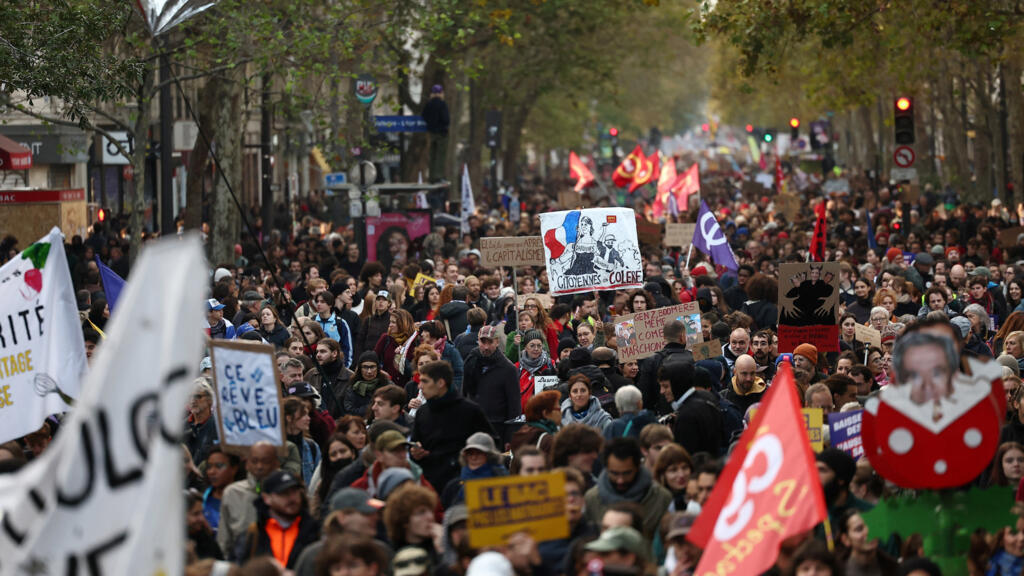
- Broad calls for protests led by students, trade unions, and the 'Yellow Vests' follow a massive mobilization of between 600,000 and 1.6 million demonstrators.
- Anticipation builds ahead of the social conference convened by Prime Minister Sébastien Lecornu, amid rejection of minor increases to the minimum wage (Smic).
- Tight security measures include the closure of metro stations, while merchants barricade storefronts with wooden boards amid sales drops of up to 70%.
A new wave of demonstrations kicked off in France on Saturday, November 7, as part of what has become known as "Act IV" of the social movement, protesting the rising cost of living and demanding better educational conditions for youth. This joint call by trade unions, high school and university student unions, and the "Yellow Vests" movement comes just two days after the massive mobilization witnessed nationwide on Thursday, November 5, with turnout estimated between 600,000 demonstrators (according to authorities) and 1.6 million (according to figures from the General Confederation of Labour, CGT).
In the capital, Paris, the inter-union coordination and youth organizations opted for the usual route, starting from Place de la République to Place de la Nation. Trade unions stressed that the escalation and street demonstrations would continue until the government responds to the protesters' demands regarding purchasing power. All eyes are on the outcomes of the social conference convened by Prime Minister Sébastien Lecornu for Monday, November 9, with unions asserting that any proposed slight increase to the minimum wage (Smic) will not be enough to quell public anger.
"Yellow Vests" Actions Defy Security Ban
For their part, "Yellow Vests" activists view their demands as going beyond living conditions to include the establishment of direct democracy mechanisms. Despite a ban issued by the Paris Police Prefecture (Préfecture de police), the movement's coordination insisted on holding an independent gathering outside the union route at Place de la Concorde, a location of symbolic weight due to its proximity to the National Assembly. Across the rest of France, nearly 80 marches and demonstrations were officially announced—a figure significantly lower than the more than 1,000 demonstrations recorded on October 17.
High Alert, Merchant Anxiety, and Transit Closures
These mobilizations cast a direct shadow over daily life and economic activity in the capital, where shopkeepers are facing a fourth Saturday of tension and fears of vandalism. Shops and banks along major streets and squares in central and eastern Paris covered ATMs with metal sheets and mounted wooden barricades over storefronts for protection.
One pharmacist reported that the cost of installing wooden boards to guard against riots ranged between 2,000 and 5,000 euros, calling it an "exorbitant financial burden." Similarly, restaurateurs expressed frustration over severe economic impacts. One restaurant owner said he chose to keep his doors open while canceling outdoor terrace seating (Terrasses) to prevent potential damage, noting that the month-long movement has caused a sharp plunge in turnover of at least 70%, and pleading that small earners struggling under heavy taxes not be harmed.
To limit crowd movement and maintain security, dozens of metro stations in Paris were shut down—a measure that further complicates daily commutes for residents and deepens the paralysis of commercial activity in the heart of the French capital.
Source: RFI

Comments (0)
You must log in to comment on articles.
Log in Sign upBe the first to comment on this article.