

Political Controversy in France Over Rescheduling Presidential Election to Avoid May Day Clashes
A heated debate has emerged across the French political landscape over proposals to bring forward the upcoming presidential election dates, aiming to prevent the second round's electoral blackout period from coinciding with May Day protests.

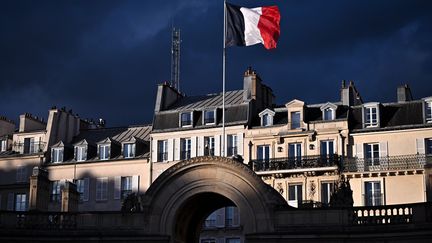
- Scheduling the second round for May 2 imposes an electoral silence that coincides with May Day demonstrations on May 1.
- Broad calls from the right, left, and trade unions urge moving the vote to April 11 and 25 amid fears of violent clashes.
- The government maintains the current calendar to minimize overlap with school holidays and refuses to yield to public order concerns.
The political landscape in France is witnessing an intense and escalating debate over the possibility of bringing forward the dates of the upcoming presidential election. This comes after the executive branch set the polling dates on July 1, scheduling the first round for April 18 and the second round for May 2. These dates have triggered a real dilemma among politicians, trade unions, and media outlets due to their direct implications on the country's public climate.
A Risky Overlap with May Day Demonstrations
The core issue lies in the provisions of the French electoral code, which mandates an electoral silence beginning at midnight on the Friday preceding the vote—meaning from April 30 for the second round. This measure sharply conflicts with the rallies held on May 1 (Labor Day), an occasion naturally characterized by massive political and union mobilization, particularly in a tense social climate and amid fears of a recurrence of violent clashes similar to those seen on October 17.
Concerns are growing that these protests could influence voters' decisions, especially if the first-round results lead to an anticipated runoff between Marine Le Pen and Jean-Luc Mélenchon. In this context, Marylise Léon, Secretary-General of the CFDT union, warned of the risks of severe tensions, emphasizing her refusal to see May Day—traditionally dedicated to union struggle—commandeered for the presidential election.
Broad Opposition Front Calling to Advance the Date
The idea of moving the election forward has gained increasing consensus across various political factions. Bruno Retailleau, the candidate for The Republicans (LR), was the first to raise the issue, warning that the date could turn into chaos—a demand subsequently echoed by the National Rally (RN). Senate President Gérard Larcher also submitted a formal request to the Prime Minister to review the timetable, supported by Social Democratic candidate Raphaël Glucksmann and Cannes Mayor David Lisnard.
The Government's Position and Legal and Media Complexities
In contrast, the government is standing by its position, pointing out that it held prior consultations with political parties through the Ministry of the Interior and stressing that no ideal date exists that would satisfy everyone. The French Constitution mandates that the first round take place between 20 and 35 days before the end of Emmanuel Macron's presidential term, which began on May 14, 2022. This leaves April 11 and April 25 as the only viable constitutional alternative.
The government defends its choice by noting that the currently selected date coincides with school holidays in only one out of three educational zones, compared to two zones if the election were brought forward, thereby supporting higher voter turnout. Government spokesperson Maud Bregeon had previously stated a refusal to "give in to rioters and troublemakers," a stance also endorsed by Marc Fesneau, head of the MoDem parliamentary group in the National Assembly.
Meanwhile, the calendar places media outlets in a complex situation; candidates are legally prohibited during the electoral blackout from making public statements or distributing leaflets on May 1, while the regulatory authority for audiovisual and digital communication (Arcom) is conducting consultations to establish guidelines for covering the marches without violating the law. The government has until January 31 to issue the decree convening the electorate should it ultimately decide to advance the dates to April.
Source: France Info

Comments (0)
You must log in to comment on articles.
Log in Sign upBe the first to comment on this article.