

Extension of the €1,000 Fuel Bonus Until 2027 and Expansion of Support for Affected Sectors
The French government has officially extended the employer-paid fuel bonus of up to €1,000 until 2027 to help workers cope with rising transport costs, alongside broadened support for affected sectors.

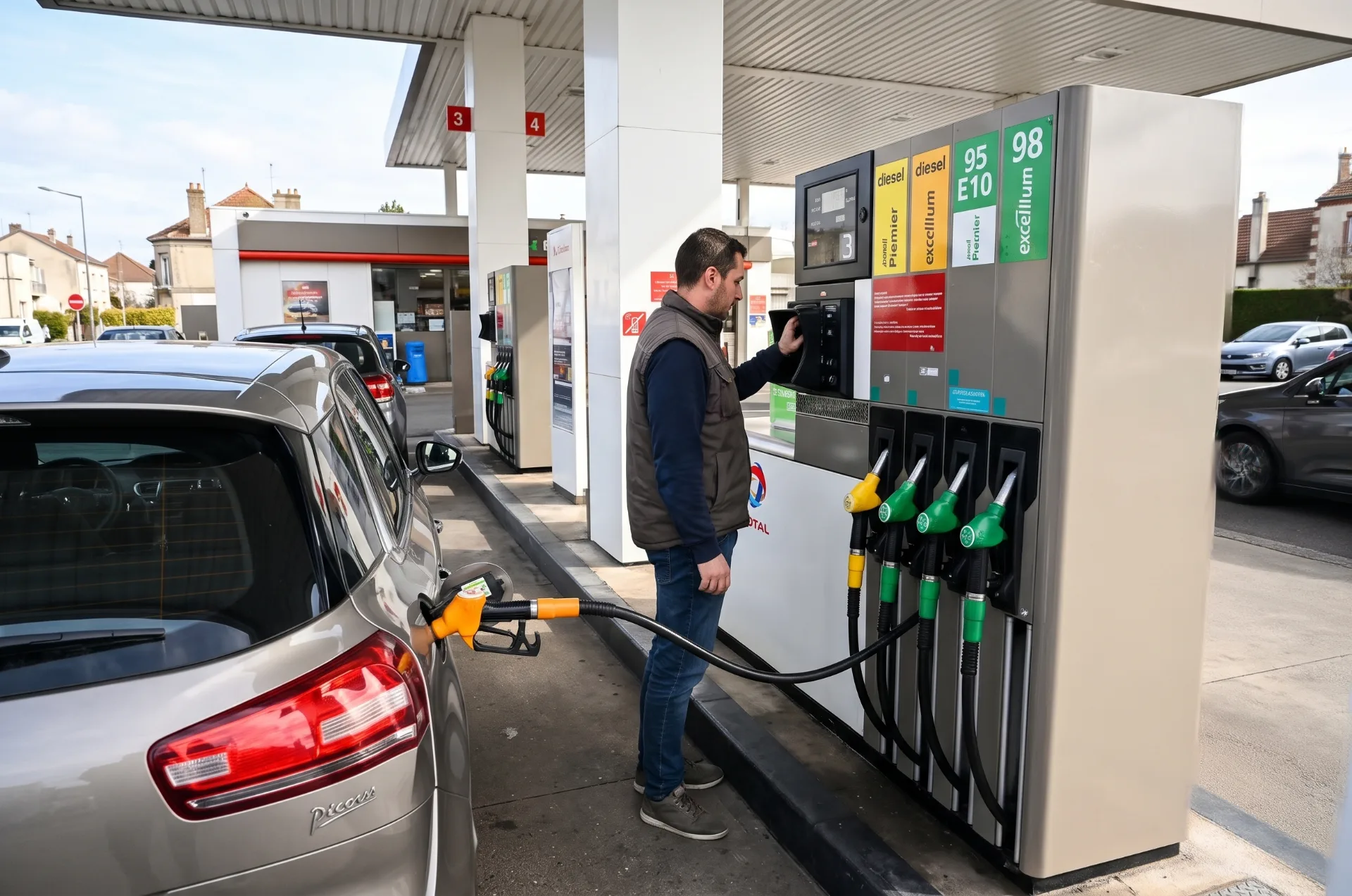
- Extension of the employer-provided fuel bonus for employees in France until 2027, fully exempt from income tax and payroll charges.
- Increasing the maximum limit of this optional bonus to €1,000 annually per employee to bolster purchasing power amid rising fuel and electric charging expenses.
- Making the allowance accessible to employees across various contract types and trainees through simplified procedures via the employer, without requiring prior receipts.
- Extension of non-road diesel (GNR) support for the construction and agricultural sectors until the end of the year, coupled with a strict warning to distributors against inflating profit margins.
Following the current crisis in France, the government has officially decided to extend the corporate-provided fuel bonus (Prime carburant) until 2027. Minister of the Economy Roland Lescure confirmed that this governmental measure serves as an essential legislative mechanism providing businesses with additional financial flexibility to support their employees' purchasing power against continuously rising transport and fuel costs.
Inclusion of the Bonus in the Social Security Financing Bill
Minister Roland Lescure explained that the decision to extend the scheme until 2027 will be incorporated into the Social Security Financing Bill. The bonus is notable for being completely exempt from income tax and social security contributions, thereby encouraging enterprises to implement it.
The government had taken a proactive step at the end of September by raising the ceiling of this bonus from €600 to €1,000 annually per employee. In this regard, the Minister of Economy and Finance stated: "Until last year, companies were able to grant a fuel bonus capped at €300. Given the current crisis, we decided to raise it to €1,000, and the government will propose a legislative amendment to maintain this ceiling for next year."
Serge Papin, Minister for Small and Medium Enterprises, commented during a press conference at "Bercy" where these facilities were unveiled: "We are thereby turning the fuel bonus into tangible purchasing power support that companies can implement for the benefit of their employees."
What Is This Assistance? Who Is Eligible and How to Benefit?
The company-funded fuel bonus (Prime carburant) is a voluntary and optional financial support scheme provided by employers to their workforce to assist with commuting expenses, rather than direct state aid.
According to the French public administration portal Service-Public, the bonus is designed to cover all or part of the costs of conventional fuel (petrol and diesel), or the charging expenses of electric, plug-in hybrid, or hydrogen-powered vehicles. Eligible beneficiaries include the following categories:
Eligible contracts: Employees on permanent contracts (CDI), fixed-term contracts (CDD), work-study trainees, and interns.
Part-time workers: If their working time exceeds 50% of the statutory weekly working hours, they receive the full allowance on equal footing with full-time staff. If their hours fall below 50%, the bonus is calculated on a pro-rata basis relative to half-time work.
Disbursement Conditions and Application Procedures
Nature of the support: The assistance is non-mandatory and granted at the employer's discretion, unless a company's collective bargaining agreement provides otherwise.
Payment method: The allowance can be disbursed directly alongside the monthly payslip or through "mobility vouchers."
Procedures: There are no complex official forms or filings required from the employee, nor is any prior proof of fuel expenses mandated under this scheme. Employees only need to inquire directly with their company management or Human Resources (HR) department to verify if the program has been adopted.
Extension of Non-Road Diesel (GNR) Support and Market Oversight
In a related development, Minister for Small and Medium Enterprises Serge Papin announced a parallel package of measures to support the construction and agricultural sectors, most notably extending support for non-road diesel (GNR) until December 31.
The Minister stressed the mobilization of state services to protect the cash flow of affected businesses by deferring social security contributions and rescheduling tax debts. He urged business leaders to reach out to economic advisers and Commissioners for Business Crisis Prevention (CRP), while pointing out the possibility of securing "emergency loans" through the public investment bank Bpifrance.
The Minister concluded his remarks with a firm warning to fuel distributors, declaring: "The monitoring of transport and distribution margins continues, especially as refined product prices climb. So far, we have observed no irregularities, but should any abuse be detected, we will immediately regulate profit margins, and all our regulatory tools are ready."
France News / AFP


Comments (0)
You must log in to comment on articles.
Log in Sign upBe the first to comment on this article.