

Restricting Phones in Schools Boosts Student Achievement: What a Recent Study Revealed
A recent Harvard University study reveals that restricting mobile phone use during the school day yields modest yet consistent academic gains, rekindling the debate on smartphone bans in classrooms.

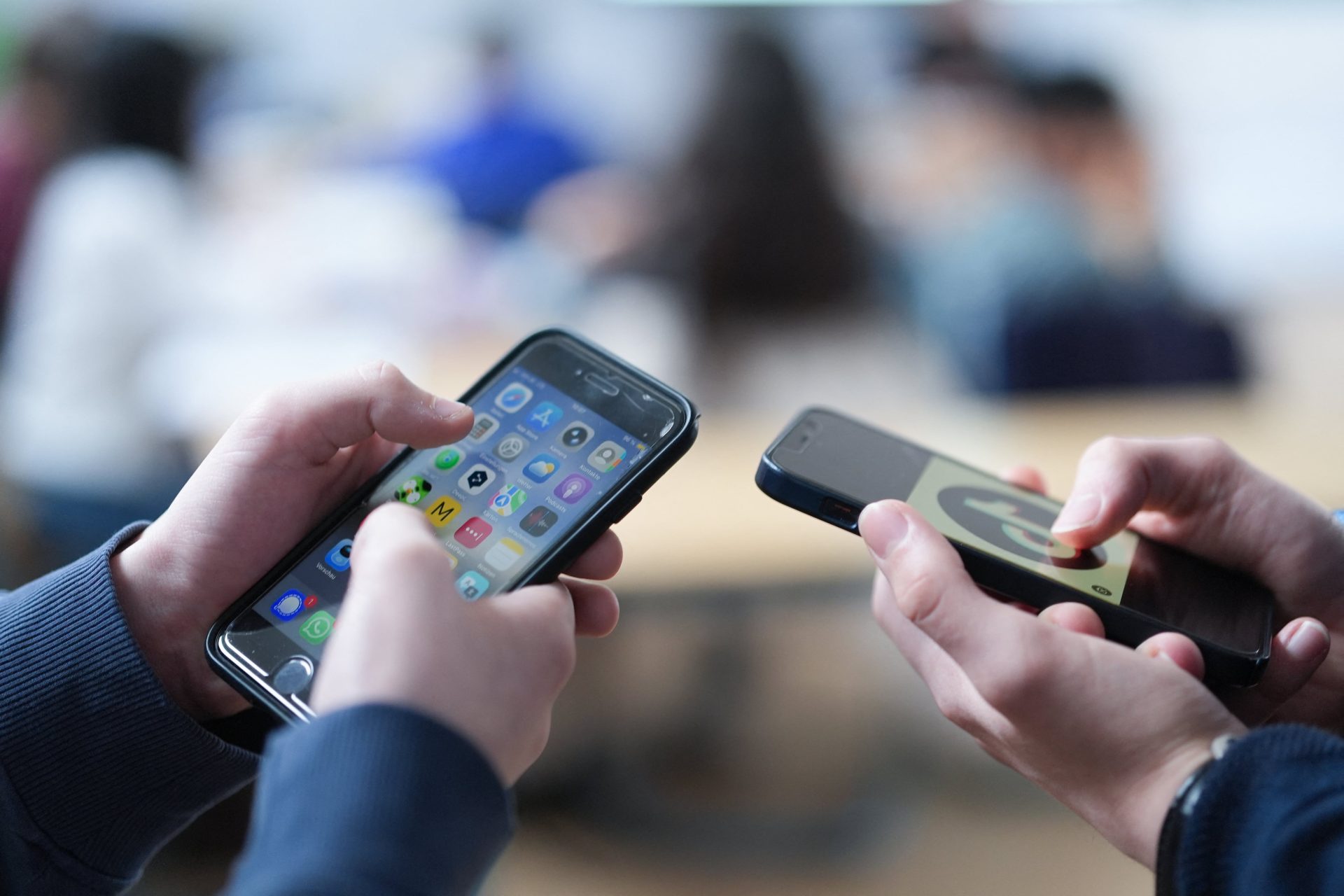
- A Harvard University study covering 3.3 million students confirms that restricting phones yields gains equivalent to up to two additional weeks of learning per year.
- OECD data indicates a sharp decline in reading and mathematics levels, coinciding with the widespread adoption of smartphones.
- Divergence across scientific studies, with other research pointing to disciplinary challenges during the first year of enforcing school bans.
Amid growing concern among families and parents regarding the impact of screens on children's focus, a recent scientific study has rekindled the debate over banning mobile phones in classrooms. The study, conducted by the Center for Education Policy Research at Harvard University and published on Tuesday, November 17, revealed that imposing restrictions on phone use during the school day leads to educational gains described as "modest but consistent."
Researchers based their assessment on test scores of 3.3 million students across 4,600 schools in the United States. According to the findings, the pedagogical benefits of removing phones are equivalent to students receiving between one and two additional weeks of learning during a single school year, compared to their peers in schools without restrictions. The research also showed that these positive effects persist for up to three years after implementation begins.
Stemming the Academic Decline
The study sought to answer an urgent question: Can curbing phone use halt the ongoing academic decline observed since the beginning of the past decade? According to data from the Organisation for Economic Co-operation and Development (OECD), reading comprehension scores for 15-year-old students dropped by 28 points between 2015 and 2025, roughly equivalent to the loss of a year and a half of learning. Mathematics also saw a significant drop of 22 points over the same period. While no direct, proven causal link exists, this decline has remarkably coincided with the widespread proliferation of smartphones and social media networks.
These indicators offer hope that this downward trajectory can be reversed, especially as an increasing number of educational institutions mandate that students lock their phones in pouches or cases throughout school hours—a trend described by Thomas Kane, one of the supervisors of the Harvard study, as encouraging and promising.
Diverging Views and Scientific Findings
Despite these optimistic findings, the scientific community remains divided over the effectiveness of strict measures. An earlier study published by the National Bureau of Economic Research (NBER) last April concluded that strict phone bans produced an impact "near zero" on test scores. Stanford University economist Thomas Dee explained that the data was insufficient to confirm a general, direct improvement in learning.
That conflicting research highlighted other challenges, including an increase in behavioral incidents and infractions during the first year of ban implementation, as well as potential impacts on student well-being, with only minor improvements observed among high school students, particularly in mathematics. Nevertheless, Thomas Dee affirmed in press statements that regaining students' attention in classrooms remains essential for unlocking their academic potential, urging patience for a few years before passing definitive judgments on the true extent to which these policies succeed in putting the educational path of future generations back on track.
Source: L’Express



Comments (0)
You must log in to comment on articles.
Log in Sign upBe the first to comment on this article.